강감찬 姜邯贊
Goryeo general who won the Battle of Gwiju; Chief Councilor (Munhasijung)
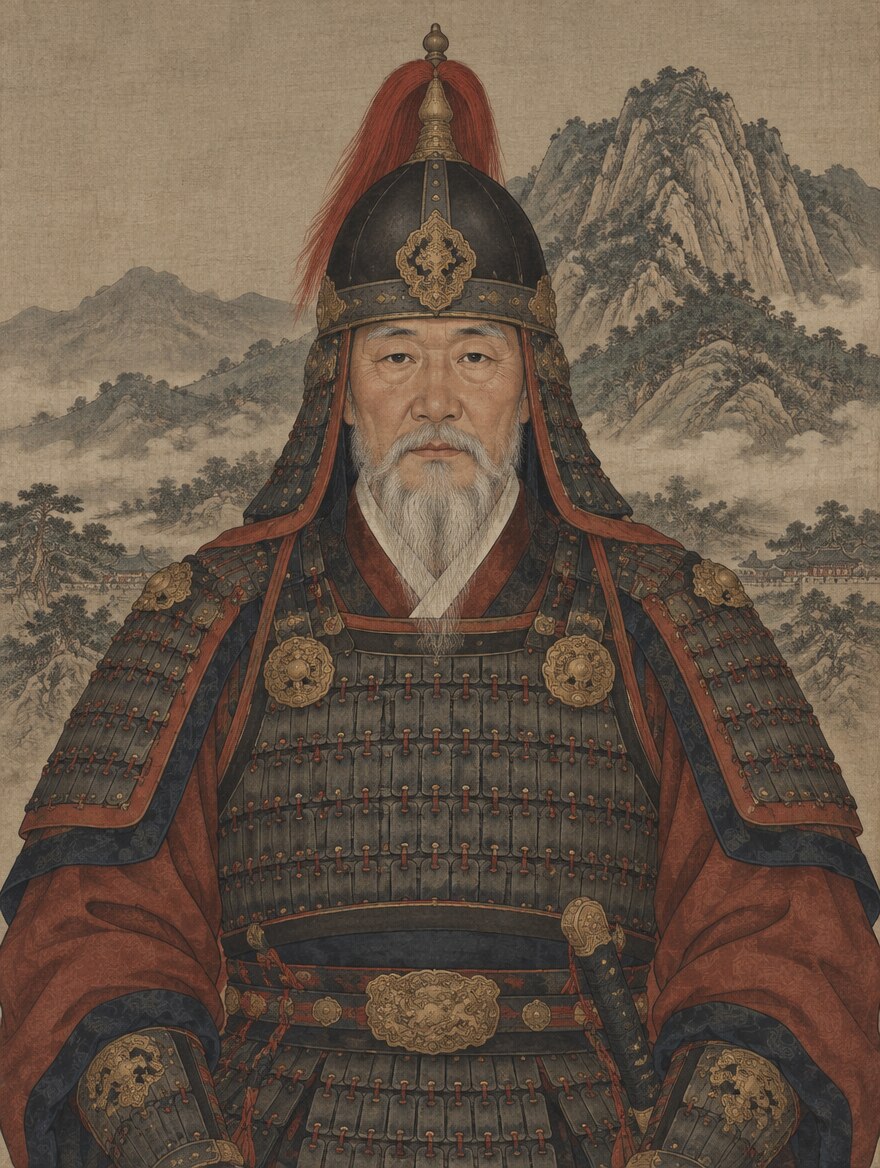
| Life | 948 ~ 1031 |
| Era | 고려 |
| Clan | 금천 강씨 |
Life & career
Gang Gam-chan (姜邯贊, 948-1031) was born in Geumju, in what is now Seoul's Geumcheon and Gwanak districts; Nakseongdae ("Fallen Star Mound"), his traditional birthplace, takes its name from a legend that a star fell to earth at his birth. A civil official who placed first in the state examination of 983, he became renowned as a great general who overcame a national crisis during the Khitan invasions despite his civilian background.
During the second Khitan invasion of 1010 he argued for resistance against courtiers who urged fleeing south as the capital fell. When the Khitan general Xiao Baiya led a massive third invasion with 100,000 troops in 1018, the 71-year-old Gang was named supreme commander and, together with deputy commander Kang Min-cheom, dammed the Samgyo stream at Heunghwajin with ox hides and released the water as the Khitan army crossed, inflicting heavy losses. The following year, 1019, he intercepted the retreating Khitan army at Gwiju and nearly annihilated it — the Battle of Gwiju.
After the victory he rose to the highest offices of state, including Chief Councilor (Munhasijung). He died in 1031 at age 84, with the posthumous title Inheon. Anguksa Shrine at Nakseongdae in Seoul's Gwanak district honors him at his traditional birthplace.
Grave
His tomb is on a hillside in Wonchon-dong, Yuseong-gu, Daejeon; Nakseongdae Park in Seoul's Gwanak district holds Anguksa Shrine and a memorial stele in his honor.
Descendants
The Geumcheon Gang clan traces its founding ancestor to Gang Gam-chan's great-great-grandfather Gang Yeo-cheong; the clan's renown grew greatly through Gang Gam-chan's achievements.