이형근 李亨根
Army General, 9th Army Chief of Staff and first Chairman of the Joint Chiefs of Staff
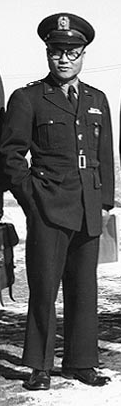
| Life | 1920 ~ 2002 |
| Era | 대한민국 건국기~현대 |
| Clan | 공주 이씨 |
Life & career
Yi Hyeong-geun (1920-2002) was a soldier from Gongju, South Chungcheong, of the Gongju Yi clan, with the pen name Cheongjae. He graduated in 1942 from the 56th class of the Imperial Japanese Army Academy and served as an artillery captain in the Japanese army until the war's end; his adopted Japanese name was Matsuyama Takeo.
Commissioned a captain in January 1946 as a member of the first class of the Military English Language School, he served as commander of the 2nd Regiment of the South Korean Constabulary, first superintendent of the Constabulary Officers School, Chief of Staff of the Tongwibu and commander of the 8th Division. When the Korean War broke out he commanded the 2nd Division, later led the III Corps, served as Army HQ Chief of Education, was a delegate to the armistice talks and commanded the I Corps; he is credited with merit in the battle of Hill 351 on the eastern front.
Promoted to general in 1954, he served as the first Chairman of the Joint Chiefs of Staff, became the 9th Army Chief of Staff in 1956, and retired in August 1959. Afterwards he was president of the Korea Veterans Association and, in 1961, ambassador to the Philippines and to the United Kingdom. Because of his Japanese army service, he was included in the military section of the 2008 list of those slated for inclusion in the Dictionary of Pro-Japanese Collaborators by the Institute for Research in Collaborationist Activities.
Japanese Army Service and the Founding of the ROK Army
He graduated from the Imperial Japanese Army Academy in 1942 and served as an artillery captain. Commissioned in 1946 from the first class of the Military English Language School, he served as a Constabulary regiment commander and superintendent of the Constabulary Officers School.
The Korean War
He commanded the 2nd Division at the outbreak of war, then the III Corps, served as Army HQ Chief of Education and armistice delegate, and commanded the I Corps. He is credited with merit at Hill 351 on the eastern front.
Chief of Staff and Assessment
Promoted to general in 1954, he was the first Chairman of the Joint Chiefs of Staff, became 9th Army Chief of Staff in 1956, retired in 1959 and later served as head of the Veterans Association and ambassador to the Philippines and the UK. His Japanese army service led to his inclusion in the 2008 list of those slated for the Dictionary of Pro-Japanese Collaborators. He belonged to the Gongju Yi clan.
Grave
The exact location of his grave was not confirmed here.