평해 황씨 family tree
Build your family tree online평해 황씨(平海 黃氏) — Known as an old ancestral seat of the Hwang clan, said to trace its founding ancestor to Hwang On-in, the General of the Golden Guard (Geumo Janggun).
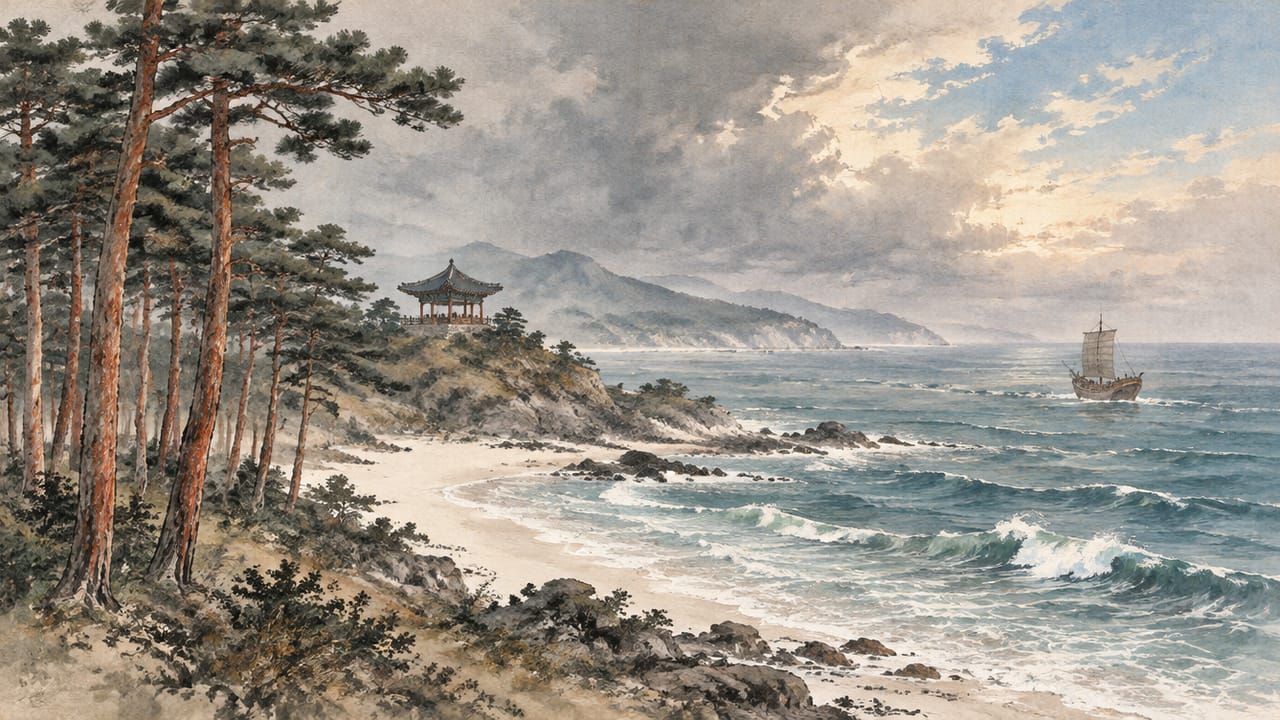
About the 평해 황씨 clan
Known as an old ancestral seat of the Hwang clan, said to trace its founding ancestor to Hwang On-in, the General of the Golden Guard (Geumo Janggun). In the 2015 Census the 평해 황씨 clan numbered about 168,374 people, one of Korea's major surnames and clans. Even among people surnamed 황, a different clan seat (bon-gwan, 평해) means a different lineage. New to these terms? See the bon-gwan, pa & hangnyeol guide.
Roots and history of the Pyeonghae Hwang clan
Founder and origin of the clan seat
The Pyeonghae Hwang take Pyeonghae-eup in Uljin County, North Gyeongsang, as their ancestral seat and are counted with the Changwon and Jangsu Hwang among the three great Hwang clans. The clan honors Hwang Rak (黃洛) as its ultimate founder. Tradition holds that he was a man of Later Han China who, around AD 28 (in the reign of King Yuri of Silla), was sailing as an envoy to Jiaozhi (交趾, today's northern Vietnam) with Gu Dae-rim, founder of the Pyeonghae Gu, when a storm carried them to the shore at Wolsong in Pyeonghae, where they settled. A further story says his three sons were enfeoffed as Lord Giseong, Lord Jangsu and Count Changwon and became the roots of the Pyeonghae, Jangsu and Changwon Hwang, but since Silla had no such titles and the dates do not fit, many regard it as legend rather than history.
The Pyeonghae Hwang regard themselves as descendants of Lord Giseong (箕城), said to be Hwang Rak's eldest son Hwang Gap-go; Giseong was the old name of Pyeonghae, and the clan was once called the Giseong Hwang. The generations after him are lost, so the documented genealogy begins with Hwang On-in, a Goryeo general of the Geumo Guard (金吾將軍) who settled in Pyeonghae, as the first generation. The Sangju Hwang and Deoksan Hwang are known as seats that split off from the Pyeonghae Hwang.
The clan through history
Third-generation Hwang Yu-jung (黃裕中) became chancellor (munha sijung), and from his three sons, fourth-generation Hwang Jin, Hwang Seo and Hwang Yong, came the Geomgyo-gong, Munjeol-gong and Chunggyeong-gong branches, the main trunks of every Pyeonghae Hwang family today. Hwang Seo, having accompanied the crown prince to the Yuan court under King Chungnyeol, had Pyeonghae raised from a county to a commandery, laying the foundation of the clan's revival.
The clan flourished most from late Goryeo into early Joseon. Hwang Hui-seok of the Chunggyeong-gong branch followed Yi Seong-gye through the Wihwado retreat and the founding of Joseon, becoming a second-rank founding merit subject and Lord Pyeonghae; Hwang Yu-jeong of the Geomgyo-gong branch was Mayor of Hanseong, and his son Hwang Hyeon became rector of the Seonggyungwan. The branches later divided further, into the Yebin-gong and Sayun-gong lines (Munjeol-gong), the Jehak-gong, Jungnangjang-gong, Jeonseo-gong and Bulgwonheon-gong lines (Geomgyo-gong), and the Uijeong-gong, Chanseong-gong, Miljik-gong and Gamsa-gong lines (Chunggyeong-gong).
The clan genealogy was burned during the Imjin War, but Haewol Hwang Yeo-il of the Munjeol-gong branch published a first printed genealogy in 1604 that restored much of the record. In Joseon the clan produced 22 civil-examination, 19 military-examination, 47 classics-licentiate and 2 interpreter-examination graduates, as well as scholars such as Hwang Jun-ryang, a disciple of Yi Hwang, and the Silhak scholar Hwang Yun-seok. Many members still live along the East Sea coast and in the Yeongdong region, around the seat at Uljin, and in northern North Gyeongsang.
Notable figures
- Hwang Rak (黃洛) — Honored as the clan's ultimate founder; legend says he drifted from Later Han China and settled at Wolsong, Pyeonghae.
- Hwang On-in — A Goryeo general of the Geumo Guard who settled in Pyeonghae; the first generation of the documented genealogy.
- Hwang Seo (黃瑞) — Fourth generation; chancellor and founder of the Munjeol-gong branch, who had Pyeonghae raised to a commandery.
- Hwang Hui-seok (黃希碩) — Eighth generation; posthumous name Yangmu (襄武). He joined the Wihwado retreat and became a second-rank founding merit subject of Joseon and Lord Pyeonghae.
- Hwang Yu-jeong (黃有定) — Eighth generation; Mayor of Hanseong in early Joseon, married to a sister of Jeong Do-jeon.
- Hwang Hyeon (黃鉉) — Son of Hwang Yu-jeong; an official who served as rector of the Seonggyungwan under King Sejong.
- Hwang Jun-ryang (黃俊良, 1517-1563) — Pen name Geumgye. A leading disciple of Yi Hwang (Toegye) who passed the civil examination in 1540 and served as magistrate of Seongju.
- Hwang Yeo-il (黃汝一, 1556-1622) — Pen name Haewol. Passed the civil examination in 1585, served as aide to Commander-in-Chief Kwon Yul in the Imjin War, and republished the clan genealogy in 1604.
- Hwang Seon-sin (黃善身) — Died fighting when Ganghwa Island fell in the Manchu invasion of 1636-37; posthumously made a senior official of the Ministry of War.
- Hwang Yun-seok (黃胤錫, 1729-1791) — Pen name Ijae. A Silhak scholar versed in astronomy, mathematics and language, who left Ijae nan-go, a vast diary spanning 54 years, and the linguistic study Hwaeum bang-eon jauihae.
- Hwang Man-yeong — Independence activist from Uljin, said to have been named vice minister of transportation of the Provisional Government.
- Hwang Young-cho — Marathon gold medalist at the 1992 Barcelona Olympics.
- Hwang Sun-hong — Former national-team footballer and coach.
Clan lands and heritage sites
- Founder's altar at Wolsong and Hwang Rak memorial stele — On the way to Wolsongjeong pavilion in Wolsong-ri, Pyeonghae-eup, Uljin, one of the Eight Views of Gwandong, the clan altar stands in a grove of great pines owned by the clan. It marks where Hwang Rak is said to have landed, and a memorial stele remains; in front of the altar stands a monument honoring the independence activist Hwang Man-yeong.
- Haewol head house of the Pyeonghae Hwang, Uljin — Hwang Yeo-il's head house in Sadong-ri, Giseong-myeon, Uljin, made up of the main house, the Haewolheon pavilion and a shrine where his permanent tablet is kept. It was designated a North Gyeongsang folk heritage in 2012; Sadong-ri is a leading Pyeonghae Hwang clan village.
- Sampanseo Historic House, Yeongju — An old house in Gaheung-dong, Yeongju, North Gyeongsang, named for the three ministers who lived there: the late-Goryeo minister Jeong Un-gyeong; his son-in-law Hwang Yu-jeong, who headed the ministries of Works, Punishments and Rites; and the astronomer and Minister of Personnel Kim Dam. Destroyed by a flood in 1961, it was rebuilt in 2008 in Guhak Park overlooking the Seocheon stream.
- Other sites — Clan sites such as the Yangmu-gongsa shrine honoring Hwang Hui-seok and the Dobong Seodang in Gyeongju survive. Old documents kept by Hwang Jun-ryang's head family are a designated North Gyeongsang tangible heritage, and Hwang Yun-seok's Ijae nan-go is a designated North Jeolla tangible heritage.
Branch divisions and genealogies vary by lineage and jokbo; confirm your own line in your family's records.
Main branches (派)
Geomgyo-gong-pa, Munjeol-gong-pa, Chunggyeong-gong-pa
Geomgyo-gong-pa (檢校公派)
The Geomgyo-gong branch descends from fourth-generation Hwang Jin (黃璡), an inspector of the Directorate of Weapons and eldest son of third-generation chancellor Hwang Yu-jung (黃裕中). All Pyeonghae Hwang branches stem from the three lines of Hwang Yu-jung's sons: the Geomgyo-gong, Munjeol-gong and Chunggyeong-gong branches.
Eighth-generation Hwang Yu-jeong (黃有定) served in early Joseon as magistrate of Hanseong and head of several ministries and married a sister of Jeong Do-jeon; his son Hwang Hyeon (黃鉉) became rector of the Seonggyungwan. Sub-branches such as the Jipyeong-gong, Daesaseong-gong, Jungnangjang-gong and Jeonseo-gong branches split from this line.
Munjeol-gong-pa (文節公派)
The Munjeol-gong branch descends from fourth-generation Hwang Seo (黃瑞), second son of Hwang Yu-jung. Having accompanied the crown prince to the Yuan court three times under King Chungnyeol, he served as cheomui pyeongni and chancellor and had Pyeonghae raised from a county to a commandery, laying the foundation of the clan's revival.
Fourteenth-generation Hwang Yeo-il (黃汝一) of its Yebin-gong sub-branch served as aide to Commander-in-Chief Kwon Yul during the Imjin War, became a Seonmu merit subject, and in 1604 recompiled the clan genealogy lost in the war. He is the founder of the Haewol-gong sub-branch.
Chunggyeong-gong-pa (忠敬公派)
The Chunggyeong-gong branch descends from fourth-generation Hwang Yong (黃墉), younger brother of Hwang Seo and third son of Hwang Yu-jung, who is said to have reached the highest Goryeo rank of samjung daegwang boguk.
Seventh-generation Hwang Cheon-gye (黃天繼) and his nephew, eighth-generation Hwang Hui-seok (黃希碩, son of Hwang Cheon-rok), followed Yi Seong-gye from his days in Yeongheung. Hwang Hui-seok joined the Wihwado retreat, was named a second-rank founding merit subject of Joseon, and rose to chancellery minister; the branch produced several early-Joseon merit subjects.
Branch divisions vary by lineage and jokbo; confirm your own branch in your family's records.
Notable figures
황락(ultimate founder of the Pyeonghae Hwang), 황온인(first-generation ancestor and Goryeo general), 황서(founder of the Munjeol-gong branch), 황희석(Yangmu-gong; Joseon founding merit subject), 황유정(Mayor of Hanseong in Joseon), 황현(rector of the Seonggyungwan), 황준량(Geumgye; disciple of Yi Hwang), 황여일(Haewol; aide in the Imjin War), 황선신(died defending Ganghwa in 1637), 황윤석(Ijae; Silhak scholar), 황만영(independence activist), 황영조(Olympic marathon champion), 황선홍(national-team footballer)
Tap a name for the full profile (life, career, grave, descendants).
How to build your 평해 황씨 tree
- Start with yourself — sign in to get your own tree. Enter your name, birth year and clan seat (평해).
- Add older generations — add parents and grandparents. For accuracy see tracing ancestors with jejeok records (usually to about 5 generations).
- Link siblings & children — sort by generational name (hangnyeol) to see each generation at a glance.
- Export & share — save the finished tree as a PDF and invite family to manage it together.
Related reading
평해 황씨 clan association
The 평해 황씨 clan association can be found in the Korean E-Jokbo Library clan-association directory.
✍ Request additions / corrections to the 평해 황씨 family tree infoStart your family tree free →