김유정 金裕貞
Novelist of Spring, Spring and Camellia, from Sillae village in Chuncheon
| Life | 1908 ~ 1937 |
| Era | 일제강점기 |
| Clan | 청풍 김씨 |
Life & career
Gim Yu-jeong (1908-1937) was a novelist of the colonial period from the Cheongpung Gim clan. According to Wikipedia he was born on 12 February 1908 in Sillae village, Chuncheon, Gangwon. The seventh of eight children of Gim Chun-sik and a Cheongsong Sim mother, he saw the family fortune wasted by his elder brother. A Gangwon newspaper account describes him as a 24th-generation descendant of the clan.
He graduated from Hwimun High School, entered the Literature course of Gyeongseong Yeonhui College in 1930 but was expelled after two months, and left Bosung College without graduating. From 1930 to 1932 he lived in his home village, organizing a farmers’ society and a night school that later became the Geumbyeong Uisuk school. Troubled by illness from school days, he was diagnosed with tuberculosis in 1933.
His short story Sonakbi won a Chosun Ilbo prize at the end of 1934, and Nodaji was a runner-up at the Chosun Jungang Ilbo. Joining the Guinhoe literary group through Yi Seok-hun, he befriended Yi Sang and published most of his major works, including Bom-bom (Spring, Spring), Dongbaek-kkot (Camellia), Manmubang and Tteok, in 1935. His humor intertwined with poverty and sorrow earned him a place as a writer of the common people; he died of tuberculosis on 29 March 1937 at age 29.
Sillae Village and the Geumbyeong School
Sillae village in Chuncheon is his home village. There he organized a farmers’ society and night school, which later received approval as the Geumbyeong Uisuk school.
Memorials
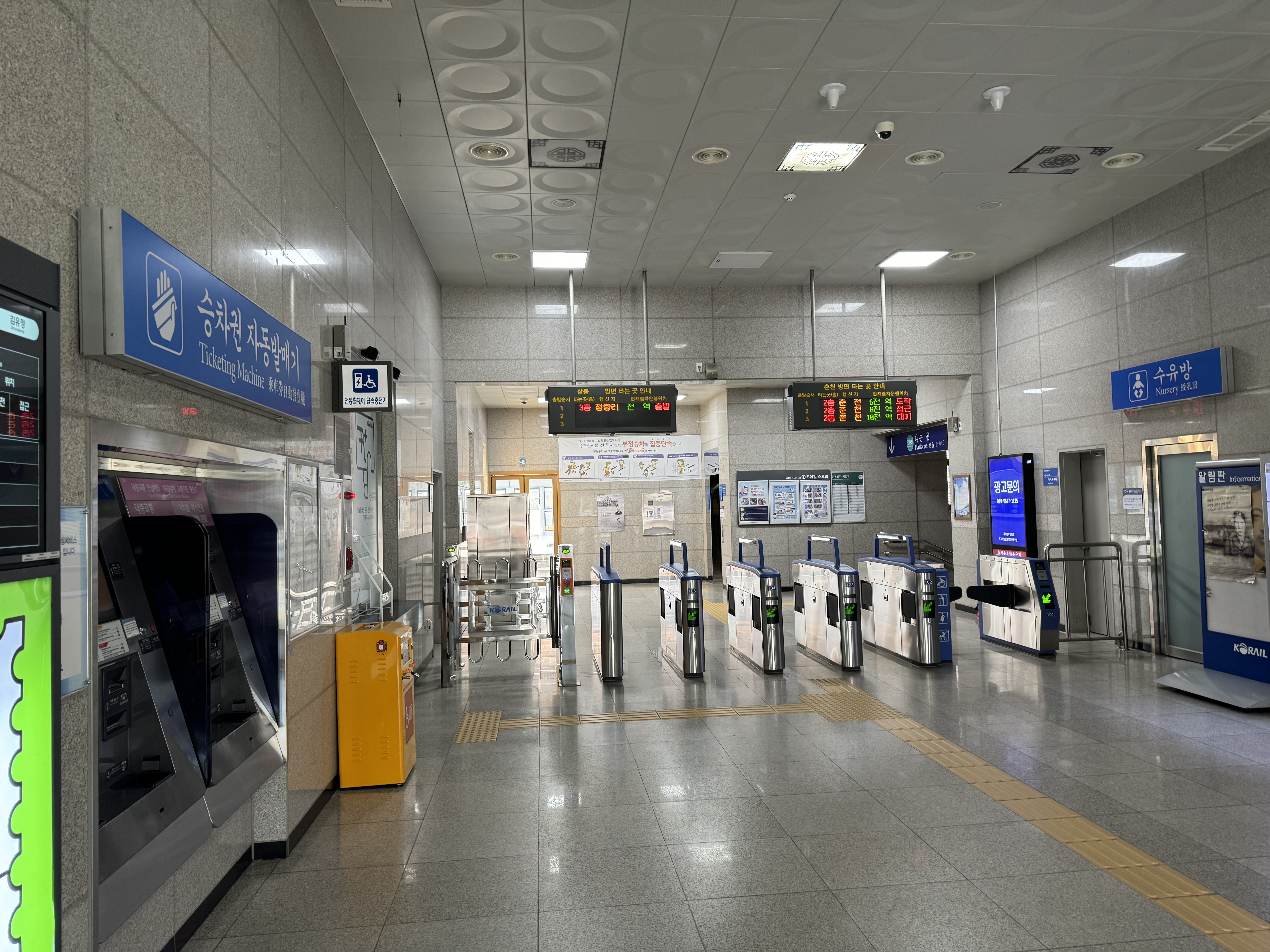
Chuncheon opened the Kim Yu-jeong Literary Village on 6 August 2002, and Sinnam Station became Kim Yu-jeong Station in 2004.
Grave
The tomb location was not confirmed. Wikipedia gives his place of death as Sangsangok-ri, Jungbu-myeon, Gwangju county. In Chuncheon the Kim Yu-jeong Literary Village opened in 2002, and Sinnam Station on the Gyeongchun Line became Kim Yu-jeong Station in 2004.