함석헌 咸錫憲
Thinker, religious figure and democracy activist, publisher of Ssial-ui Sori; pen names Sincheon and Ssial; recognized as an independence activist in 2002
| Life | 1901 ~ 1989 |
| Era | 일제강점기~대한민국 |
| Clan | 강릉 함씨 |
Life & career
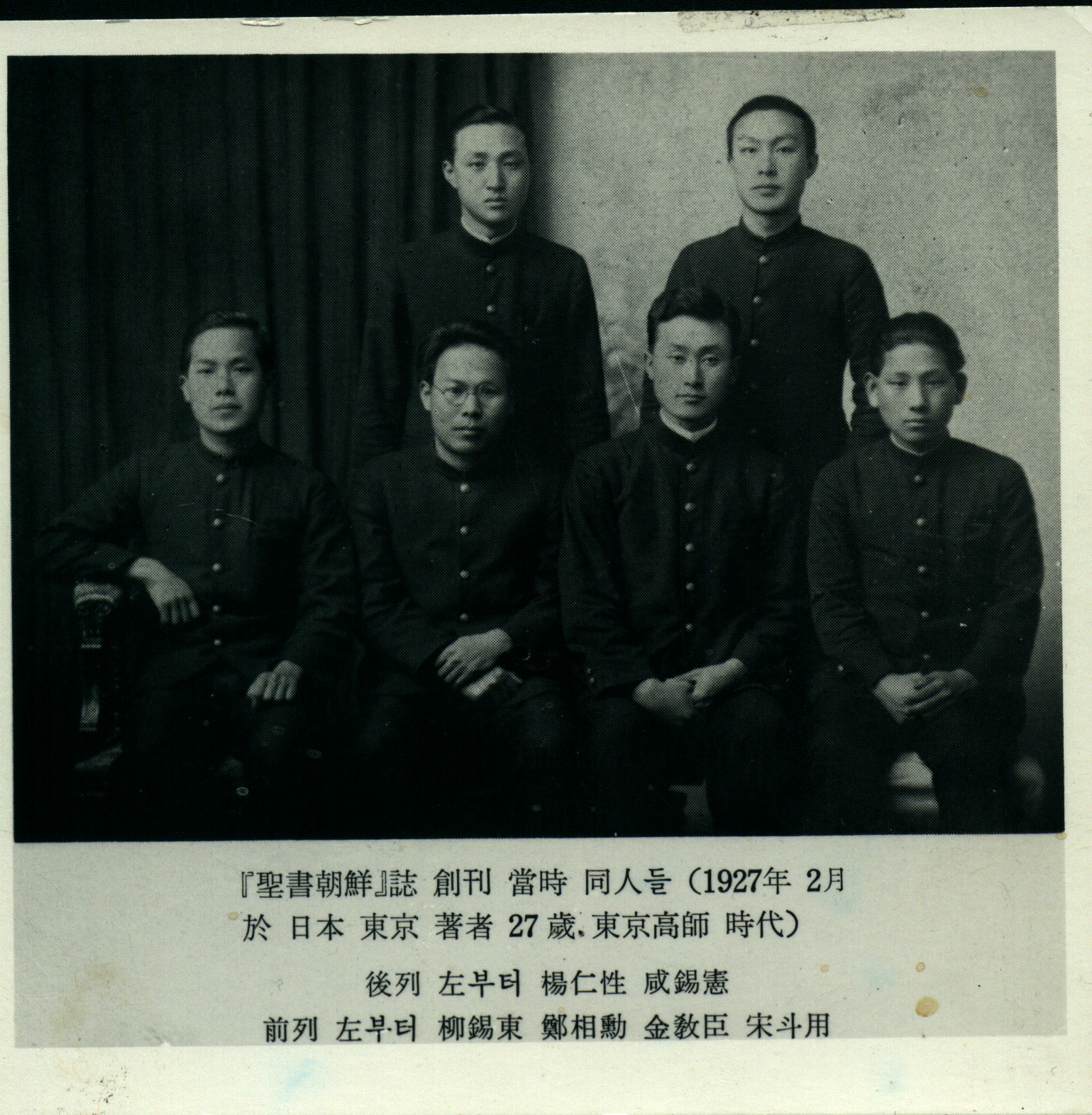
Ham Seok-heon (咸錫憲, 1901-1989) was a thinker, religious figure and democracy activist of the Gangneung clan, born on 13 March 1901 in Yongcheon, North Pyongan, to Ham Hyeong-taek and Kim Hyeong-do, with pen names Sincheon, Ssial and Babo-sae. After taking part in the March 1st Movement in 1919 he refused to submit a letter of reflection and was expelled, and in 1921 he transferred into Osan School, where Yu Yeong-mo became his teacher. He graduated in 1923, entered the Tokyo Higher Normal School in 1924, attended Uchimura Kanzo's Bible meetings and graduated in 1928.
Back in Korea he taught history and ethics at Osan until 1938 and wrote for the journal Seongseo Joseon, serializing Korean History from a Biblical Standpoint in 1934-35. He was held for about a year in the 1940 Gyeu-hoe case and imprisoned at Seodaemun in 1942 over the closure of Seongseo Joseon. After liberation he was jailed by North Korean authorities in 1947 as the alleged instigator of the Sinuiju student protest, was released and came south.
From 1956 he wrote for Jang Jun-ha's Sasanggye, and in 1961 he published criticism of the May 16 coup. He founded the monthly Ssial-ui Sori in 1970, promoting the nonviolent, democratic and peaceful idea of ssial, was indicted without detention over the 1976 March 1st Declaration for Democracy, and was recommended for the Nobel Peace Prize by American Quaker groups in 1979 and 1985. He received the first Inchon Prize in 1987. His works include Korean History Seen through Meaning (1967). He died at Seoul National University Hospital on 4 February 1989, aged 87; his tomb at Yeoncheon was moved to the patriots' section of the Daejeon National Cemetery after his recognition as an independence activist in 2002.
Seongseo Joseon and Imprisonment
Influenced during his studies in Japan by the Non-Church movement, he worked with Kim Gyo-sin and others and joined the founding of Seongseo Joseon in 1927. He was held in the 1940 Gyeu-hoe case and imprisoned at Seodaemun in the 1942 Seongseo Joseon case (a prisoner number of 1588 is recorded).
Ssial and Ssial-ui Sori
Ssial was both his pen name and the core of his thought, built on nonviolence, democracy and peace. Ssial-ui Sori was founded in 1970, shut down by the new military authorities in 1980 and revived in December 1988. He met American Quakers during a 1962 US visit and is said to have become a Quaker after meetings in 1961 and 1967.
Major Works
His works include Korean History from a Biblical Standpoint (1948), Human Revolution (1961), History and Nation (1964), Korean History Seen through Meaning (1967) and The Road to Unification (1984), and he translated Gandhi's autobiography and Kahlil Gibran's The Prophet.
Grave
He was first buried in Jeongok-eup, Yeoncheon, and after his recognition as an independence activist in 2002 his tomb was moved to the patriots' section (3-329) of the Daejeon National Cemetery.
Descendants
He married Hwang Deuk-sun in 1917 and is said to have had seven children. Their names appear on Wikipedia but are omitted here as private matters.