이효상 李孝祥
Scholar, poet and Speaker of the National Assembly (6th and 7th terms, the longest tenure at seven years and six months); pen name Ilsong
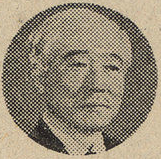
| Life | 1906 ~ 1989 |
| Era | 현대 |
| Clan | 성산 이씨 |
Life & career
Yi Hyo-sang (李孝祥, 1906-1989) was a scholar, poet and politician from Seongsan, pen name Ilsong. Born in Daegu on 14 January 1906, he was a Catholic with the baptismal name Agilo. He studied in Japan and graduated from the German literature department of Tokyo Imperial University in 1930, and made his literary debut in 1936 with the poem 'Gijeok' in Catholic Youth. His poetry collections include Sarang, Angyeong, San, Bada and Insaeng; his books include Naui gangsana, Gyoyugui geunbon munje and Ingan munje, and he translated Teilhard de Chardin in six volumes.
He served as head of the North Gyeongsang education bureau in 1945, was a professor and dean of the College of Liberal Arts at Kyungpook National University from 1952, was elected to the House of Councillors in 1960 but resigned after the 1961 coup, and then became chairman of the Yeongnam school foundation. Elected Speaker in December 1963, he held the post through the 6th and 7th assemblies until June 1971, the longest tenure of any Speaker at seven years and six months. He was elected to the 9th (1973) and 10th (1979) assemblies and served as acting chairman of the Democratic Republican Party in 1973 and standing adviser to its president in 1979. He received West Germany's Grand Cross of Merit and the Papal Grand Cross, among others.
Politically he was a central figure of the Park Chung-hee government and was criticised for inflaming regionalism with remarks on Yeongnam voters during a Park Chung-hee presidential election. His study in Japan and appointment as North Gyeongsang education bureau head in 1945 are not grounds for deciding whether he was pro-Japanese, so no such tag is applied here and only facts are given. His sons are Yi Mun-ho (former professor of philosophy at Kyungpook National University), Yi Mun-hui (Roman Catholic archbishop) and Yi Mun-jo (former professor at Yeungnam University). The Korean Wikipedia page contains a derogatory passage of unclear sourcing, which is not quoted here.
Poet and Scholar
He graduated in German literature from Tokyo Imperial University, debuted with a poem in 1936 and served as dean at Kyungpook National University.
Longest-Serving Speaker
He was Speaker of the 6th and 7th assemblies from December 1963 to June 1971, the longest tenure.
Grave
His grave was not confirmed.
Descendants
Sons Yi Mun-ho, Yi Mun-hui (archbishop) and Yi Mun-jo.