김구 金九
Independence activist and chairman of the Provisional Government of the Republic of Korea (pen name Baekbeom)
Same-name figures:
김구(金坵) — Goryeo scholar-official and middle ancestor of the Buan Kim
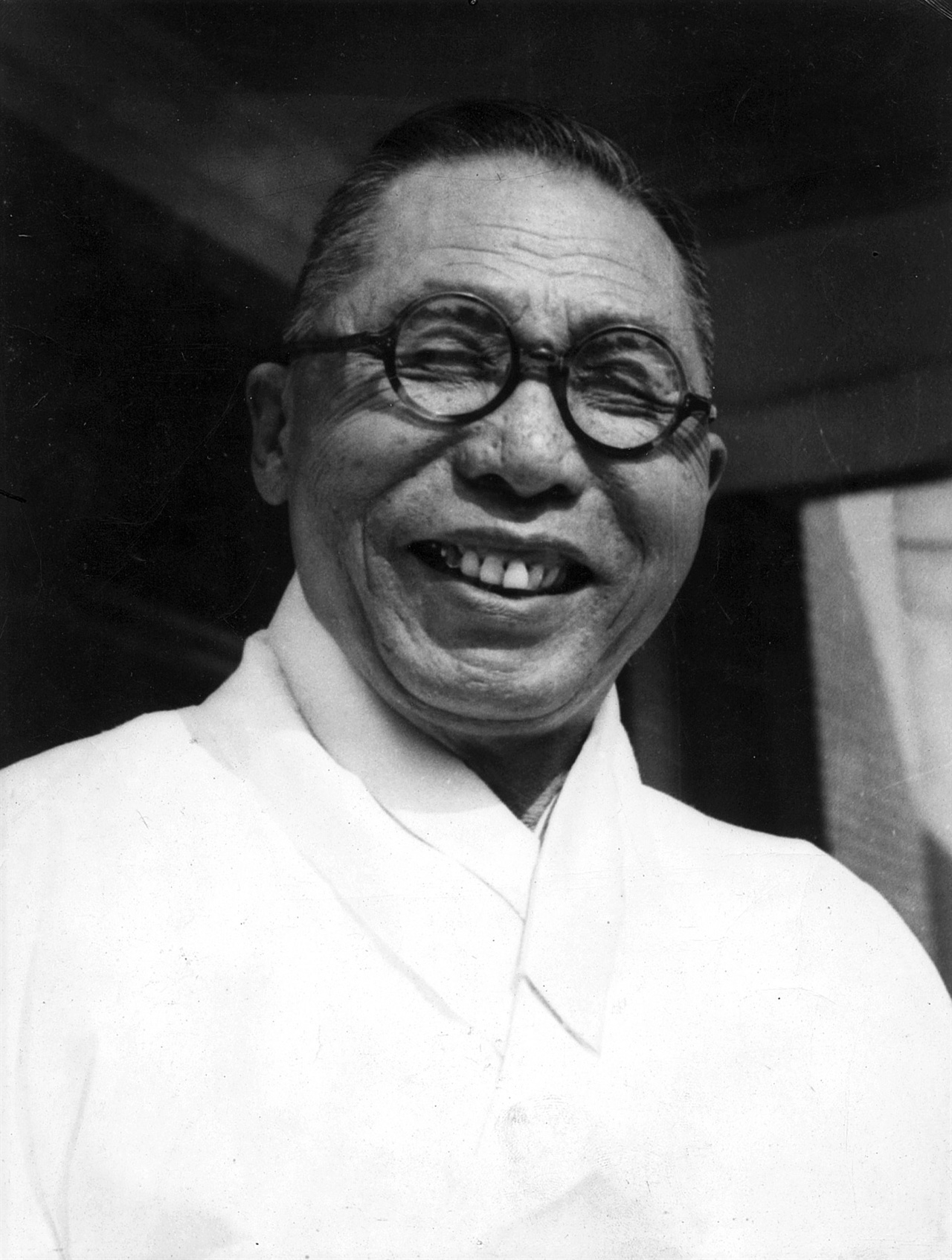
| Life | 1876 ~ 1949 |
| Era | 근현대(일제강점기) |
| Clan | 안동 김씨 |
Life & career
Kim Gu, known by the pen name Baekbeom, was an independence activist from Haeju, Hwanghae Province. From his youth he engaged in anti-Japanese resistance, joining the Donghak Peasant Revolution and later being imprisoned for the Chihapo incident, in which he killed a Japanese agent after the assassination of Empress Myeongseong. He married Choe Jun-rye in 1906, but she died of tuberculosis in Shanghai in 1924.
After the March First Movement he fled to Shanghai and joined the Provisional Government of the Republic of Korea, serving as premier and, from 1940, as its chairman. In 1931 he organized the Korean Patriotic Organization, directing the bombing missions of Yi Bong-chang and Yun Bong-gil, and in 1940 he led the founding of the Korean Liberation Army. His second son, Kim Sin, born in 1922, later became Chief of Staff of the South Korean Air Force.
After liberation he returned home and worked toward a unified government, engaging in inter-Korean negotiations, but was assassinated in Seoul in 1949 by An Du-hui. He was given a state funeral and interred at the Patriotic Martyrs' Cemetery in Hyochang-dong, Seoul, a site he himself had helped establish for repatriated independence fighters. He left behind the autobiography Baekbeom Ilji and was posthumously awarded the Order of Merit for National Foundation, Republic of Korea Medal, in 1962.
Grave
Patriotic Martyrs' Cemetery at Hyochang Park, Yongsan-gu, Seoul
Descendants
His second son Kim Shin served as chief of staff of the Republic of Korea Air Force and as Minister of Transportation.