황준량 黃俊良
Leading disciple of Yi Hwang (Toegye) who served as magistrate of Sinnyeong, Danyang and Seongju; pen name Geumgye
| Life | 1517 ~ 1563 |
| Era | 조선 중기 |
| Clan | 평해 황씨 |
Life & career
Hwang Jun-ryang (1517-1563) was a mid-Joseon official of the Pyeonghae Hwang clan, with courtesy name Jung-geo and pen name Geumgye (錦溪). He was born in Geumgye-ri, Punggi, in today's Yeongju. According to the Digital Yeongju Culture Encyclopedia, his great-great-grandfather Hwang Yeon moved the line from Yeongcheon to Punggi; his father was Hwang Chi, a junior official at Uireung, and his mother a Changwon Hwang. As he and his wife of the Yeongcheon Yi clan had no children, he adopted Hwang Ji-hwan, eldest son of his younger brother. Having become a grandson-in-law of Yi Hyeon-bo, he came to study under Yi Hwang (Toegye), and is counted as the senior figure of the Toegye school.
He passed the licentiate examination in 1537 and the civil examination in 1540, then served as instructor at Sangju (1545), Hongmungwan academician and Seonggyungwan secretary (1547) and ministry of war aide (1550). In 1551, after serving as royal inspector of Gyeongsang, he became magistrate of Sinnyeong, where he is said to have worked on famine relief, burned the people's debt records and founded Baekhak Seodang. As magistrate of Danyang from 1557 he submitted the Danyang jinpye so, setting out the causes of the district's troubles and remedies, and Danyang received a ten-year tax exemption, bringing scattered people home. He repaired the Danyang hyanggyo and enshrined U Tak, and the people raised a eulogy stele to him. As governor of Seongju from 1560 he restored Yeongbong Seowon, appointed O Geon as instructor and founded Gonggok Seodang and Nokbong Jeongsa.
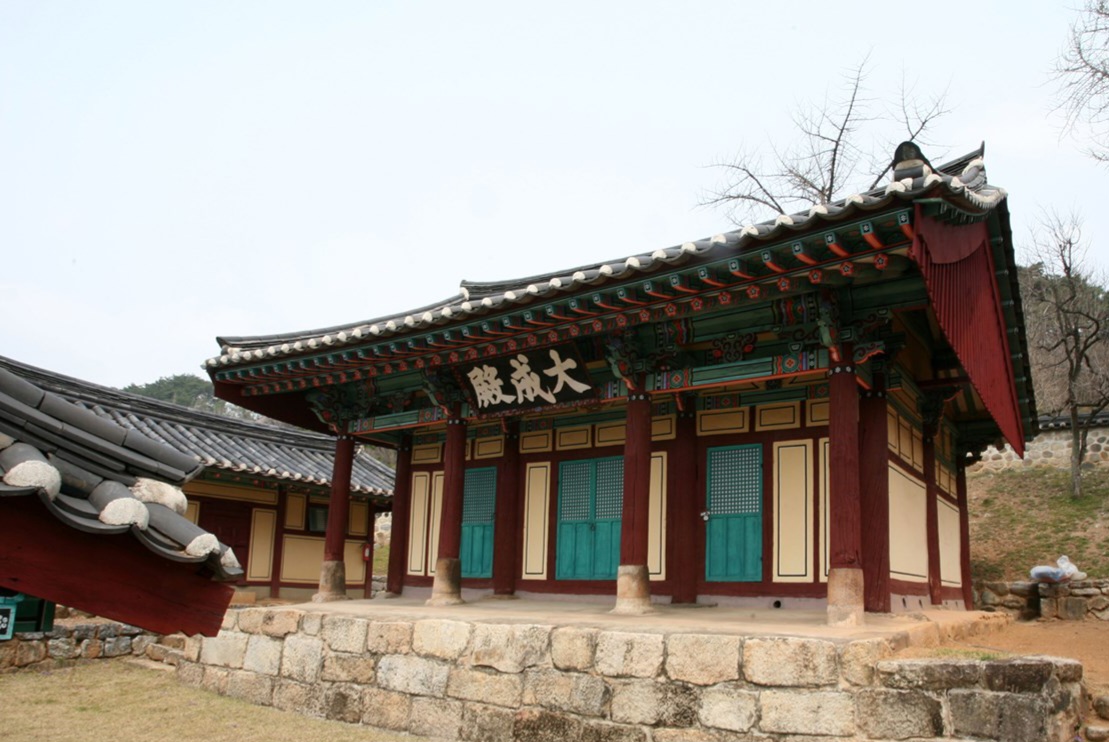
Falling ill around 1560, he resigned and died at Yecheon on his way home, in 1563 at the age of forty-seven. Toegye wrote his funeral eulogy and biographical sketch, and personally edited the Geumgye-jip, a 14-volume (5 books) collection with over 830 poems. The Geumyang Jeongsa he had left unfinished was completed in 1566, and he was enshrined at Baekhak Seowon in Sinnyeong (1678) and Ugyang Seowon (1690). In 1781 the Punggi magistrate Yi Hyeon-il and others built the pavilion Geumseonjeong in his memory. His tomb is said to be at Sanbeop-ri, Punggi.
The Danyang memorial
The Danyang jinpye so submitted by Hwang Jun-ryang after becoming magistrate of Danyang in 1557 set out why the district had declined and how to fix it, and the Digital Yeongju Culture Encyclopedia says it won Danyang a ten-year tax exemption.
Grave
Said to be beside the village hall at Sanbeop-ri, Punggi-eup, Yeongju.
Descendants
Having no children, he adopted Hwang Ji-hwan, eldest son of his younger brother Hwang Su-ryang.
Related photos