조소앙 趙素昻
Independence activist and political thinker; founder of the Three Equalities Principle
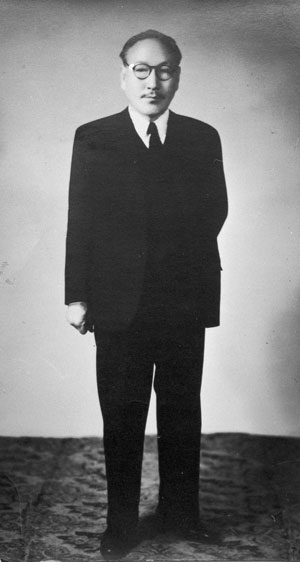
| Life | 1887 ~ 1958 |
| Era | 근현대 |
| Clan | 함안 조씨 |
Life & career
Jo So-ang (趙素昻), whose original name was Jo Yong-eun (趙鏞殷), was from Paju (Gyoha), Gyeonggi Province. After studying at Meiji University in Japan, he went into exile in China and devoted himself to the independence movement. In 1919 he drafted the Korean Declaration of Independence (the Muo Declaration of Independence).
He took part in establishing the Provisional Government of the Republic of Korea, serving as foreign minister and other posts, and led the founding of the Korea Independence Party. He formulated the "Three Equalities Principle" (三均主義), centered on equality in politics, economy, and education, providing the ideological foundation for the Provisional Government's founding charter.
After liberation he returned home and was active in politics, and in 1950 was elected to the 2nd National Assembly (Seongbuk, Seoul) with the highest vote count, but was abducted to the North during the Korean War and died in Pyongyang in 1958. His works include the Soang jip. In 1989 he was posthumously awarded the Order of Merit for National Foundation, Republic of Korea Medal.
Grave
Patriotic Martyrs' Cemetery in Sinmi-ri, Pyongyang (died in the North). In the South there is a symbolic (empty) grave in Nam-myeon, Yangju, Gyeonggi Province.
Descendants
Many of his siblings (six brothers and two sisters) devoted themselves to the independence movement, making the family renowned as a household of independence activists.