고인후 高因厚
Second son of Ko Gyeong-myeong who died with his father at Geumsan; pen name Hakbong, posthumous title Uiyeol
| Life | 1561 ~ 1592 |
| Era | 조선 중기 |
| Clan | 장흥 고씨 |
Life & career
Ko In-hu (1561-1592) was a mid-Joseon civil official of the Jangheung Ko clan, with courtesy name Seongeon, pen name Hakbong and posthumous title Uiyeol, born in Gwangju. His grandfather was Ko Maeng-yeong, his father Ko Gyeong-myeong, his mother of the Ulsan Kim, his elder brother Ko Jong-hu and his wife of the Hampyeong Yi.
He passed the licentiate examination in 1577 and the civil examination in 1589 and served as a probationary Seonggyungwan official. When the Imjin War began he was at Gwangju and joined his father's army, and is said to have come under Gwon Yul at Suwon.
In the seventh month of the same year he died fighting beside his father at Geumsan. He was posthumously made Councillor of the Ministry of Rites, Chief State Councillor in 1629 and received the title Uiyeol in 1694; in 1786 an order of Bujo Jijeon is recorded. Because his descendants settled at Changpyeong to keep his rites, the Hakbong branch arose.
The Start of the Hakbong Branch
Because his wife's family in Changpyeong had no heirs, his descendants came to live there as heirs for his rites. They are therefore also called the Changpyeong Ko, and the Hakbong head house, shrine and tomb are said to be at Yucheon village in Damyang.
The late-Joseon righteous-army leader Ko Gwang-sun is described as his ritual heir, and the Damyang shrine Poeuisa honors Ko Gwang-sun.
Memory of Father and Son
At Geumsan, where the father and son fell, the Chilbaek Uichong and Jongyongsa honor them together, and they are enshrined together at Pochungsa in Gwangju.
Grave
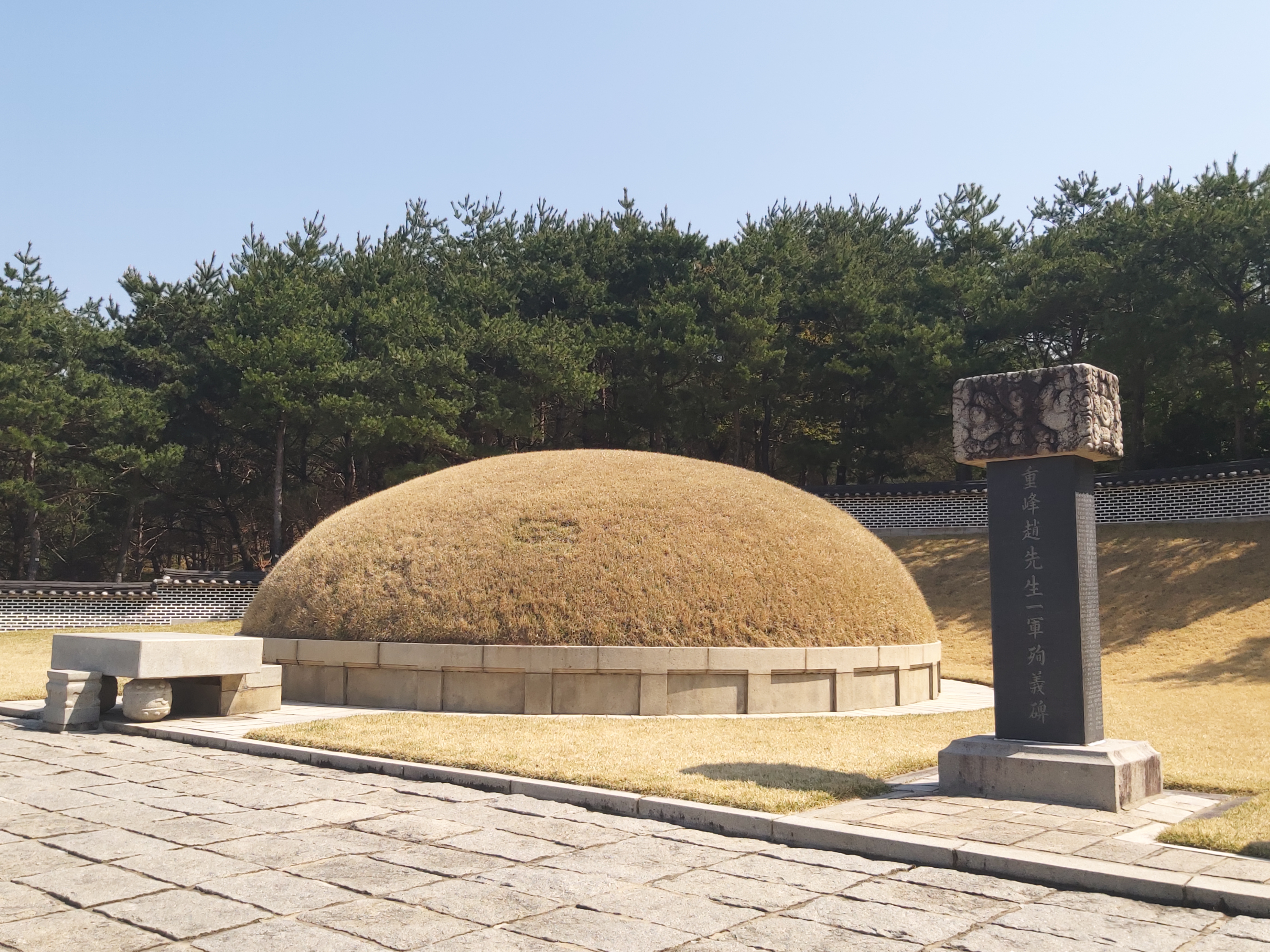
He is said to be buried on a hillside at Sugok-ri, Changpyeong, after his elder brother had monks recover and prepare the body. He is honored at Pochungsa in Gwangju and Jongyongsa at the Chilbaek Uichong, Geumsan.
Descendants
His sons Ko Bu-rim, Ko Bu-cheon, Ko Bu-jip and Ko Bu-ryang and a son by a concubine, Ko Bu-mae, are recorded. Ko Bu-cheon passed the civil examination and served as Saheonbu Jangnyeong. His descendants at Changpyeong came to be called the Changpyeong Ko.