서광범 徐光範
Enlightenment-faction statesman who took part in the Gapsin Coup; Minister of Justice; pen name Wisan; posthumous name Ikheon
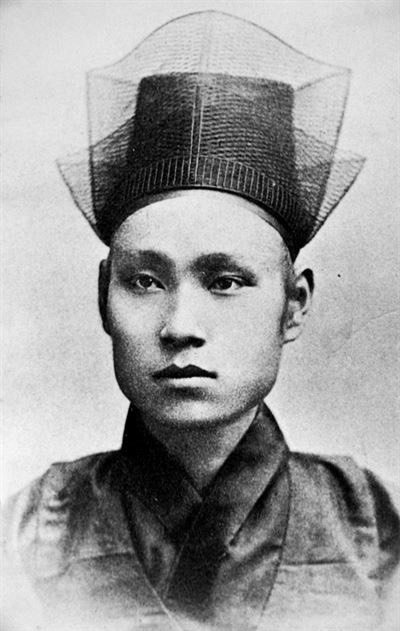
| Life | 1859 ~ 1897 |
| Era | 개항기 |
| Clan | 대구 서씨 |
Life & career
Seo Gwang-beom (1859-1897) was a late-Joseon official and Enlightenment-faction politician of the Daegu Seo clan. Courtesy name Seogu, pen name Wisan, posthumous name Ikheon, with the American name Kenneth Suh, he was born in the Pyeongyang governor's residence, son of Vice Minister of Personnel Seo Sang-ik and great-grandson of Chief State Councillor Seo Yong-bo. He is said to be a seventh-generation descendant of Seo Jong-je, father of Queen Jeongseong, and was influenced by Bak Gyu-su, O Gyeong-seok and Yu Hong-gi.
He passed the 1880 special examination and served as Gyujanggak Daegyo, accompanied Kim Ok-gyun to Japan in 1882, and toured the United States and Europe in 1883 as aide to Min Yeong-ik's mission. In December 1884 he took part in the Gapsin Coup with Bak Yeong-hyo, Hong Yeong-sik and Seo Jae-pil; it collapsed within three days and he fled via Japan to the United States in 1885. His family in Korea suffered heavily, and his father Seo Sang-ik is said to have died in prison.
In the United States he obtained citizenship in 1892 and worked as translator and interpreter at the Bureau of Education. In 1894, with Japanese help, he returned, was pardoned and restored, and served as Minister of Justice and then Minister of Education in the second Kim Hong-jip cabinet, pushing to modernize the judicial system. He was named minister to the United States in 1895 but was dismissed after the 1896 Royal Refuge at the Russian Legation, and died in the United States in 1897 as tuberculosis worsened. He was rehabilitated in 1907 and given the name Ikheon in 1910.
Enlightenment and the Gapsin Coup
Influenced by Bak Gyu-su and others, he formed the Enlightenment party with Kim Ok-gyun and Bak Yeong-hyo, took part in the 1884 coup and fled abroad.
Exile in America
He crossed to the United States in 1885, gained citizenship in 1892 and worked at the Bureau of Education; in January 1895 he is said to have renounced it and regained Korean nationality.
Gabo Reform Era
Back in late 1894 as Minister of Justice he pushed judicial modernization, including rules for a judicial training school and a revised method of execution. Assessments note that the cabinet then operated under Japanese influence.
Grave
His tomb was in Gwangju, Gyeonggi, and is said to have been moved to Yangju in October 1985, where he lies with his later wife. The monument was erected in May 1900, with an inscription said to be written by Horace Allen.
Descendants
Descendants were not confirmed. He is introduced as the 13th-degree paternal uncle of Seo Jae-pil and Seo Jae-chang.