우장춘 禹長春
Agronomist known for the theory of the synthesis of species; returned to Korea to lead plant breeding and improvement of vegetable and horticultural seeds
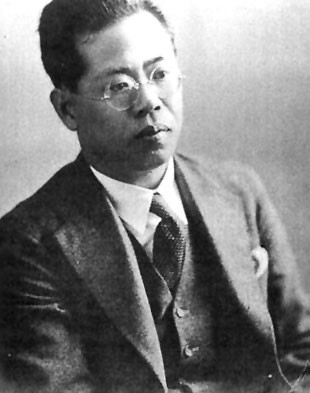
| Life | 1898 ~ 1959 |
| Era | 근현대 |
| Clan | 단양 우씨 |
Life & career
U Jang-chun (1898-1959) was a Korean agricultural biologist, botanist and horticultural breeder born in Tokyo, of the Danyang clan. His father was the Korean U Beom-seon and his mother the Japanese Sakai Naka. His father, known as a participant in the 1895 Eulmi Incident as a battalion commander of the Hullyeondae, fled to Japan and was assassinated by Go Yeong-geun in 1903, and this reportedly weighed on U Jang-chun all his life. He spent a short time in an orphanage, was placed at a temple in Tokyo, Kaiun-ji, and then grew up with his mother.
He entered the agriculture course at Tokyo Imperial University in 1916 and, after graduating, worked at the Japanese Ministry of Agriculture's experiment station. In May 1936 he earned a doctorate in agriculture from the university with the thesis "Synthesis of Species," which showed that new species can arise from crosses between different species and appears in modern genetics textbooks. He stayed in Japan for a while after liberation in 1945, but at the request of the Syngman Rhee government, which established the Korean Agricultural Science Institute in 1949, he returned to the Republic of Korea on 8 March 1950. His family remained in Japan, and because of poor Korea-Japan relations at the time he was for a while barred from leaving.
After returning he succeeded in breeding and synthesizing vegetable seeds, developed heading cabbage suited to Korea from Japanese native cabbage and head cabbage, improved Gangwon potatoes vulnerable to viral infection, and recommended citrus and rapeseed growing on Jeju. He was also called the "rubber-shoe doctor" because he always wore rubber shoes at the institute. It is also worth remembering that the seedless watermelon was first made by Kihara Hitoshi in 1947 and that U Jang-chun was the first to demonstrate it in Korea. He received the Busan Culture Prize in science in 1957 and the Order of Cultural Merit in 1959, and died on 10 August 1959 at 62 of a gastroduodenal ulcer. His grave is on Yeogisan inside the Rural Development Administration in Suwon, and in 2003 he was inducted into the Hall of Fame of Scientists and Engineers.
Synthesis of Species
In 1936 he received his doctorate from Tokyo Imperial University for "Synthesis of Species," which shows that crosses between different species can produce a new species and is introduced even in modern genetics textbooks.
Return and Seed Improvement
After returning in 1950 he led the Korean Agricultural Science Institute and the Horticultural Experiment Station, contributing to the food and horticultural base through heading cabbage, improved Gangwon potatoes, and citrus and rapeseed on Jeju.
Commemoration
He received the Order of Cultural Merit in 1959, was inducted into the Hall of Fame in 2003, and a memorial museum stands in Busan. If U Ha-yeong of the same clan set out agricultural thought in late Joseon, U Jang-chun opened the way for modern agricultural science.
Grave
His grave is on Yeogisan inside the Rural Development Administration in Suwon, and he was inducted into the Hall of Fame of Scientists and Engineers in 2003. A U Jang-chun memorial museum stands in Busan.
Descendants
His father was U Beom-seon and his mother Sakai Naka; his wife was Watanabe Koharu (Korean name U So-chun), and a younger brother, U Hong-chun, is recorded.