원세훈 元世勳
Independence activist in the Korean National Assembly and Provisional Government, post-liberation politician in the Hanmindang and National Autonomy League, elected to the 2nd National Assembly; pen name Chungok
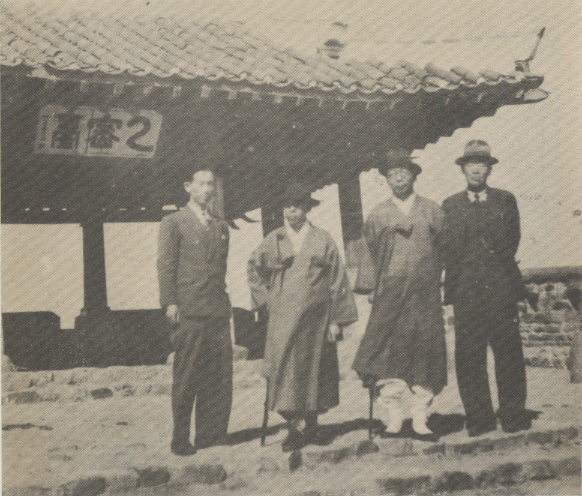
| Life | 1887 ~ 1959 |
| Era | 일제강점기~대한민국 초기 |
| Clan | 원주 원씨 |
Life & career
Won Se-hun (1887-1959) was an independence activist of the colonial period and later unification advocate and politician from the Wonju Won clan, with the pen name Chungok. He was born on 10 July 1887 in Jeongpyeong, South Hamgyeong, and graduated from Daedong Law College in Pyongyang. He should not be confused with the namesake born in 1951 who served as head of the National Intelligence Service.
In the late 1910s he is studied as having organized the Central General Assembly of the Jeon-ro Hanjok Association in the Maritime Province and expanded it into the Korean National Assembly in early 1919. In 1919 he was chosen as its representative, came to Shanghai and negotiated its merger with the Provisional Government of the Republic of Korea, taking part in the formation of the unified government in September that year. As the Provisional Government faced division, he sought reform through the 1920-1924 National Representatives Conference and, when a new government proved hard to form, put his efforts into the single national party movement. In 1925 he was expelled from the Soviet Union together with other Korean nationalists under a secret Soviet-Japanese understanding. His activities are recorded in the Ministry of Patriots and Veterans Affairs' Independence Merit Records.
After liberation in 1945 he took part in founding the Korea Democratic Party and in anti-trusteeship bodies, and expressed support for Syngman Rhee. As the Hanmindang's representative he joined the left-right coalition efforts but moved to the National Autonomy League after internal opposition, and in 1948 joined the North-South negotiations in Pyongyang alongside Kim Gu and Kim Gyu-sik. When these failed he accepted them and the founding of the Republic of Korea government. An anecdote says that at the end of 1945, when the entrepreneur Kim Yeon-su brought political funds and asked him to manage Gyeongseong Spinning, he refused the money because it was tainted by Japanese militarism. Elected to the 2nd National Assembly in May 1950, he was taken north during the Korean War, served on the Council for Promoting Peaceful Unification in North Korea, and is said to have died of illness in Pyongyang on 25 December 1959.
Origins and the Maritime Province
A native of Jeongpyeong, South Hamgyeong, and a graduate of Daedong Law College in Pyongyang, he is studied as having taken part in organizing the Jeon-ro Hanjok Association and the Korean National Assembly in the Maritime Province.
Provisional Government and the National Representatives Conference
In 1919 he negotiated in Shanghai as the Korean National Assembly's representative, and from 1920 to 1924 sought reform through the National Representatives Conference.
Post-Liberation Politics
He joined the founding of the Korea Democratic Party, engaged in left-right coalition efforts, moved to the National Autonomy League and took part in the 1948 North-South negotiations.
Elected Assemblyman and Abduction
Elected to the 2nd National Assembly in May 1950, he was taken north during the Korean War and is said to have died in Pyongyang in 1959.
Grave
He is said to have died of illness in Pyongyang after being taken north; his grave was not confirmed.