전주 최씨 family tree
Build your family tree online전주 최씨(全州 崔氏) — Said to be a distinguished Choi house that produced the most civil-examination graduates during the Joseon period.
About the 전주 최씨 clan
Said to be a distinguished Choi house that produced the most civil-examination graduates during the Joseon period. In the 2015 Census the 전주 최씨 clan numbered about 458,191 people, one of Korea's major surnames and clans. Even among people surnamed 최, a different clan seat (bon-gwan, 전주) means a different lineage. New to these terms? See the bon-gwan, pa & hangnyeol guide.
Roots and History of the Jeonju Choe Clan
Founder and Origin of the Ancestral Seat
The Jeonju Choe clan (全州 崔氏) takes Jeonju, the old Wansan, in North Jeolla as its ancestral seat. Its defining feature is that it is not one family descended from a single founder: four separate lines, each founded by a man who rose from Jeonju in the Goryeo period, share the same seat. They are the Munyeolgong line of Choe Sun-jak, enfeoffed as Lord of Wanju for fighting the Jurchen under King Jeongjong; the Munchunggong line of Choe Gun-ok, said to have been a chief minister and Prince of Wansan under King Seonjong; the Sadogong line of Choe Gyun, who died suppressing the Jo Wi-chong rebellion under King Myeongjong; and the Munseonggong line of Choe A, said to have been Munha Sijung under King Chungsuk.
Because the four lines have different origins and have compiled separate genealogies, the first step in finding a Jeonju Choe jokbo is to confirm which line your family belongs to. Generation counts and generation names differ from line to line.
The Clan Through History
In Goryeo the Sadogong line rose first. Founder Choe Gyun, a civil official who served as vice minister of rites, died in the 1174 rebellion, and his son Choe Bo-sun rose to chief historian and grand preceptor, lifting the family high. In late Goryeo Choe Yang (pen name Manyuk), a nephew of Jeong Mong-ju, served as Grand Academician but gave up office when Joseon was founded and lived in seclusion in Jeonju, revered as one of the 72 worthies of Dumundong.
In Joseon the Munyeolgong line flourished most. The incorruptible Pyeongdo-gong Choe Yu-gyeong became an Origin Merit Subject of the dynasty, and his son Choe Sa-gang became a royal in-law as his daughters and a granddaughter married Taejong's son Prince Hamnyeong and Sejong's sons Grand Princes Imyeong and Geumseong. In the Munseonggong line, the scholar Choe Deok-ji (pen name Yeonchon) served as Namwon magistrate and royal academician before retiring to study in Yeongam.
From mid-Joseon, Choe Myeong-gil of the Munyeolgong line helped bring about the Injo Restoration and argued for peace negotiations during the Manchu invasion of 1636, becoming Chief State Councillor. His grandson Choe Seok-jeong served as Chief State Councillor many times and wrote the mathematical treatise Gusuryak, and his younger brother Choe Seok-hang became Left State Councillor, so that a grandfather and both grandsons all served as state councillors. The clan produced 109 civil examination graduates in Joseon, the most of any Choe seat.
Notable Figures
- Choe Gyun (崔均) — Founder of the Sadogong line; a civil official who died in 1174 while serving against the Jo Wi-chong rebellion.
- Choe Bo-sun (崔甫淳, 1162–1229) — Son of Choe Gyun; chief historian, grand preceptor and personnel minister of Goryeo.
- Choe Yu-gyeong (崔有慶, 1343–1413) — Incorruptible official who served as Inspector-General and state councillor and became an Origin Merit Subject; posthumously titled Pyeongdo.
- Choe Yang (崔瀁, 1351–1424) — Late-Goryeo official taught by Jeong Mong-ju who declined King Taejo's summons and lived in seclusion in Jeonju; posthumously titled Chungik.
- Choe Chil-seok (崔七夕, ?–1394) — Figure of the Munchunggong line who served as naval commander of Gyeonggi.
- Choe Deok-ji (崔德之, 1384–1455) — Munseonggong-line scholar-official who served as Namwon magistrate and royal academician and retired to Yeongbo village in Yeongam; posthumously titled Munsuk.
- Choe Sa-gang (崔士康, 1385–1443) — Son of Choe Yu-gyeong; Minister of War and Right Chancellor, linked to the royal house by several marriages under Sejong.
- Choe Myeong-gil (崔鳴吉, 1586–1647) — Merit subject of the Injo Restoration and leading advocate of peace in 1636; Chief State Councillor and Prince of Wanseong, posthumously titled Munchung.
- Choe Seok-jeong (崔錫鼎, 1646–1715) — Grandson of Choe Myeong-gil; Chief State Councillor several times under Sukjong and a mathematician who wrote Gusuryak; enshrined in King Sukjong's royal shrine.
- Choe Seok-hang (崔錫恒, 1654–1724) — Younger brother of Choe Seok-jeong; Governor of Gyeongsang and Left State Councillor.
- Choi Min-sik (崔岷植, 1962–) — Film and stage actor.
Clan Villages and Heritage Sites
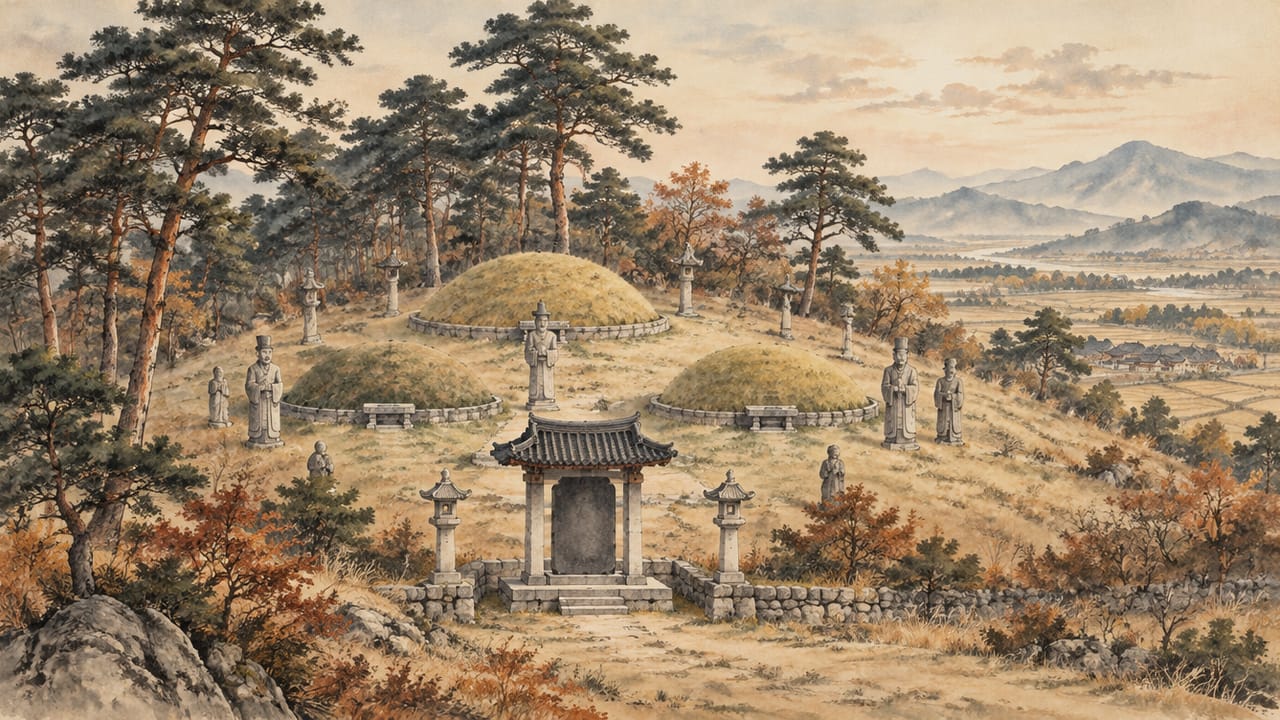
Tomb and Spirit-Way Stele of Choe Myeong-gil — In Daeyul-ri, Buki-myeon, Cheongwon-gu, Cheongju, designated a North Chungcheong Provincial Monument in 1984 and maintained by the Jeonju Choe clan. Three mounds form a triangle, and the gravestone was inscribed by Nam Gu-man. The spirit-way stele at the entrance was separately designated a provincial tangible heritage in 1980. His grandson Choe Seok-jeong was also buried at Daeyul-ri, making it a principal burial ground of this branch. A seated full-length portrait of Choe Seok-jeong, probably painted in the early 18th century, survives together with its wooden storage case and oil-paper draft.
Memorial Stele of Choe Yang — In Baegun-myeon, Jinan County, a stele marking where Choe Yang lived in seclusion, with front lettering by Gi Jeong-jin, designated a North Jeolla Provincial Monument in 1992. Choe Yang was also enshrined at Seosansa in Jeonju.
Sites of Choe Deok-ji — He was enshrined at Seosansa in Jeonju, Juam Seowon in Namwon and Nokdong Seowon in Yeongam, and Yeongam residents honored him at the Jonyangsa shrine. His portrait and its oil-paper draft survive together, a valuable source for early-Joseon portraiture. Choe Yu-gyeong was enshrined at Songcheon Seowon in Cheongju.
Known clan villages include Sinhu-ri in Bongdong (Wanju), Wanggung and Samgi in Iksan, Geumgu in Gimje and other parts of North Jeolla such as Gochang, Buan, Namwon and Sunchang; Hyeongyeong in Muan and Deokjin in Yeongam in South Jeolla; Hwaseong, Cheolsan-dong in Gwangmyeong and Miyang in Anseong in Gyeonggi; and Eumseong and Jincheon in North Chungcheong.
Branch lines and genealogical succession can differ by lineage group and jokbo, so please check against your own family genealogy.
Main branches (派)
Munyeol-gong-pa, Munseong-gong-pa, Sado-gong-pa, Munchung-gong-pa, Pyeongdogong-pa
Munyeol-gong-pa (文烈公派)
The Munyeol-gong line takes as its founder Choe Sun-jak (崔純爵), who won merit fighting the Jurchen under King Jeongjong of Goryeo, rose to honorary general of the Sinhowi guard, and was ennobled as Founding Earl of Wanju (完州開國伯). The four Jeonju Choe lines are recorded as having different origins and ancestors.
The six sons of Choe Yu-gyeong (崔有慶), an early Joseon official honored as an incorruptible official, founded sub-branches such as the Panyun-gong, Yangdo-gong and Gyeongjeol-gong branches. All of the clan's state councillors, including chief state councillors Choe Myeong-gil and Choe Seok-jeong and right state councillor Choe Seok-hang, as well as its chief scholars and incorruptible officials, came from this line.
Munseong-gong-pa (文成公派)
The Munseong-gong line takes as its founder Choe A (崔阿), said to have served as chief chancellor (munha sijung) under King Chungsuk of Goryeo. His father, senior general Choe Ip-pyeong (崔立枰), is believed to descend from Choe Sun-jak of the Munyeol-gong line, but because the intervening generations cannot be traced, it is kept as a separate line.
Choe A's four sons, Choe Yong-saeng, Choe Yong-gak, Choe Yong-gap and Choe Yong-bong, founded the Anryeomsa-gong, Daehogun, Pansa-gong and Jungnangjang-gong sub-branches. Choe San-hwi (崔山輝), a yeongsa merit subject, came from this line.
Sado-gong-pa (司徒公派)
The Sado-gong line takes as its founder Choe Gyun (崔均), a civil official of King Myeongjong's reign in Goryeo. He passed the civil service examination under King Injong and served as vice-minister of rites, among other posts; during Jo Wi-chong's rebellion in 1174 he went out as deputy military commander and was captured and killed.
Skilled in cursive and clerical script, he was known with Choe Cheok-gyeong and Choe Song-nyeon as the 'Three Choes of Wansan' (完山三崔). Because his sons Choe Bo-sun (崔甫淳) and Choe Bo-yeon rose to high office, he was posthumously promoted to left vice-director of the Department of State Affairs. It is known as the Jeonju Choe line with the most descendants.
Munchung-gong-pa (文忠公派)
The Munchung-gong line takes as its founder Choe Gun-ok (崔群玉), who is said to have served as munha sirang pyeongjangsa under King Seonjong of Goryeo and been ennobled as Prince of Wansan (完山府院君). Some regard him as a descendant of Choe Jun-ong (崔俊邕), founder of the Dongju Choe clan.
The line later divided into many sub-branches, including the Wijeong-gong, Jinsa-gong, Sanghogun, Gunsu-gong, Dosa-gong and Hyeongam-gong branches. Choe Eung-il, a jinmu merit subject, came from this line.
Pyeongdogong-pa (平度公派)
The Pyeongdogong line is a sub-branch of the Munyeolgong line descending from Jukjeong Choe Yu-gyeong (崔有慶, 1343–1413), an incorruptible official of early Joseon. As a late-Goryeo censor he impeached a eunuch who abused royal favor, and although he had reported the 1388 Wihwado withdrawal to King U, King Taejo praised his loyalty and named him an Origin Merit Subject. He served as Governor of Gyeongsang, Inspector-General and state councillor before retiring as Hanseong magistrate, was listed as an incorruptible official under Taejong and was enshrined at Songcheon Seowon in Cheongju; his posthumous title is Pyeongdo.
His son Choe Sa-gang rose to Right Chancellor and married into the royal house repeatedly under Sejong, and several sub-lines such as the Panyungong line branched from Choe Yu-gyeong's sons. The line is regarded as a foundation of the clan's rise to prominence in early Joseon.
Branch divisions vary by lineage and jokbo; confirm your own branch in your family's records.
Notable figures
최균(founder of the Sadogong line; Goryeo official), 최보순(Goryeo grand preceptor), 최유경(incorruptible Joseon official; Pyeongdo-gong), 최양(loyalist of late Goryeo; one of the Dumundong worthies), 최칠석(early-Joseon naval commander), 최덕지(early-Joseon scholar; Munsuk-gong), 최사강(Joseon Right Chancellor), 최명길(Joseon Chief State Councillor), 최석정(Joseon Chief State Councillor), 최석항(Joseon Left State Councillor), 최민식(actor)
Tap a name for the full profile (life, career, grave, descendants).
The Jeonju Choi Clan and Its Four Branch-Lines
The Jeonju Choi clan (全州 崔氏), with its ancestral seat in Jeonju, North Jeolla Province, is the second most populous surname among the Choi. It divides into four branch-lines with different founders: the Munyeolgong line (文烈公系) of Choi Sun-jak (崔純爵), the Munchunggong line (文忠公系) of Choi Gun-ok (崔羣玉), the Sadogong line (司徒公系) of Choi Gyun (崔均), and the Munseonggong line (文成公系) of Choi A (崔阿). As the four lines differ in origin and ancestry, the Jeonju Choi clan is counted among the houses with the most complex genealogy even within a single surname and seat.
The Most Flourishing Munyeolgong Line
Of the four lines, the most flourishing is the Munyeolgong line, descended from the founder Choi Sun-jak. Choi Sun-jak is said to have passed the civil examination in the reign of King Jeongjong of Goryeo, served as Byeongbu Sangseo in the reign of King Sukjong, and been enfeoffed as Wanju-baek (完州伯). Among his descendants was Choi Yu-gyeong, a founding secondary merit subject of Joseon and an incorrupt official (cheongbaengni); from his son Choi Sa-gang onward the family held high court offices and repeatedly married into the royal family, growing into a distinguished house. Munchunggong Choi Myeong-gil, who argued for peace during the Byeongja War; Choi Seok-jeong, who served nine times as Chief State Councillor; and Left State Councillor Choi Seok-hang all belong to this line.
A Distinguished House of Joseon
The Jeonju Choi clan produced 109 civil-examination graduates during the Joseon period, the most among Choi ancestral seats, and produced 3 State Councillors (Choi Myeong-gil, Choi Seok-jeong, Choi Seok-hang), 2 Daejehak, 3 incorrupt officials, 5 Hanseong Panyun, and 1 merit subject enshrined in the Royal Ancestral Shrine (Choi Seok-jeong). From the Munchunggong line came Choi Chil-seok, who subdued Tsushima, and Choi Yang, who kept his loyalty to Goryeo; from the Sadogong line, the founder Choi Gyun, who died putting down Jo Wi-chong's rebellion, are among the known figures.
The detailed branch and lineage divisions vary by clan and genealogy, so confirm your own family's history in the genealogy you hold.
How to build your 전주 최씨 tree
- Start with yourself — sign in to get your own tree. Enter your name, birth year and clan seat (전주).
- Add older generations — add parents and grandparents. For accuracy see tracing ancestors with jejeok records (usually to about 5 generations).
- Link siblings & children — sort by generational name (hangnyeol) to see each generation at a glance.
- Export & share — save the finished tree as a PDF and invite family to manage it together.
Related reading
전주 최씨 clan association
The 전주 최씨 clan association can be found in the Korean E-Jokbo Library clan-association directory.
✍ Request additions / corrections to the 전주 최씨 family tree infoStart your family tree free →