연일 정씨 family tree
Build your family tree online연일 정씨(延日 鄭氏) — Said to be a distinguished house that produced Poeun Jeong Mong-ju and Songgang Jeong Cheol.
About the 연일 정씨 clan
Said to be a distinguished house that produced Poeun Jeong Mong-ju and Songgang Jeong Cheol. In the 2015 Census the 연일 정씨 clan numbered about 284,290 people, one of Korea's major surnames and clans. Even among people surnamed 정, a different clan seat (bon-gwan, 연일) means a different lineage. New to these terms? See the bon-gwan, pa & hangnyeol guide.
Roots and History of the Yeonil Jeong Clan
Founder and Origin of the Clan Seat
The Yeonil Jeong clan (延日 鄭氏) is a single lineage also known as the Yeongil Jeong (迎日 鄭氏) and Ocheon Jeong (烏川 鄭氏) clans. According to the Samguk Yusa, the original ancestor of the Jeong surname was Ji Baek-ho (智伯虎), chief of Jinji village in Chwisan, one of the six villages of Saro; when the six villages became six districts in 32 CE (9th year of King Yuri), his village became Bonpi district and received the surname Jeong. The blood ties between today's various Jeong clans and Ji Baek-ho, however, cannot be verified.
Clan tradition names Jeong Jong-eun (鄭宗殷), a Silla remonstrance official, as founder, and his descendant Jeong Ui-gyeong (鄭宜卿), a hojang (local chief) of Yeongil County who was ennobled as Earl of Yeongil, as the ancestor who gave the clan its seat. Because the intervening generations were later lost, the clan today continues in three branches founded by three Goryeo figures, Jeong Seup-myeong, Jeong Geuk-yu and Jeong Ja-pi: the Jijusa-gong, Gammu-gong and Yangsuk-gong branches, whose exact kinship to one another cannot be traced.
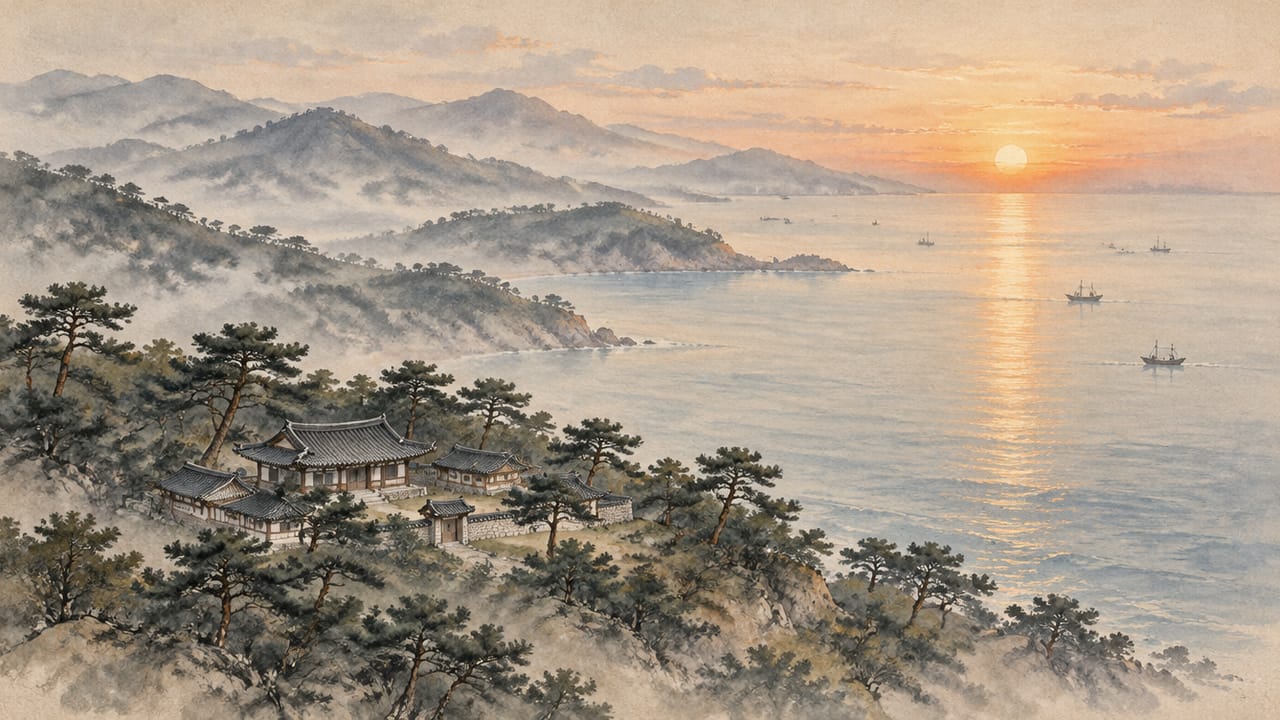
The clan seat, Yeongil, is today's Ocheon-eup and Yeonil-eup in Nam-gu, Pohang, North Gyeongsang Province. Called Geunojihyeon in Silla, it became Imjeong County in 757 and Yeongil County in 940 (23rd year of Goryeo's King Taejo); true to its name, "welcoming the sun," it is famous for sunrises over the East Sea. The 2015 census counted the Yeonil (284,290), Yeongil (65,991) and Ocheon (43,341) spellings separately, for a combined total of about 390,000.
The Clan Through the Ages
Jeong Seup-myeong, founder of the Jijusa-gong branch, was a civil official who served as Jijusa of the Royal Secretariat under Goryeo's King Injong. His descendant Jeong Mong-ju (pen name Poeun) placed first in the civil examination under King Gongmin, rose to Acting Chancellor, and died at Seonjuk Bridge remaining loyal to Goryeo to the end, becoming a symbol of fidelity. His descendants form the Poeun-gong branch; his grandson Jeong Bo (鄭保) was punished in connection with the Six Martyred Ministers affair, and later descendants include Right State Councillor Jeong Yu-seong under King Hyeonjong and Hagok Jeong Je-du, who systematized Korean Yangming learning. The Jijusa-gong branch also divided into the Saengwon-gong, Mungye-gong, Munson-gong, Sajeong-gong, Jeongnang-gong, Manho-gong and Dosa-gong lines, which took root around Yeongcheon, Gyeongju, Gyeongsan and Pohang.
The Gammu-gong branch produced Jeongsuk-gong Jeong Yeon (鄭淵), a grandson of late-Goryeo official Jeong Sa-do who served as Minister of Punishments and became father-in-law of Grand Prince Anpyeong, and Jeong Hyo-jeon, who married King Taejong's daughter Princess Sukjeong. Above all, the master of gasa poetry Jeong Cheol (pen name Songgang) came from this branch, and his son Jeong Hong-myeong served as Daejehak. The Yangsuk-gong branch includes the Deokseong-gun line of Jeong Deok-seong, Minister of War under King Sejong, and the Hyoseong-gun line of Jeong Hyo-seong.
In late Joseon the clan's standing continued with figures such as Right State Councillor Jeong U-ryang under King Yeongjo and Jeong Chi-dal, who married Yeongjo's daughter Princess Hwawan. In modern times many figures in law, politics and scholarship have come from the clan, including Jeong Ji-yong, poet of "Hyangsu" (Nostalgia).
Notable Figures
- Jeong Seup-myeong (鄭襲明, 1094-1150) — Goryeo official under Kings Injong and Uijong who served as Jijusa of the Royal Secretariat; founder of the Jijusa-gong branch.
- Jeong Mong-ju (鄭夢周, 1337-1392) — Pen name Poeun. Late-Goryeo Neo-Confucian scholar and diplomat who remained loyal to Goryeo to the end. View profile
- Jeong Yeon (鄭淵, 1389-1444) — Pen name Songgok, posthumous title Jeongsuk. Early-Joseon official who served as Vice Minister of War and Minister of Punishments; father-in-law of Grand Prince Anpyeong.
- Jeong Bo (鄭保) — Grandson of Jeong Mong-ju who was punished for his connection to the Six Martyred Ministers' attempt to restore King Danjong.
- Jeong Hyo-jeon (鄭孝全) — Royal son-in-law married to King Taejong's daughter Princess Sukjeong, regarded as founder of the Buma-gong line.
- Jeong Cheol (鄭澈, 1536-1593) — Pen name Songgang. Master of gasa poetry, author of "Gwandong Byeolgok" and "Samiingok," who became Left State Councillor. View profile
- Jeong Hong-myeong (鄭弘溟, 1592-1650) — Son of Jeong Cheol who served as Daejehak.
- Jeong Yu-seong (鄭維城, 1596-1664) — Descendant of Jeong Mong-ju who became Right State Councillor under King Hyeonjong.
- Jeong Je-du (鄭齊斗, 1649-1736) — Pen name Hagok. Grandson of Jeong Yu-seong who systematized Korean Yangming learning with its emphasis on the unity of knowledge and action.
- Jeong U-ryang (鄭羽良) — Right State Councillor under King Yeongjo.
- Jeong Chi-dal (鄭致達) — Royal son-in-law married to King Yeongjo's daughter Princess Hwawan.
- Jeong Ji-yong (鄭芝溶, 1902-1950) — Modern lyric poet best known for "Hyangsu" (Nostalgia). View profile
Clan Villages and Heritage Sites
In Ocheon-eup, Pohang, the ancestral seat, stands Ocheon Seowon (烏川書院), founded by local Confucian scholars in 1588 (21st year of King Seonjo) to honor Jeong Seup-myeong and Jeong Mong-ju. It received the royal charter name "Ocheon" in 1613, added Jeong Sa-do and Jeong Cheol to its enshrinement in 1740, was dismantled under the 1868 academy-abolition order and was restored in 1975.
Jeong Mong-ju's tomb is in Neungwon-ri, Mohyeon-eup, Cheoin-gu, Yongin, Gyeonggi. Legend says that while his body was being carried home to Yeongcheon, his funeral banner blew away and he was buried where it fell. Nearby Poeun Shrine, built in 1679 (5th year of King Sukjong), is the family shrine of the clan's head house and holds Jeong Mong-ju's spirit tablet and portraits. Jeong Cheol's tomb and his shrine Songgangsa are in Munbaek-myeon, Jincheon, North Chungcheong, and Songgangjeong pavilion, where he stayed and wrote, is in Damyang, South Jeolla.
Clan villages include Neungwon-ri and Wangsan-ri in Mohyeon-eup, Yongin, home of the Poeun-gong branch, as well as Daejeon-dong in Yeongcheon, Bongsan-myeon in Gimcheon, Angye-myeon in Uiseong, Isan-myeon in Yeongju, Cheongnyang-eup in Ulju (Ulsan), Yongsan-myeon in Yeongdong (North Chungcheong) and Oseong-myeon in Pyeongtaek. A clan village formed in Dongchun-dong, Yeonsu-gu, Incheon, after Jeong Je (鄭濟) moved there in mid-Joseon, and in the Gangneung and Samcheok area of Gangwon live descendants of Jeong Du-hyeong, an eighth-generation descendant of Jeong Mong-ju who came as Magistrate of Gangneung in 1570.
Branch divisions and lineages can differ between family organizations and genealogies, so please check against your own family's jokbo.
Main branches (派)
Jijusa-gong-pa, Poeun-gong-pa, Gammu-gong-pa, Yangsuk-gong-pa
Jijusa-gong-pa (知奏事公派)
The Jijusa-gong branch descends from Jeong Seup-myeong (鄭襲明, 1094-1150), a civil official under Kings Injong and Uijong of Goryeo. He rose through vice-minister of rites to royal secretary of the Security Council (Chumirwon jijusa), took part with Kim Bu-sik in compiling the Samguk sagi, and, having tutored Uijong as crown prince, fell from favor for remonstrating against the king's conduct.
Jeong Mong-ju is recorded as his tenth-generation descendant. Sub-branches of this line include the Poeun-gong, Saengwon-gong, Mungye-gong, Munson-gong, Sajeong-gong, Jeongnang-gong, Manho-gong and Dosa-gong branches.
Poeun-gong-pa (圃隱公派)
The Poeun-gong branch, a sub-branch of the Jijusa-gong line, descends from Poeun Jeong Mong-ju (鄭夢周), the late-Goryeo Neo-Confucian scholar remembered for his loyalty. Its main seat has been Yongin in Gyeonggi Province.
Among Jeong Mong-ju's descendants, Jeong Yu-seong served as third state councillor under King Hyeonjong, and his grandson Hagok Jeong Je-du (鄭齊斗) is credited with completing a systematic Korean school of Wang Yangming thought.
Gammu-gong-pa (監務公派)
The Gammu-gong branch descends from Jeong Geuk-yu (鄭克儒), who served as a county overseer (gammu) under Goryeo. Because the intervening generations were lost, its kinship distance from the Jeong Seup-myeong line cannot be traced.
Its best-known member is Songgang Jeong Cheol (鄭澈), master of gasa poetry and second state councillor, whose son Jeong Hong-myeong (鄭弘溟) became chief scholar (daejehak). Many sub-branches, including the Gonggan-gong, Jeongsuk-gong, Buma-gong and Gimje-gong lines, spread to Yeongil, Ganghwa, Jangdan, Goyang, Cheongdo and elsewhere.
Yangsuk-gong-pa (良肅公派)
The Yangsuk-gong branch descends from Jeong Ja-pi (鄭子皮) of Goryeo, said to have served as vice-commissioner of the Eastern Relief Office under King Hyeonjong. As with the other two branches, lost generations make it impossible to reckon kinship among them.
Its sub-branches include the Deokseong-gun line of Jeong Deok-seong (鄭德成), minister of war under King Sejong, and the Hyoseong-gun line of Jeong Hyo-seong (鄭孝成).
Branch divisions vary by lineage and jokbo; confirm your own branch in your family's records.
Notable figures
정습명(founder of the Jijusa-gong branch·Goryeo official), 정몽주(Goryeo scholar), 정연(early-Joseon official·father-in-law of Grand Prince Anpyeong), 정보(grandson of Jeong Mong-ju·implicated in the Six Martyred Ministers affair), 정철(Joseon civil official and poet), 정홍명(son of Jeong Cheol·Daejehak), 정유성(Right State Councillor under King Hyeonjong), 정제두(Yangming scholar·pen name Hagok), 정우량(Right State Councillor under King Yeongjo), 정치달(royal son-in-law of King Yeongjo), 정지용(modern poet)
Tap a name for the full profile (life, career, grave, descendants).
Related Videos
How to build your 연일 정씨 tree
- Start with yourself — sign in to get your own tree. Enter your name, birth year and clan seat (연일).
- Add older generations — add parents and grandparents. For accuracy see tracing ancestors with jejeok records (usually to about 5 generations).
- Link siblings & children — sort by generational name (hangnyeol) to see each generation at a glance.
- Export & share — save the finished tree as a PDF and invite family to manage it together.
Related reading
연일 정씨 clan association
The 연일 정씨 clan association can be found in the Korean E-Jokbo Library clan-association directory.
✍ Request additions / corrections to the 연일 정씨 family tree infoStart your family tree free →