정몽주 鄭夢周
Late Goryeo civil official and Neo-Confucian scholar; one of the "Three Recluses" (Sam-eun); art name Poeun (圃隱)
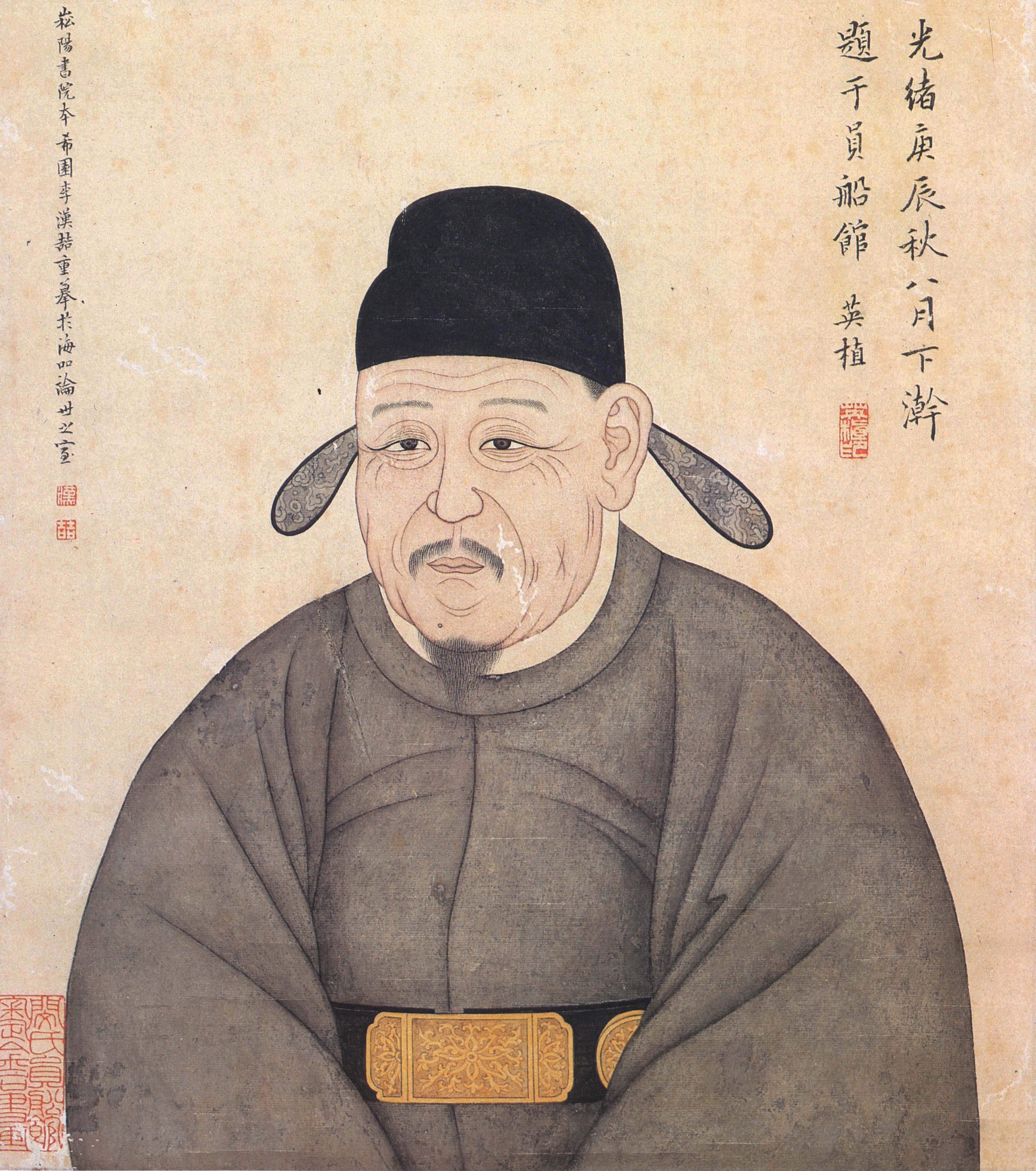
| Life | 1337 ~ 1392 |
| Era | 고려 |
| Clan | 연일 정씨 |
Life & career
Jeong Mong-ju (pen name Poeun) of the Yeonil (Yeongil) Jeong clan was one of the leading Neo-Confucian scholars of the late Goryeo dynasty, serving as Rector of the National Academy (Seonggyungwan) and rising to Junior Prime Minister, while also playing an active diplomatic role with Ming China and Japan.
Revered as the founding figure of Korean Neo-Confucian learning, he established relief granaries for the poor and worked to reform ritual and legal institutions based on the Family Rites of Zhu Xi. His collected writings survive as the Poeun-jip.
Remaining loyal to the Goryeo throne, he opposed Yi Seong-gye's founding of Joseon and was assassinated with an iron mace at Seonjuk Bridge in Gaeseong in 1392 by Jo Yeong-gyu and other men of Yi Bang-won, on his way home after visiting the ailing Yi Seong-gye. He is famously remembered for answering Yi Bang-won's conciliatory poem 'Hayeoga' with his own 'Danshimga,' vowing unwavering loyalty even after a hundred deaths. He was later reinterred at Neungwon-ri in Yongin, Gyeonggi Province.
Birth and Family
He is said to have been born in the 12th lunar month of 1337 (January 1338) in Yeongil County, Gyeongsang Province (around today's Pohang), though Yeongcheon and Pohang dispute his birthplace. His clan seat was Yeonil (Yeongil); his father was Jeong Un-gwan and his mother Lady Yi of Yeongcheon. He was first named Mong-ran or Mong-ryong before becoming Mong-ju, with the courtesy name Dalga (達可), the art name Poeun (圃隱) and the posthumous title Munchung (文忠).
Raised in a locally prominent family of officials in comfortable circumstances, he is said to have been rewarded by King Gongmin for keeping a three-year vigil at his father's grave. An anecdote says that at nine he wrote a love letter for a maidservant, but its truth is hard to verify.
Learning and Examinations
Through his father's connections he studied Neo-Confucianism under Yi Saek and befriended fellow students such as Jeong Do-jeon, Jo Jun and Nam Eun. In 1360 (King Gongmin's 9th year) he placed first in the civil examination, joined Han Bang-sin's campaign against the Jurchens as an aide, and served as a Yemungwan censor; in 1371 he became an instructor (saseong) at the Seonggyungwan.
Diplomacy
When the Ming dynasty was founded in 1368 he argued for establishing diplomatic relations; on his way back from Ming in 1372 his ship is said to have been wrecked and he drifted before being rescued and returning with the help of the Ming founder. In 1375 he criticized Yi In-im's pro-Yuan diplomacy and was exiled to Eonyang until 1377.
In 1377-1378 he went to Japan as an envoy, negotiated with the Kyushu governor to restrain Japanese pirates and brought back captured Goryeo people (sources differ on how many). Between 1381 and 1387 he went to Ming several more times and is said to have secured reductions of the annual tribute and the waiver of arrears.
Cooperation with Yi Seong-gye
He took part in the Battle of Hwangsan in 1380 and campaigned several times with Yi Seong-gye, with whom he worked closely. A story says that in the same year, when Yi hinted at founding a new dynasty at Omokdae in Jeonju, he left the gathering and wrote a poem of anger, though this should be treated as a later account. He is recorded as supporting the 1388 Wihwado Retreat.
Reforms and Enthronement of King Gongyang
In 1387 he aligned officials' dress with the Chinese system, criticized the abuses of Buddhism and promoted Confucian learning and the Seonggyungwan. He encouraged ancestral shrines according to Zhu Xi's Family Rites and the founding of the Five Schools and local academies. In 1389 he joined Yi Seong-gye's circle in deposing Kings U and Chang and enthroning King Gongyang, was named a meritorious subject, and in 1390 rose to Junior Prime Minister, sharing the chief ministry with Yi. He re-established the relief granaries (uichang) against famine and in 1391 sought to draw up new statutes drawing on the Great Ming Code and Goryeo law.
Death at Seonjuk Bridge (1392)
In 1392, when Yi Seong-gye was thrown from his horse while hunting and stayed at Hwangju, Jeong Mong-ju is said to have tried to seize the chance to remove Yi's faction, but was frustrated by Yi Bang-won. The famous tale that he answered Yi Bang-won's probing sijo with the Danshimga is recorded in later sources, and there is disagreement over its historicity.
On the 4th day of the 4th lunar month, returning from a visit to the ailing Yi Seong-gye, he was struck down with an iron mace at Seonjuk Bridge in Gaegyeong by Jo Yeong-gyu and other retainers of Yi Bang-won. His age at death is given as 54 or 56 depending on the source. He was first branded a traitor, but his body was recovered and later reburied in Yongin, Gyeonggi Province.
Posthumous Honors
In 1401 King Taejong posthumously granted him the post of Chief State Councillor and the title Prince Igyang. Some interpret this as a political move to lower Jeong Do-jeon's faction and to set up an example of loyalty. He was enshrined in the Confucian Shrine in 1517, honored at Imgo Seowon (1555) and other academies, given a spirit-way stele in 1699, and named a Person of Culture by the Ministry of Culture in 2003.
Thought, Writings and Disciples
For criticizing Buddhism and spreading Neo-Confucianism he is called the founding master of Korean Neo-Confucian learning. Disciples named in sources include Gil Jae, Yi Sung-in, Gwon Geun, Byeon Gye-ryang and Gwon U, through whom his teaching is said to have reached the early-Joseon Sarim scholars and the learning of King Sejong's era. He is counted one of the Three Recluses (Sam-eun) of late Goryeo. His collected works survive as Poeun-jip, and Poeun Sigo is said to have been compiled by his son Jeong Jong-seong and younger brother Jeong Do.
Family and Assessment
He had younger brothers Jeong Gwa, Jeong Hu and Jeong Do; his wife was of the Gyeongju Yi clan; his sons were Jeong Jong-seong and Jeong Jong-bon, with illegitimate sons Jeong Jong-hwa and Jeong Jong-ham. Jeong Jong-seong was known as a filial son but is said to have suffered hardship when the family property was confiscated after his father's death.
He is generally regarded as a loyal subject who protected the Goryeo state and a statesman skilled in diplomacy and administration, though critics note that he took part in deposing Kings U and Chang and that his image of loyalty was shaped by later politics. Recent studies increasingly look at his institutional reforms and administrative ability as well as his loyalty.
Sources: Namuwiki, Wikipedia and other public materials (differences such as birth and death ages are noted).
Grave
Neungwon-ri, Mohyeon-eup, Cheoin-gu, Yongin-si, Gyeonggi-do
Descendants
He had descendants including his son Jeong Jong-seong (鄭宗誠, 1374-1442), and the line continued as the Yeonil Jeong clan.