이성계 李成桂
King Taejo (太祖), founder of Joseon and a leading general of late Goryeo
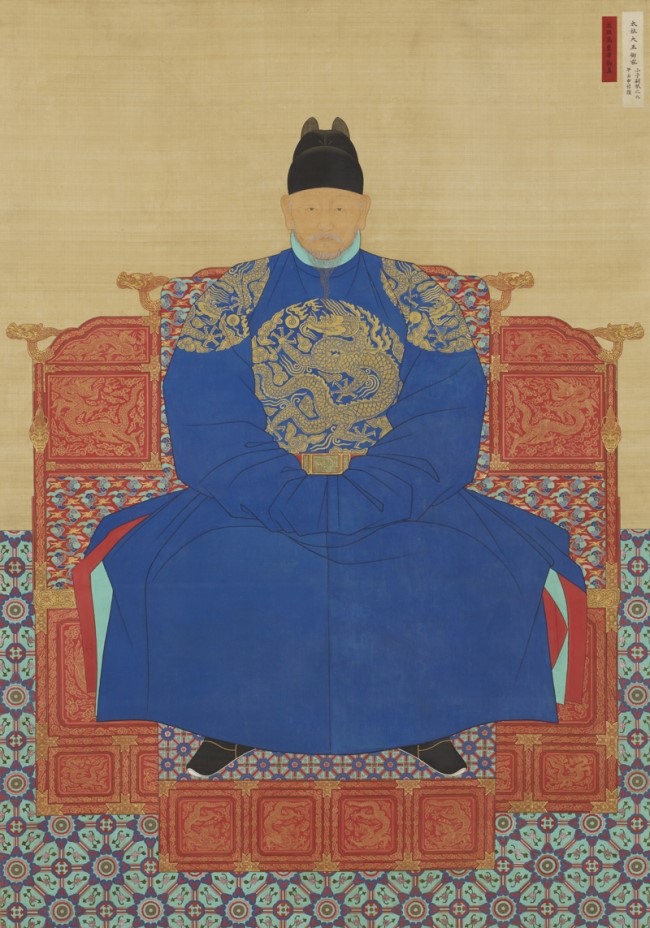
| Life | 1335 ~ 1408 |
| Era | 고려 말~조선 초 |
| Clan | 전주 이씨 |
Life & career
Yi Seong-gye (1335-1408) was a general who rose from the Ssangseong region of Hamgyeong in late Goryeo, making his name fighting the Red Turbans, Japanese pirates, Jurchens, and Yuan forces. He is widely remembered for his great victory over the pirates at the Battle of Hwangsan in 1380.
Having set out on a Liaodong expedition in 1388, he turned his army back at Wihwa Island (the Wihwado Retreat) and took control of the government. Allying with emerging literati such as Jeong Do-jeon and Jo Jun and pursuing reforms like the Land Rank Law, he received the throne from King Gongyang in 1392 and founded Joseon. After his accession he changed his name to Dan (旦); his temple name is Taejo.
He set the country name as Joseon in 1393 and moved the capital to Hanyang in 1394, but after the First Strife of the Princes in 1398 he passed the throne to Jeongjong. He died in 1408 and rests at Geonwolleung in Donggureung, Guri. The sections below cover his family background, campaigns, founding of the dynasty, family, and legacy in detail.
Birth and Family
Yi Seong-gye is said to have been born on the 11th day of the 10th lunar month of 1335 (4 November in the solar calendar) at Hwaryeong in the northeastern frontier (Dongbukmyeon), around present-day Geumya and Yeongheung in South Hamgyeong. His father was Yi Ja-chun (later honored as Hwanjo) and his mother Lady Choe (Queen Uihye). His ancestral seat is Jeonju, which the Joseon royal house later treated as its dynastic homeland.
His ancestors run from Yi An-sa (Mokjo) to Yi Haeng-ni (Ikjo), Yi Chun (Dojo), and Yi Ja-chun (Hwanjo). Yi An-sa moved from Jeonju to the northeast in the mid-13th century and served the Yuan as a local officer (cheonhojang and darugachi); his descendants inherited the role and grew into a local power in the Hamgyeong region. Details such as how many households followed him differ between Joseon-era accounts.
In 1356 (the 5th year of King Gongmin), when Gongmin attacked the Ssangseong Commandery, Yi Ja-chun sided with Goryeo and the region returned to Goryeo rule. Yi Ja-chun held military command in the northeast until his death in 1361, and Yi Seong-gye inherited that military base.
Career as a Commander
Through the many foreign incursions of late Goryeo, Yi Seong-gye made his name in a long series of campaigns. The main ones are:
- 1356 Took part in recovering the Ssangseong Commandery; records say he impressed King Gongmin with his polo (gyeokgu) skill.
- Around 1361 When the Red Turbans took Gaegyeong, he joined the recapture with some 2,000 private troops (sources differ between 1361 and 1362).
- 1362 Drove back the Yuan commander Naghachu on the Hamhung plain.
- 1364 Helped repel the Yuan-backed force that sought to enthrone Prince Deokheung, and defeated the Jurchen brothers Gim Sam-seon and Gim Sam-gae.
- 1370 Joined the first Liaodong expedition against the Dongnyeong prefecture area.
- 1377-1380 Fought Japanese pirates around Gaegyeong and Jirisan, and won a major victory at the Battle of Hwangsan in 1380.
- 1383-1384 Defeated the Jurchen chieftain Hobatu and put down pirates at Gilju.
His private retinue (gabyeolcho) later became part of his political base. Some battles are credited to other generals such as Choe Yeong in certain records, and scholars note that Joseon-era sources may have emphasized Yi's role.
The Wihwado Retreat (1388) and Seizure of Power
In 1388, when the Ming claimed territory north of Cheolryeong, King U and Choe Yeong moved to launch a Liaodong expedition. Yi Seong-gye is traditionally said to have opposed it with his so-called Four Reasons Against: a small state should not defy a large one, summer campaigning disrupts farming, the pirates might exploit the absence of the army, and the rainy season brings disease and weakens bows.
The campaign went ahead and Yi led the right army, but when heavy rain stalled the force at Wihwa Island on the Amnok River, he persuaded the left army commander Jo Min-su to turn back. The army returned to Gaegyeong, seized Choe Yeong, and deposed King U; Choe was executed soon after.
In the years that followed, as first King Chang and then King Gongyang were placed on the throne, Yi effectively held military and political control. Sources disagree on motives: one view holds that Choe schemed to remove Yi through the expedition, while another holds the two were originally close allies.
Founding Joseon (1392) and Reforms
Once in power, Yi allied with radical reformist literati such as Jeong Do-jeon, Jo Jun, and Nam Eun. The Land Rank Law (Gwajeonbeop, 1391), driven by Jo Jun and others, curbed abuses of private estates and redistributed tax-collecting rights among officials, weakening the economic base of the old powerful families. It did not, however, hand land directly to peasants, a limit scholars point out.
In 1392, while Yi was injured after a fall from his horse during a hunt, Jeong Mong-ju is said to have moved against the reformers, and men of Yi Bang-won's faction killed him at Seonjukgyo Bridge in Gaegyeong. On the 17th day of the 7th lunar month (13 August) of 1392, King Gongyang stepped down and Yi was acclaimed king at Suchang Palace in Gaegyeong. Goryeo ended after about 475 years; Yi was 56 by Western reckoning, among the oldest to take the Joseon throne.
For a time the country kept the name Goryeo, then after consultation with the Ming adopted the name Joseon in 1393. The Ming did not immediately invest him as king and instead recognized him as acting administrator of Goryeo affairs (gwonji goryeo guksa).
In 1394, after sites such as Gyeryongsan and Mount Muak were discussed, the capital was moved to Hanyang, with Jeong Do-jeon leading the plan for Gyeongbokgung, the royal shrine, and the altars. Construction of the Hanyang city wall began in 1396 and was finished in a little over a year. Law codes such as the Joseon Gyeongguk-jeon and the Gyeongje Yukjeon organized the new dynasty's governance.
The Strife of the Princes and Abdication
Yi made his youngest son Yi Bang-seok, born to Queen Sindeok, crown prince. The sons of Lady Han, especially Yi Bang-won, who had contributed greatly to the founding, resented this. After Queen Sindeok died in 1396, Yi built her tomb Jeongneung inside the capital and founded the temple Heungcheonsa in her memory.
In 1398, as Jeong Do-jeon pushed to abolish private armies, Yi Bang-won rose in arms and eliminated Jeong Do-jeon, Nam Eun, and the brothers Bang-beon and Bang-seok (the First Strife of the Princes). Yi Seong-gye soon abdicated to his second son Bang-gwa (King Jeongjong) and became retired king. In 1400 came the Second Strife, in which Yi Bang-gan clashed with Bang-won; the same year Jeongjong yielded the throne to Bang-won (King Taejong), and Yi Seong-gye became grand retired king.
In 1402 the governor of Anbyeon, Jo Sa-ui, rose in rebellion. Some read this as having Yi's tacit support, but it was put down by government forces led by Taejong. Interpretations of this episode and of Yi's residence in Hamgyeong vary among sources.
The Hamhung Chasa Tale and His Final Years
The phrase hamheung chasa (咸興差使, 'an envoy to Hamhung', meaning someone who never comes back) is said to come from the tale that Yi Seong-gye killed or detained the envoys his son Taejong sent to Hamhung. But this is largely later folklore. Accounts based on the Annals say not all envoys died and many returned alive, and the story that the monk Muhak persuaded him to return is likewise classed as folk tradition.
Sources differ somewhat on where Yi stayed. One record places him at a temporary palace on Soyosan in 1401, while another describes him returning to Gaegyeong rather than directly to Hanyang. The exact timing and route are hard to establish.
In his last years he is said to have leaned on Buddhism. An entry in the 1402 Annals records him saying he honored Buddhism to pray for his two sons (Bang-beon and Bang-seok) and his son-in-law. He died of a stroke at Changdeok Palace on the 24th day of the 5th lunar month (27 June) of 1408; his age is given as 72 in some records and counted as 74 in others.
Family
First wife, Queen Sinui (Lady Han, 1337-1391), from Anbyeon, died in 1391, before Yi's accession, and was later posthumously honored as queen. She bore six sons: Prince Jinan (Bang-u), Jeongjong (Bang-gwa), Prince Ikan (Bang-ui), Prince Hoean (Bang-gan), Taejong (Bang-won), and Prince Deogan (Bang-yeon), and daughters Princess Gyeongsin and Princess Gyeongseon.
Second wife, Queen Sindeok (Lady Kang, 1356-1396), bore two sons, Prince Muan (Bang-beon) and Prince Uian (Bang-seok), and Princess Gyeongsun. He is said to have cherished her deeply and built her tomb Jeongneung (in what is now Seongbuk-gu, Seoul), though it was downgraded and relocated under Taejong.
Known concubines include Lady Yu (Jeonggyeong Gungju), Lady Kim (Princess Hwaui), Lady Ju (Chandeok), and Lady Won (Seongbi). Records give him eight sons and five daughters. Five of his eight sons died before him, and Bang-beon and Bang-seok were killed in the First Strife. The Annals record that a marriage proposal with the Ming Hongwu Emperor's family was discussed in 1396-1397 but cancelled at the Ming side's notice.
Geonwolleung Tomb and Posthumous Titles
Yi Seong-gye rests at Geonwolleung (健元陵) in Donggureung, Guri, Gyeonggi Province. It was the first tomb built at Donggureung, and the grass on the mound is said to be left uncut except for one trimming a year in a continuing custom. The story that Taejong brought soil and reeds from Hamhung to cover it is a tradition, not something established.
His temple name is Taejo (太祖) and his posthumous title is Great King Ganghon Jiin Gyeun Seongmun Sinmu (康獻至仁啓運聖文神武大王). In the Korean Empire period he was posthumously elevated to emperor and received the title Taejo Gohwangje. The best-known portrait is the one enshrined at Gyeonggijeon in Jeonju, from which widely seen images derive.
Assessments
Positive views. He is regarded as a gifted general who held off the Red Turbans, Japanese pirates, Jurchens, and Yuan forces, and as a reformer who tackled the late-Goryeo problems of private estates and land concentration, laying the economic foundation of the new state. Accounts also note that he employed talent widely, treated founding merit subjects with honor, and valued practicality over formality.
Critical views. He is criticized for the succession problem of naming his youngest son Bang-seok crown prince, which fueled conflict among his sons; for the heavy losses suffered by the Goryeo royal Wang clan; for having historical drafts rewritten and clashing with court historians; and for deferential diplomacy toward the Ming. The scale of the Wang clan killings and any role in the deaths of Kings U, Chang, and Gongyang are disputed because of questions about the sources.
Debate. Scholars and the public differ over whether the dynastic change from Goryeo to Joseon was justified. It has also been observed that Korean society tends to remember him more as the great general Yi Seong-gye than as a dynastic founder.
Anecdotes and Traditions
The stories around Yi Seong-gye mix material grounded in the Annals with later folklore, so they are worth telling apart.
- Bow and horse. The Annals record his skill at archery and polo. A tradition links him with the eight famed horses depicted in the Paljun-do, said to have been produced in King Sejong's reign.
- The golden ruler dream. The story that a divine being gave him a golden ruler (geumcheok) in a dream is said to have been turned into the 1393 court song Mong Geumcheok.
- The monk Muhak. Stories of Muhak advising on the move to Hanyang and the building of the royal shrine, and of banter between the two, mostly derive from folk tradition.
- Boriam and Seokwangsa. Legends tell of his prayers on Geumsan in Namhae and of tales tied to Seokwangsa Temple.
- Other. The popular claim that he stood 195 cm has weak support, and some estimate about 180 cm. The tale of the 72 loyalists of Dumundong is known as later folklore.
Views of Yi have varied widely by era and standpoint; North Korean scholarship, for example, has judged him harshly as a man who betrayed Goryeo.
Grave
Geonwolleung (健元陵) within Donggureung, Guri, Gyeonggi Province
Descendants
The kings of Joseon, from his sons Jeongjong (Bang-gwa) and Taejong (Bang-won), born to Queen Sinui, down through King Sejong, are his descendants, and he is revered as the progenitor of the Jeonju Yi royal house. Bang-beon and Bang-seok, sons of Queen Sindeok, died in the First Strife of the Princes.