전주 이씨 family tree
Build your family tree online전주 이씨(全州 李氏) — The Jeonju Yi (全州 李氏) are the clan of King Taejo, Yi Seong-gye, who founded the Joseon dynasty. The clan traces its founder to Yi Han (李翰), said to have served as sagong (minister of works) in Silla. Because the founder's tomb altar, Jogyeongdan, and Gyeonggijeon, the shrine for King Taejo's portrait, are in Jeonju, the clan takes Jeonju as its ancestral seat. It is also called the Wansan Yi. The 2015 Statistics Korea census counted 2,631,643 members, the third-largest clan by ancestral seat.
About the 전주 이씨 clan
The Jeonju Yi (全州 李氏) are the clan of King Taejo, Yi Seong-gye, who founded the Joseon dynasty. The clan traces its founder to Yi Han (李翰), said to have served as sagong (minister of works) in Silla. Because the founder's tomb altar, Jogyeongdan, and Gyeonggijeon, the shrine for King Taejo's portrait, are in Jeonju, the clan takes Jeonju as its ancestral seat. It is also called the Wansan Yi. The 2015 Statistics Korea census counted 2,631,643 members, the third-largest clan by ancestral seat. In the 2015 Census the 전주 이씨 clan numbered about 2,631,643 people, one of Korea's major surnames and clans. Even among people surnamed 이, a different clan seat (bon-gwan, 전주) means a different lineage. New to these terms? See the bon-gwan, pa & hangnyeol guide.
Founder and Origins
The founder of the Jeonju Yi clan is Yi Han (李翰), courtesy name Gyeonseong (甄城). According to the Seonwon Gyebo (royal genealogy), he married a daughter of Kim Eun-ui, a gunyun (military official) and 10th-generation descendant of King Taejong Muyeol of Silla, and served as sagong. Wikipedia estimates his dates as c. 713 to c. 754.
Two accounts of the clan's origin exist. One says it branched off from the Gyeongju Yi; the other says it came from China (Encyclopedia of Asan Culture).
Seonwon Lineage and the Royal Line
The generations from Yi Han to Yi Yang-mu, the 17th-generation general, are called the Seonwon Seongye (璿源先系, pre-royal lineage). The royal line from Mokjo (Yi An-sa) to Emperor Sunjong is called the Seonwon Segye or main line. The other princely lines are called the Seonwon Pagye or collateral lines.
When Yi Ui-bang, a leader of the military coup, was killed in 1174, his younger brother Yi Rin retired to Jeonju. Yi Rin's son was Yi Yang-mu.
Yi An-sa (Mokjo), the 18th generation, was a local magnate of Jeonju. After a conflict with the Jeonju magistrate, he moved to Samcheok and then to Deogwon, and later became darughachi of the 5,000 households of Namgyeong under the Yuan. Hwanjo, Yi Ja-chun, of the 21st generation, distinguished himself in recovering Ssangseong. His son, King Taejo Yi Seong-gye, founded Joseon. The clan association calls Taejo its jungsijo (restoring ancestor).
Why Jeonju
The clan takes Jeonju as its seat for two reasons: the founder's Jogyeongdan altar and the Gyeonggijeon shrine are there, and the family lived in Jeonju as local magnates until Mokjo. For this reason it is also called the Wansan Yi.
Offshoot Clans
The Daeheung Yi, Yeonghae Yi and Habin Yi branched off from the Jeonju Yi. Yi Yeon-gye, founder of the Daeheung Yi, was a 22nd-generation descendant of the Jeonju Yi.
Branches
According to the Onnyeong-gun branch association, three branches split off before Mokjo:
- Sijunggong: from Dansin, second son of Gungjin (14th generation)
- Pyeongjangsagong: from Geo, second son of Yongbu (15th generation)
- Jubudongjeong: from Yeongseup, third son of Yi Yang-mu (17th generation)
The descendants of Mokjo, Ikjo, Dojo and Hwanjo formed 18 branches. Counting the princely lines from Taejo through the three princes of Jangjo, there were 125 branches in total. After mergers and extinctions, 105 remain, of which 89 associations are registered with the Royal Family Association. Other sources give 92 (Yangdogong association) or 86 (Namuwiki, 2012).
Branches and founders confirmed in this research:
- Wanpung Daegun branch: Grand Prince Wanpung Yi Won-gye, eldest son of Hwanjo
- Hoean Daegun branch: Grand Prince Hoean Yi Bang-gan, Taejo's fourth son
- Deokcheon-gun branch: Prince Deokcheon Yi Hu-saeng, son of Jeongjong
- Seonseong-gun branch: Prince Seonseong Yi Mu-saeng, Jeongjong's fourth son
- Yangnyeong Daegun branch: Grand Prince Yangnyeong, Taejong's eldest son
- Hyoryeong Daegun branch: Grand Prince Hyoryeong, Taejong's second son
- Geunnyeong-gun branch: Prince Geunnyeong Yi Nong, Taejong's eighth son
- Onnyeong-gun branch: Prince Onnyeong, a son of Taejong
- Gwangpyeong Daegun branch: Grand Prince Gwangpyeong, son of Sejong
The founders of the Uian Daegun and Wanchang Daegun branches could not be reconfirmed in this research.
Clan Villages
Wikipedia lists Jeonju, Buan, Naju, Gilju, Bukcheong, Jeongju, Yeoncheon and Namyangju as clan villages. Settlement records confirmed in local culture encyclopedias:
- Sojeong-ri, Sejong (Yangnyeong branch)
- Bonggyo-ri, Dangjin (Deokcheon branch, settler Yi Yu-yeon, 1583–1659)
- Gangjang-ri, Asan (Seonseong branch)
- Wollang-ri, Asan (Geunnyeong branch)
- Yonghwa-dong, Asan (Hoean branch)
- Several villages in Buan
- Baegun-myeon, Jecheon
- Deokgok, Muju (settler Yi Chong)
Clan Associations
The Jeonju Yi Royal Family Association (Jeonju Lee Daedong Jongyakwon) succeeds the association founded by Prince Ui in 1922. It conducts the five great rites (Jogyeongdan, Hwangu, Jongmyo, Sajik and Geonwonneung) and the Chilgung rite. Its office is in the Ihwa Hall, 139 Waryong-dong, Jongno-gu, Seoul. Sources disagree on its founding date: 1955, 1956, or 3 April 1957. Branch associations include those of Onnyeong-gun, Yangdogong (Wanpung branch), Gwangpyeong Daegun, and Cheonggwonsa, which manages Grand Prince Hyoryeong's tomb.
Generation Names
The following are based on clan blog and forum posts and have not been checked against an official table.
- Yangnyeong branch (36th–50th): 東, 容, 奎, 善, 承, 秀, 丙, 基, 鍾, 漢, 柱, 燮, 時, 鎬, 泰
- Hyoryeong branch (36th–50th): U, Beom, Hoe, U, Ui, Gi, Gang, Jae, Jeong, Gyu, Hak (學), Yong (庸), Yeon (演), Gyeong (卿), Jin (振)
Heritage Sites
- Jogyeongdan: Altar at the founder's tomb, built in 1899. Designated a Jeonbuk monument on 23 June 1973. Located in Deokjin-dong, Jeonju.
- Jogyeongmyo: Shrine founded in 1771 for the tablets of the founder and his wife. Its main hall became a Treasure on 25 November 2022.
- Gyeonggijeon, Jeonju: Historic site enshrining King Taejo's portrait. Founded in 1410, named Gyeonggijeon in 1442, burned in 1597 and rebuilt in 1614. Its main hall is a Treasure.
- Portrait of King Taejo: An 1872 copy, designated a National Treasure on 29 June 2012 and kept by the Royal Portrait Museum.
- Seunggyeongwon: Built in Jeonju on 19 February 2023 to enshrine the 2nd through 17th generations.
- Tomb of Grand Prince Hyoryeong and Cheonggwonsa: In Seocho-gu, Seoul. The shrine was built in 1736 and given its name plaque in 1789; it was designated a Seoul tangible heritage in 1972.
Population
The 2015 census counted 2,631,643 members, third by ancestral seat and 5.3% of the population. Sejong City had 11,781 members. Estimates of total descendants vary: the Royal Family Association cites 5 million, while surname.info gives its estimate as about 2 million.
Points of Disagreement
- The founder's title is written 司空, 司功 or 司公, and his name 李翰 or 李瀚, depending on the source.
- Sources differ on the founder's era: service under King Munseong versus death in 754.
- Sources also differ on whether Taejo was the 21st- or 22nd-generation descendant of the founder.
Main branches (派)
Yangnyeong Daegun-pa, Hyoryeong Daegun-pa, Gwangpyeong Daegun-pa, Deokcheongun-pa, Wanpung Daegun-pa, Uian Daegun-pa, Wanchang Daegun-pa, Seonseong-gun branch, Geunnyeong-gun branch, Hoean Daegun branch, Onnyeong-gun branch
Yangnyeong Daegun-pa (讓寧大君派)
The Yangnyeong Daegun branch descends from Grand Prince Yangnyeong, Yi Je (李禔, 1394-1462), the eldest son of King Taejong. He gave up his place as crown prince, which allowed the throne to pass to his younger brother Grand Prince Chungnyeong (King Sejong).
It is counted as one of the largest Jeonju Yi branches, second in membership after the Hyoryeong Daegun branch. Syngman Rhee, the first president of the Republic of Korea, descends from this branch.
Hyoryeong Daegun-pa (孝寧大君派)
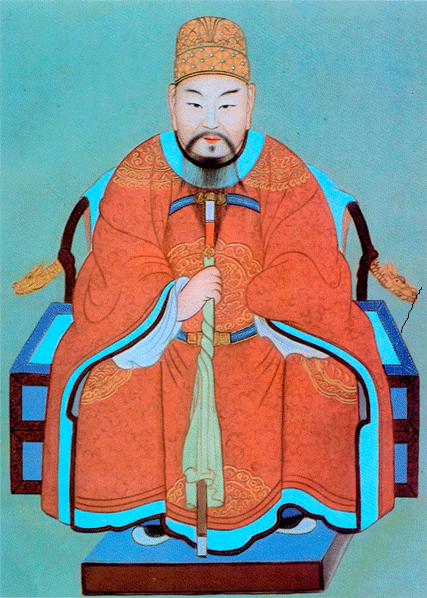
The Hyoryeong Daegun branch descends from Grand Prince Hyoryeong, Yi Bo (李補, 1396-1486), the second son of King Taejong and an elder brother of King Sejong. Tradition remembers him as a senior royal family member who stepped aside from the succession.
It is counted as the largest of the Jeonju Yi branches by membership, and produced a chief state councillor (yeonguijeong) and many civil service examination and licentiate passers.
Gwangpyeong Daegun-pa (廣平大君派)
The Gwangpyeong Daegun branch descends from Grand Prince Gwangpyeong, Yi Yeo (李璵, 1425-1444), the fifth son of King Sejong. Although he died young, his line flourished and is counted as the third largest Jeonju Yi branch, after the Hyoryeong and Yangnyeong branches.
It produced three chief state councillors, and Yi Beom-seok, the first prime minister and defense minister of the Republic of Korea, descends from it.
Deokcheongun-pa (德泉君派)
The Deokcheon-gun branch descends from Prince Deokcheon, Yi Husaeng (李厚生), the tenth son of King Jeongjong. It is known as the most prosperous line among Jeongjong's descendants.
In the Joseon period it produced three heads of the Office of Special Counselors (including a father and son) and one chief state councillor. Yi Gyeong-seok and Yi Geon-chang are among its noted descendants.
Wanpung Daegun-pa (完豊大君派)
The Wanpung Daegun branch descends from Yi Won-gye (李元桂, 1330-1388), the eldest son of Hwanjo Yi Ja-chun and an older half-brother of King Taejo (Yi Seong-gye). He was posthumously honored as Grand Prince Wanpung in 1872, and his descendants form the line of Taejo's eldest brother.
His son Yi Cheon-u (Marquis Yangdo) was a founding meritorious subject of Joseon and is regarded as a key ancestor of this line. The generation characters are: 39th generation 在, 40th 鍾, 41st 洙, 42nd 柱, 43rd 淵/源, 44th 東/秉, 45th 憲, 46th 基.
Uian Daegun-pa (義安大君派)
The Uian Daegun branch descends from Grand Prince Uian, Yi Hwa (李和, 1348-1408), a son of Hwanjo Yi Ja-chun and a younger half-brother of King Taejo (Yi Seong-gye). His posthumous name was Yangso (襄昭).
A military officer of late Goryeo, he was a meritorious subject in the founding of Joseon and is recorded as having supported Yi Bang-won (later King Taejong) in the first and second Strifes of the Princes. He was enshrined among the meritorious subjects at Jongmyo Shrine, and ranks as the 21st generation by the Jeonju Yi Royal Clan Association's reckoning.
Wanchang Daegun-pa (完昌大君派)
The Wanchang Daegun branch descends from Grand Prince Wanchang, Yi Ja-heung (李子興, 1305-1342), the eldest son of Dojo (道祖) Yi Chun. He was an elder brother of Hwanjo Yi Ja-chun and thus the uncle of King Taejo (Yi Seong-gye).
Grand Prince Yeongseong, Yi Cheon-gye, the third son of Hwanjo, was adopted as his heir. The generation characters are: 39th generation 模/根, 40th 性/形, 41st 均/周, 42nd 鍾/銓, 43rd 浩/泳, 44th 秉/權, 45th 煥/炫, 46th 重/載.
Seonseong-gun branch (宣城君派)
The Seonseong-gun branch descends from Prince Seonseong, Yi Mu-saeng, the fourth son of King Jeongjong.
According to the Encyclopedia of Asan Culture, the branch has a clan village at Gangjang-ri, Songak-myeon, Asan. The first settler there was Yi Jeong-jang.
Geunnyeong-gun branch (謹寧君派)
The Geunnyeong-gun branch descends from Prince Geunnyeong, Yi Nong (李禯), the eighth son of King Taejong.
According to the Encyclopedia of Asan Culture, the branch has a clan village at Wollang-ri, Eumbong-myeon, Asan. The first settler there was Yi Gyeong-hu (1759–1830).
Hoean Daegun branch (懷安大君派)
The Hoean Daegun branch descends from Grand Prince Hoean, Yi Bang-gan (李芳幹), the fourth son of King Taejo.
In Yonghwa-dong, Asan, there are settlement records associated with Yi Sa-nul (1457–1519).
The Encyclopedia of Buan Culture also records clan villages at Gojan-ri and Gamgyo-ri in Sangseo-myeon, Buan.
Onnyeong-gun branch (溫寧君派)
According to its association's website, the Onnyeong-gun branch descends from Prince Onnyeong, a son of King Taejong.
The branch association's office is at 9 Donhwamun-ro 10-gil, Jongno-gu, Seoul. Its website (onyeong.org) describes the clan's origins and branch structure: 125 branches in total, 105 surviving today, and 89 associations registered with the Royal Family Association.
Branch divisions vary by lineage and jokbo; confirm your own branch in your family's records.
Notable figures
이한(clan founder, sagong of Silla), 이의방(leader of the Goryeo military coup), 이안사(18th generation, posthumously King Mokjo, a local magnate of Jeonju), 이성계(King Taejo of Joseon), 완풍대군(eldest son of Hwanjo), 이천우(Yangdogong, second son of Grand Prince Wanpung), 양녕대군(eldest son of King Taejong), 효령대군(second son of King Taejong), 덕천군(son of King Jeongjong, founder of the Deokcheon-gun branch), 광평대군(son of King Sejong), 세종대왕(father of Grand Prince Gwangpyeong), 이총(executed in the 1504 purge, posthumous name Chungmin)
Tap a name for the full profile (life, career, grave, descendants).
전주 이씨 — Independence patriots
전주 이씨 figures recognized as independence patriots (National Independence Hall / Gonghun public data). Tap a name for the citation.
▼ Show more (121 more)▲ Collapse
전주 이씨 — Pro-Japanese collaborators
전주 이씨 figures listed by the Presidential Committee or the Dictionary of Pro-Japanese Collaborators (Minjok Munje Institute).
▼ Show more (34 more)▲ Collapse
Founder and Early Lineage
Yi Han is the clan founder, said to have served as sagong in Silla. Yi Ui-bang led the military coup in Goryeo. His younger brother Yi Rin retired to Jeonju, and the line continued through Yi Rin's son, Yi Yang-mu, of the 17th generation.
The Royal Line and the Founding of Joseon
Yi An-sa (Mokjo), a Jeonju magnate, moved to Samcheok and then Deogwon, and became a Yuan darughachi. His descendant Yi Seong-gye (1335–1408) founded Joseon.
Princes Who Founded Branches
- Grand Prince Wanpung: Hwanjo's eldest son. The descendants of his son Yi Cheon-u (Yangdogong) form the Yangdogong association.
- Prince Deokcheon: Son of Jeongjong and founder of the Deokcheon-gun branch.
- Grand Prince Yangnyeong (1394–1462): Taejong's eldest son.
- Grand Prince Hyoryeong (1396–1486): Taejong's second son.
- Grand Prince Gwangpyeong: Son of King Sejong.
Joseon-Era Royal Kin
Yi Chong (d. 1504) was executed in the 1504 Gapja purge. He was later posthumously honored as Prince Mupung and given the posthumous name Chungmin.
Wikipedia's List of Notable Members
The Wikipedia infobox lists the following as notable members. Their clan affiliation was not individually cross-checked.
- Yi Won-ik
- Yi Gyeong-seok
- Yi Seong-gu
- Yi Yong-ik
- Yi Gang-nyeon
- Yi Jun
- Yi Jae-gon
- Yi Byeong-mu
- Yi Jae-geuk
- Yi Geun-taek
- Yi Ji-yong
- Syngman Rhee
- Yi Wi-jong
- Yi Beom-seok
- Yi Jae-hyeong
- Lee Hee-ho
Related Videos
How to build your 전주 이씨 tree
- Start with yourself — sign in to get your own tree. Enter your name, birth year and clan seat (전주).
- Add older generations — add parents and grandparents. For accuracy see tracing ancestors with jejeok records (usually to about 5 generations).
- Link siblings & children — sort by generational name (hangnyeol) to see each generation at a glance.
- Export & share — save the finished tree as a PDF and invite family to manage it together.
Related reading
전주 이씨 clan association
The 전주 이씨 clan association can be found in the Korean E-Jokbo Library clan-association directory.
✍ Request additions / corrections to the 전주 이씨 family tree infoStart your family tree free →