세종대왕 李祹
4th king of Joseon, creator of Hunminjeongeum (Hangul)
| Life | 1397 ~ 1450 |
| Era | 조선 전기 |
| Clan | 전주 이씨 |
Life & career
King Sejong the Great (1397-1450) was the fourth king of Joseon. Born the third son of Taejong and Queen Wongyeong of the Min clan, he took the throne in 1418 and ruled until 1450, about 32 years. His given name was Do (祹), his first title was Grand Prince Chungnyeong, and his ancestral seat was Jeonju.
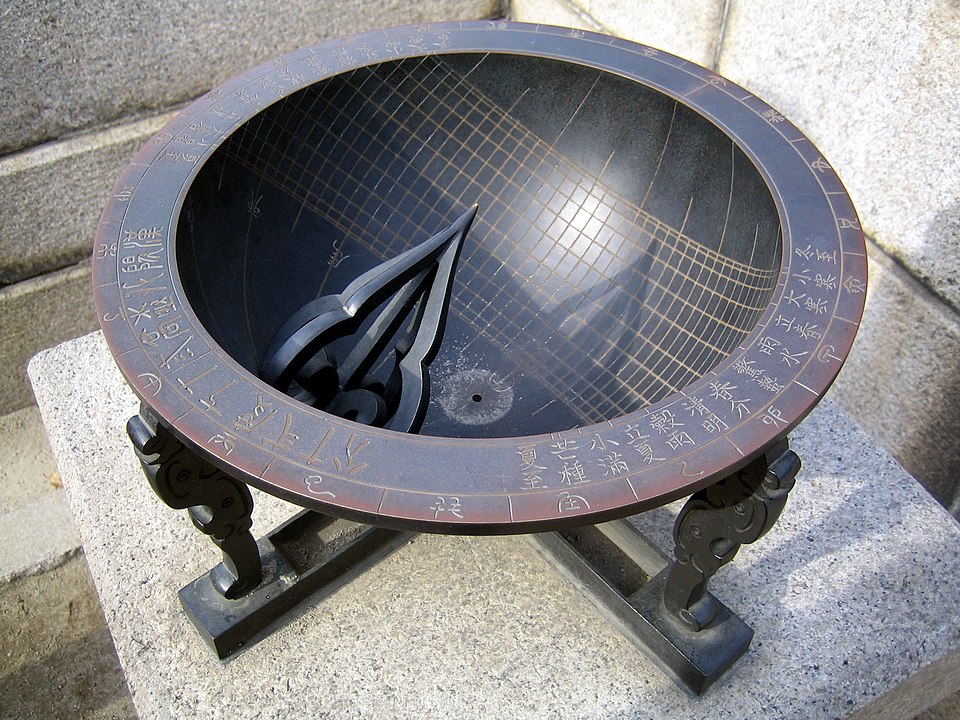
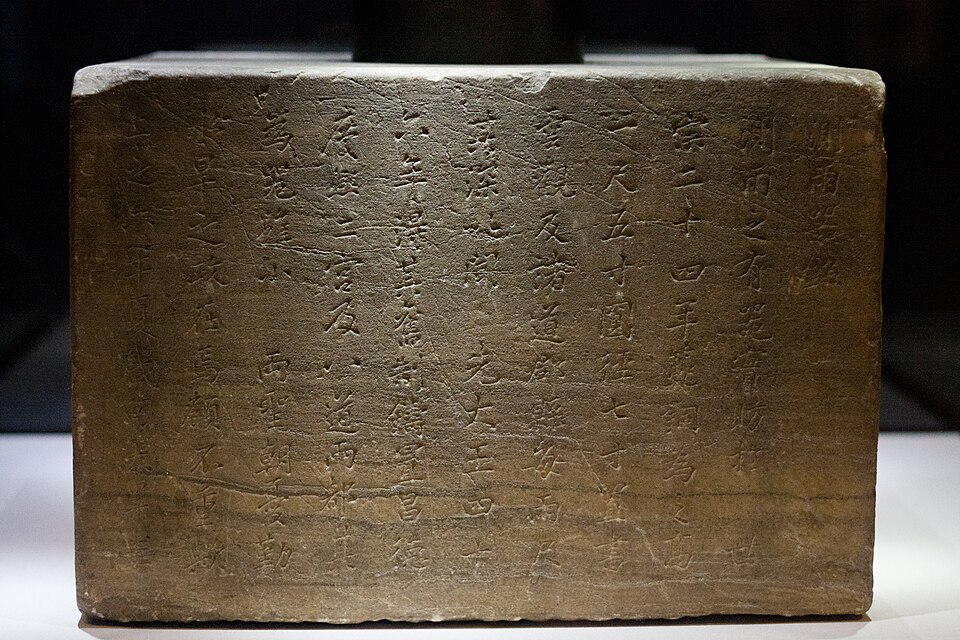
He created Hunminjeongeum in 1443 and promulgated it in 1446, led scholarship and compilation through the Hall of Worthies, and with Jang Yeong-sil and others advanced instruments such as the rain gauge, water clock, and sundial. He opened the Four Garrisons and Six Garrisons in the north and carried out reforms such as the Gongbeop tax system.
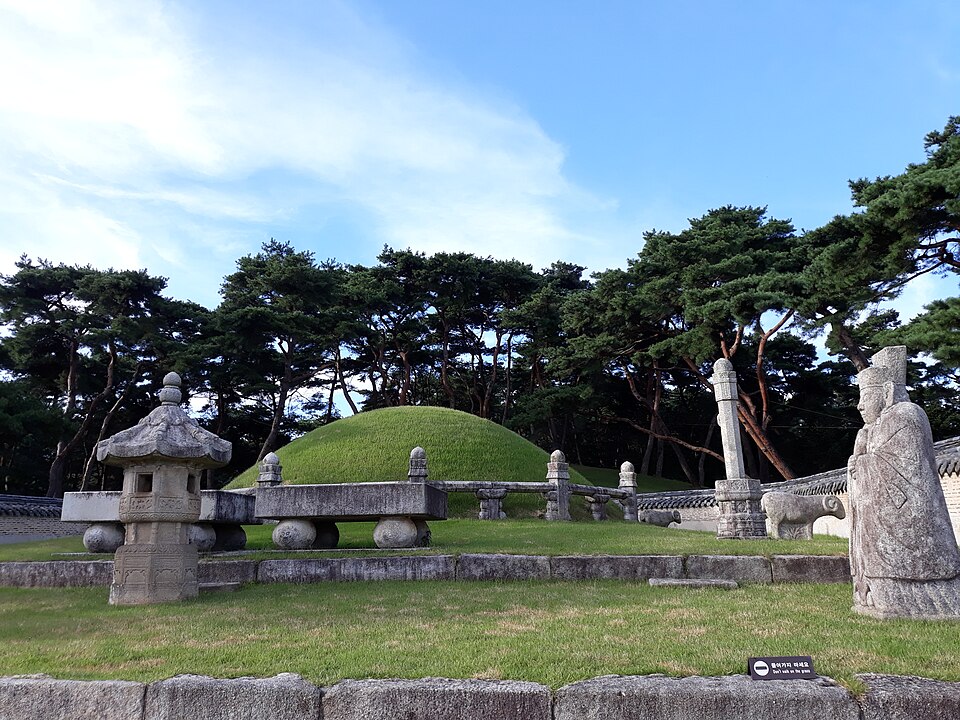
He died in 1450 and rests with Queen Soheon at Yeongneung in Yeoju, Gyeonggi Province. The sections below cover his birth and accession, the Korean script, science, defense, institutions, family, and legacy in detail.
Birth and Family
Sejong was born on 15 May 1397 (the 10th day of the 4th lunar month, 6th year of Taejo) in Junsu-bang in Hanseong (present-day central Seoul). His father was Yi Bang-won, the future King Taejong, the third king of Joseon, and his mother was Queen Wongyeong of the Min clan; he was their third son. He is recorded as Yi Do, with the courtesy name Wonjeong and the childhood name Mak-dong. The character used for his personal name is written in slightly different forms in different sources.
His grandfather was the dynasty's founder, Yi Seong-gye. His ancestral seat was Jeonju. His maternal Yeoheung Min family had contributed greatly to Taejong's rise, yet Taejong later purged in-laws such as the brothers Min Mu-gu and Min Mu-jil out of wariness toward consort families.
He was made Prince Chungnyeong (Chungnyeong-gun) in 1407, married the daughter of Sim On (the future Queen Soheon) in 1408, and was raised to Grand Prince Chungnyeong in 1412. His elder brothers were Crown Prince Grand Prince Yangnyeong and Grand Prince Hyoryeong, and his younger brother was Grand Prince Seongnyeong. A well-known anecdote says he loved books so much that he read even when ill, until his father had the books taken away.
Becoming Crown Prince and King
Taejong's eldest son Yangnyeong had been named crown prince in 1404 but clashed with his father over his conduct and was deposed in the sixth lunar month of 1418. After consulting his ministers, Taejong chose his third son, Grand Prince Chungnyeong, as the new heir (15 July 1418 in the solar calendar). A popular tale says Yangnyeong stepped aside voluntarily, but more recent scholarship also stresses Chungnyeong's own preparation and Taejong's calculation, so interpretations of the events vary.
About two months after becoming crown prince, on the 10th day of the 8th lunar month of 1418 (18 September), he received Taejong's abdication and was enthroned at Geunjeongjeon Hall in Gyeongbokgung at age 21. His temple name is Sejong, and he was later given the posthumous title Yeongmun Yemu Inseong Myeonghyo.
Taejong as Retired King, Ministers, and the Hall of Worthies
Even after his enthronement Taejong kept command of the military and key appointments as retired king. Sejong's father-in-law Sim On is said to have been executed in late 1418 after returning from a mission to Ming China on accusations of seeking military control, which is generally read as Taejong's move to curb consort-family power. Only after Taejong's death in 1422 did Sejong begin personal rule in full.
Sejong relied both on seasoned ministers such as Hwang Hui, Maeng Sa-seong, and Heo Jo and on younger scholars. In 1420 he reorganized the Hall of Worthies (Jiphyeonjeon) so scholars could devote themselves to research and compilation; Jeong In-ji, Sin Suk-ju, Seong Sam-mun, and Bak Paeng-nyeon passed through it. Governing through discussion with his officials is a hallmark of the era.
Creation and Promulgation of Hunminjeongeum
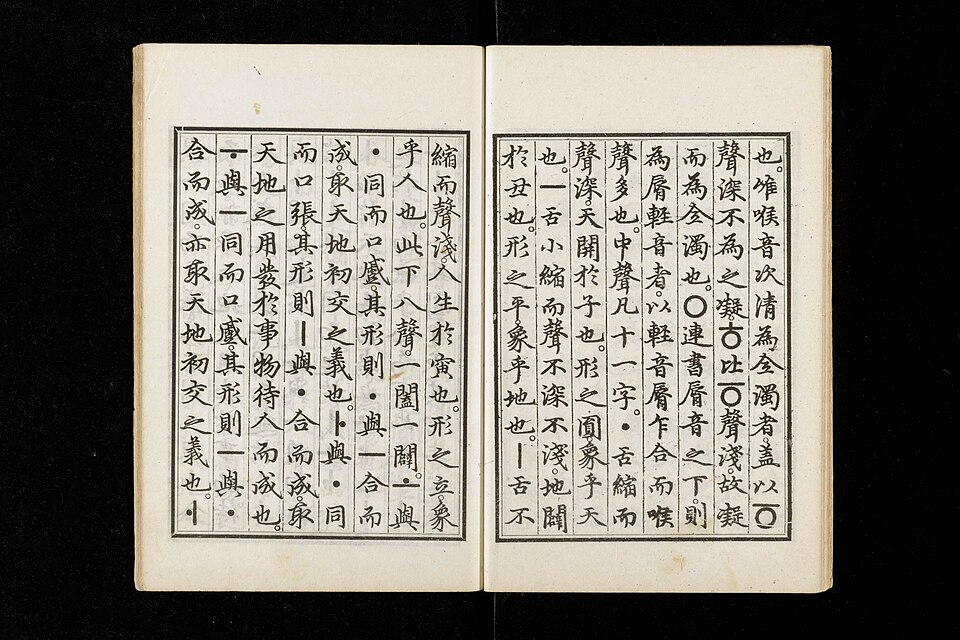
Sejong completed the new script Hunminjeongeum in the twelfth lunar month of 1443 and promulgated it in the ninth lunar month of 1446. The script, generally described as having 28 letters, is praised as a systematic design modeled on the shape of speech organs and on heaven, earth, and humankind. The exact promulgation day is not known; the early part of the ninth month is the usual reading based on the commentary's colophon.
That Sejong played the central role is widely accepted, but how much the Hall of Worthies scholars or princes and princesses took part is debated because sources are thin. In the second month of 1444, Choe Man-ri, vice-director of the Hall, and others submitted a memorial opposing the script, citing the Chinese civilizational order and Hanja culture; they are said to have been briefly jailed and released. See Choe Man-ri.
Alongside the promulgation, Jeong In-ji, Sin Suk-ju, Seong Sam-mun, and others produced the commentary Hunminjeongeum Haerye. It was found in Andong, North Gyeongsang, in 1940, held by Jeon Hyeong-pil (Gansong), and was designated National Treasure No. 70 in 1962 and inscribed in UNESCO's Memory of the World in 1997. Books in the script soon followed, including Yongbi eocheon-ga, Seokbo sangjeol, and Worin cheongang jigok, and it entered the lower-official examinations.
Science and Technology
Astronomy, calendrical science, and instrument-making advanced greatly under Sejong. Jang Yeong-sil, a man of slave origin who became a court technician, is said to have built the armillary sphere and simplified armillary instrument, the Angbuilgu sundial, and the Jagyeongnu self-striking water clock together with Yi Cheon, Jeong Cho, and others. The sundial and water clock date to around 1434, and the Okru water clock in Heumgyeonggak Pavilion is said to have been finished in 1438.
In 1441 the rain gauge (cheugugi) was made, reportedly prompted by the crown prince (the future Munjong), and installed at local offices; accounts of who invented it and when differ. Yi Sun-ji, Kim Dam, and others compiled the calendar Chiljeongsan (inner and outer volumes, 1442) calculated for Hanyang, and in 1429 Jeong Cho and Byeon Hyo-mun produced Nongsa jikseol, a farming manual suited to Korean conditions.
In printing, the metal types Gyeongja (1420) and Gabin (1434) made large-scale publishing easier, and firearms and Singijeon rocket arrows were improved. Jang Yeong-sil was punished in 1442 after a royal sedan chair broke, and his later fate is unclear.
Culture, Music, and Compilations
Sejong treated music, alongside ritual, as a foundation of government and had Bak Yeon reorganize court ritual music (aak). Around 1430 new stone chimes (pyeongyeong) were made to correct pitch, the Jeonggan-bo notation for recording the length and pitch of notes was devised, and works such as Yeominrak are attributed to him.
Compilation projects were equally active. Samgang haengsil-do (1432) used pictures and text to teach loyalty, filial piety, and fidelity; Hyangyak jipseongbang (1433) and Uibang yuchwi (1445) gathered medical knowledge; and Yongbi eocheon-ga (completed 1445, printed 1447) is an epic celebrating the legitimacy of the Joseon founding. Goryeosa, Paldo jiriji, Chongtong deungnok, and the Gukjo oryeui were also compiled or begun in this period. After Queen Soheon's death he is said to have written the Buddhist hymn Worin cheongang jigok following Seokbo sangjeol.
Defense and Territory
In the sixth lunar month of 1419 (Sejong 1), acting on the wishes of retired king Taejong, Yi Jong-mu led more than 200 warships to attack Tsushima, regarded as a base of Japanese pirates. The island's lord submitted, and Joseon followed with conciliation, opening three ports in 1426 and allowing limited trade under the 1443 Gyehae Treaty. Accounts of the results and casualties vary.
In the north, after clashes with the Jurchens, the border was pushed out to the Amnok (Yalu) and Duman (Tumen) rivers. In 1433 Choe Yun-deok attacked the Jurchens on the Pajeo River and the Four Garrisons (Yeoyeon, Jaseong, Muchang, Uye) were set up on the upper Amnok; Kim Jong-seo built the Six Garrisons (Jongseong, Onseong, Hoeryeong, Gyeongwon, Gyeongheung, Buryeong) on the Duman from the mid-1430s. Exact dates for the garrisons span about 1433 to 1449 depending on the source. These efforts are seen as laying the foundation of Korea's present northern border.
Law, Institutions, and Welfare of the People
Sejong reformed the land tax and settled the Gongbeop system in 1444: land was graded into six classes by fertility (jeonbun yukdeungbeop) and the yearly rate set by nine harvest grades (yeonbun gudeungbeop). It is said to have been enacted after long deliberation and a nationwide opinion survey that began in 1430.
In governance, around 1436 he introduced the Uijeongbu seoseje, under which the six ministries reported to the king through the State Council, strengthening the chief ministers; its date and scope are described differently by scholars. In justice, the Geumbu sambokbeop required three trials for capital cases, and he took steps to reduce unjust punishment of slaves.
The maternity leave for female government slaves was lengthened to 100 days in 1426, and in 1434 their husbands are said to have been given 30 days of leave. In famine years he reduced the dishes at the royal table and curtailed local tribute.
Family: Queen Soheon and Children
Queen Soheon of the Sim clan (1395-1446), daughter of the chief state councillor Sim On, bore eight sons and two daughters, including Munjong (Hyang), Sejo (Grand Prince Suyang), Grand Prince Anpyeong, Grand Prince Geumseong, and Princesses Jeongso and Jeongui. She remained queen even after her father's execution and died in 1446.
His royal consorts included Lady Sin of the Kim clan, Lady Hye of the Yang clan, and Lady Yeong of the Kang clan, mothers of sons such as Grand Princes Gwangpyeong, Pyeongwon, and Yeongeung. Sources give the total number of children variously (for example 18 sons and 4 daughters), so an exact count cannot be asserted.
His second son, Grand Prince Suyang, later deposed his nephew Danjong and took the throne as Sejo, and Grand Princes Anpyeong and Geumseong were among the victims. Some scholars of the Hall of Worthies were executed in the movement to restore Danjong, and these tragedies after Sejong's death are often mentioned in later assessments.
Final Years, Death, and Yeongneung
In his last years Sejong is said to have suffered from failing eyesight and various illnesses, and had Crown Prince Munjong handle state affairs as regent from 1442 (some accounts say around 1445). His health reportedly worsened after Queen Soheon died in 1446.
He died on the 17th day of the 2nd lunar month of 1450 (30 March) at the residence of Grand Prince Yeongeung (the Dongbyeolgung), aged 53 by Korean reckoning (52 by Western count), after about 31 and a half years on the throne. The era is also called the Yeongmyo reign after his tomb name.
His tomb, Yeongneung (英陵), was first built west of Heolleung in Seoul. In 1469 (Yejong 1), for geomantic and other reasons, it was moved to its present site in Neungseo-myeon, Yeoju, Gyeonggi Province, where he lies buried together with Queen Soheon. It is now called Yeongnyeongneung together with the tomb of King Hyojong. Accounts of the exact reasons for the move vary.
Legacy and Anecdotes
Sejong is regarded as one of Joseon's greatest kings and one of the few Korean monarchs customarily called 'the Great' (Daewang). His achievements in the Korean script, science, music, law, and defense are highly valued, and his portrait appears on the South Korean 10,000-won note. Critical views also exist, concerning his foreign policy, the status system, and his late-life turn to Buddhism.
Anecdotes include reading even while ill until his father removed his books, patiently listening to his officials, and efforts to reduce unjust punishment of the people. His promotion of Jang Yeong-sil, who was of slave origin, is often cited as an example of employing talent regardless of rank.
The portrait of Sejong widely seen today, such as the 1973 standard portrait by Kim Ki-chang, is an imagined later work; no portrait made in his lifetime survives. Because of his birthday (the 10th day of the 4th lunar month), 15 May is observed in Korea as Teachers' Day.
Grave
Yeongneung (英陵), tomb of King Sejong, Neungseo-myeon, Yeoju, Gyeonggi Province
Descendants
He had many children, including Munjong, Sejo (Grand Prince Suyang), Grand Prince Anpyeong, and Grand Prince Geumseong by Queen Soheon, as well as children by royal consorts. Danjong, son of Munjong, and the royal line descending from Sejo, along with the Jeonju Yi royal kin, trace back to him.
Related photos