경주 이씨 family tree
Build your family tree online경주 이씨(慶州 李氏) — A venerable ancestral seat whose founder is said to be Yi Al-pyeong, village chief of Alcheon Yangsan, one of the six villages of Silla.
About the 경주 이씨 clan
A venerable ancestral seat whose founder is said to be Yi Al-pyeong, village chief of Alcheon Yangsan, one of the six villages of Silla. In the 2015 Census the 경주 이씨 clan numbered about 1,391,867 people, one of Korea's major surnames and clans. Even among people surnamed 이, a different clan seat (bon-gwan, 경주) means a different lineage. New to these terms? See the bon-gwan, pa & hangnyeol guide.
Roots and History of the Gyeongju Yi Clan
Founder and Origin of the Ancestral Seat
The Gyeongju Yi clan (慶州 李氏) takes Gyeongju in North Gyeongsang Province as its ancestral seat and is also called the Wolseong Yi clan. Its founder, Yi Al-pyeong (李謁平), was chief of Alcheon Yangsan village, one of the six villages of Saro that predate Silla, and tradition holds that he descended from heaven onto Pyoam Peak in Gyeongju. According to the jokbo, he helped enthrone Bak Hyeokgeose and received the surname Yi in 32 CE (the 9th year of King Yuri), when Alcheon Yangsan village was renamed Geuprang-bu. Historians generally regard the Chinese-style surnames attached to the six bu as a later addition, so the story of the granted surname is best understood as a long-held clan tradition.
The line after the founder was long unrecorded. It was reconstructed when Yi Saek wrote the epitaph of Yi Je-hyeon in late Goryeo, recording the generations from Yi Geo-myeong (李居明), who held the rank of sopan in late Silla. The clan therefore counts Yi Geo-myeong as the restoration ancestor and first generation, and the clan-wide generation names are set from him. Gyeongju was the Silla capital for a thousand years, and the Pyoam area in Dongcheon-dong, where the founder is said to have descended, is still honored as the clan's birthplace.
The Clan Through History
In late Goryeo the clan rose when Yi Jin (李瑱) advanced through the civil examinations, and with his son Ikjae Yi Je-hyeon it became one of the foremost literary houses of Goryeo. The jokbo lists major branches such as the Pyeongnigong, Iamgong, Ikjaegong, Hogungong, Gukdanggong, Bujeonggong, Sangseogong, Saingong, Panjeongong, Wolseonggun, Jikjanggong, Seoktangong, Jinsagong and Gyogamgong lines. Of these, the Ikjaegong, Iamgong, Gukdanggong, Sangseogong and Seoktangong lines are especially well known. The Hapcheon, Chaseong and Ugye Yi and the Wonju, Asan, Jaeryeong, Jinju and Jangsu Yi clans are recorded as offshoots of the Gyeongju Yi.
In Joseon, Baeksa Yi Hang-bok of the Sangseogong line became Chief State Councillor, and his descendants included Chief State Councillors Yi Gwang-jwa, Yi Jong-seong and Yi Yu-won. The Gukdanggong line produced Yi Wan, a military official who became Training Command general and Right State Councillor under King Hyojong, and Yi Byeok, a central figure in the founding of the Korean Catholic Church. In modern times the brothers Yi Hoe-yeong and Yi Si-yeong sold the family estate to found the Sinheung Military Academy in Manchuria, and Hague envoy Yi Sang-seol also came from this clan. The 2015 census counted about 1.39 million members, the second largest Yi seat after the Jeonju Yi.
Ikjae Yi Je-hyeon and the Ikjaegong Line
Ikjae Yi Je-hyeon (李齊賢, 1287–1367) was the son of Yi Jin. His early name was Jigong, his courtesy name Jungsa, and his pen names Ikjae and Yeogong. In 1301 he placed first in the Seonggyun examination and passed the civil examination the same year, marrying the daughter of the leading scholar Gwon Bo. In 1314 the retired King Chungseon summoned him to the Mangwondang library in the Yuan capital, where he befriended noted Yuan scholars such as Zhao Mengfu, and he made three long journeys as far as Mount Emei in Sichuan, Zhejiang and Gansu.
He petitioned against the Yuan plan to turn Goryeo into a province, and after King Gongmin's accession he led the government as chief minister, holding the top post four times. During the anti-Yuan reforms of 1356 he became Munha Sijung to steady the state; he was enfeoffed as Prince of Gyerim and received the posthumous title Munchung. He left the Ikjae Nango and Yeogong Paeseol (together the Ikjaejip), and through his disciples Yi Gok and Yi Saek he became a main trunk of late-Goryeo Neo-Confucian scholarship. Yi Saek praised him as "the first in virtue and the master of letters."
The Ikjaegong line descends from Yi Je-hyeon and is among the most searched branches of the clan. His sons included Yi Seo-jong, Yi Dal-jon and Yi Chang-ro; Yi Dal-jon, a fine writer, died on the way home after accompanying King Chunghye to Yuan. His daughter became Consort Hye of King Gongmin. His sixth-generation descendant Yi Gong-rin, son-in-law of Bak Paeng-nyeon of the Six Martyred Ministers, was exiled when his son Yi Won was implicated in the 1504 purge and later lived quietly in Cheongju. A great-great-grandson of Yi Won, Yi Si-bal, distinguished himself in the Imjin War and the Yi Gwal rebellion and was posthumously named Chief State Councillor; his son Yi Gyeong-eok became Left State Councillor under King Hyeonjong. Yi Si-bal's spirit-way stele, composed by Song Si-yeol, stands in Chopyeong-myeon, Jincheon County, and Hague envoy Yi Sang-seol, also from Jincheon, is counted among the Ikjaegong line.
When looking for the Ikjaegong jokbo, it helps to remember that the clan counts Yi Geo-myeong as the first generation, making Yi Je-hyeon the 17th. Confirm the Ikjaegong descent in the clan-wide jokbo first, then compare the Ikjaegong branch genealogy and the sub-branch registers below it.
Notable Figures
- Yi Al-pyeong (李謁平) — Founder of the clan, said to have been chief of Alcheon Yangsan village in Saro.
- Yi Je-hyeon (李齊賢, 1287–1367) — Late-Goryeo Munha Sijung and Prince of Gyerim, a great scholar who mixed with Yuan literati at the Mangwondang and the founder of the Ikjaegong line.
- Yi Jon-o (李存吾, 1341–1371) — Upright late-Goryeo official demoted for impeaching the monk Sin Don; founder of the Seoktangong line.
- Yi Hang-bok (李恒福, 1556–1618) — Escorted King Seonjo during the Imjin War and became Chief State Councillor; he died in exile at Bukcheong after opposing the deposition of Queen Dowager Inmok.
- Yi Si-bal (李時發, 1569–1626) — Served as aide to Yu Seong-ryong in the Imjin War and helped suppress the Yi Mong-hak rebellion; posthumously Chief State Councillor, titled Chungik.
- Yi Wan (李浣, 1602–1674) — Military official who defeated Qing troops at Jeongbang Fortress in 1636 and rose to Training Command general and Right State Councillor.
- Yi Gyeong-eok (李慶億, 1620–1673) — Son of Yi Si-bal; topped a civil examination and became Left State Councillor.
- Yi Gwang-jwa (李光佐, 1674–1740) — Descendant of Yi Hang-bok and Chief State Councillor under King Yeongjo, a leading Soron statesman.
- Yi Byeok (李蘗, 1754–1785) — Author of Seonggyo Yoji, regarded as a leader of the self-initiated beginnings of Catholicism in Korea.
- Yi Yu-won (李裕元, 1814–1888) — Chief State Councillor under King Gojong and author of Imha Pilgi.
- Yi Hoe-yeong (李會榮, 1867–1932) — Independence activist who emigrated to Manchuria with his brothers and founded the Sinheung academy.
- Yi Si-yeong (李始榮, 1869–1953) — Younger brother of Yi Hoe-yeong, active in the Provisional Government and the first Vice President of the Republic of Korea.
- Yi Sang-seol (李相卨, 1870–1917) — Founded the Seojeon Seosuk school in North Gando and led the 1907 envoy mission to The Hague.
- Yi Byeong-cheol (李秉喆, 1910–1987) — Founder of the Samsung Group.
Clan Villages and Heritage Sites
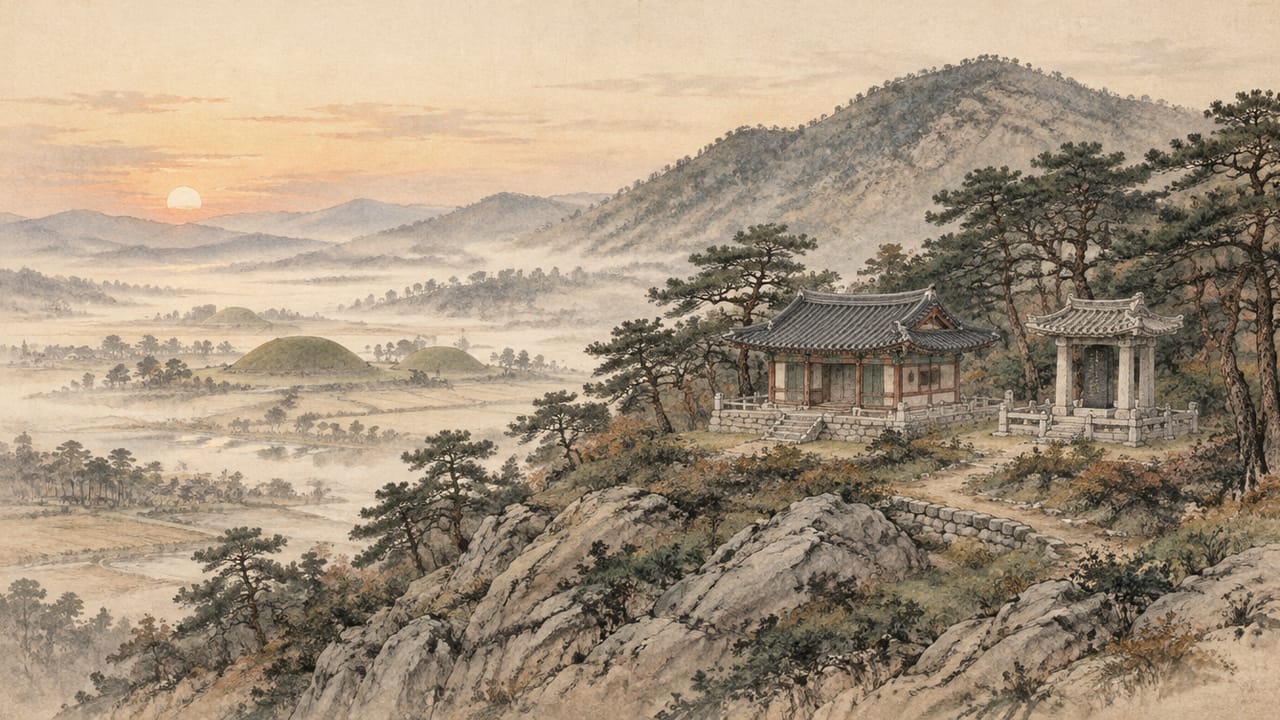
Pyoam, Gyeongju — The clan's birthplace on the slopes of Sogeumgangsan in Dongcheon-dong, designated a North Gyeongsang Provincial Monument in 1985. A memorial stele was erected in 1806 and the shrine hall Pyoamjae in 1925; rites are held every March.
Gugang Seowon — In Angang-eup, Gyeongju, founded in 1692 to honor Yi Je-hyeon. Demolished under the 1868 academy closure order and restored in 1917, it keeps the woodblocks of the Ikjae Munjip.
Ikjae Yeongdang — A portrait shrine for Yi Je-hyeon in Tanbu-myeon, Boeun County, said to have been built in 1504 by his descendant Yi Sa-gyun while in exile there. It became a North Chungcheong Provincial Monument in 2014, and its portrait is a provincial tangible heritage. Portraits of Yi Je-hyeon are also kept at Sullak Yeongdang in Cheongju, Gugoksa in Gangjin and Gasan Seowon in Jangseong, and the full-length portrait by the Yuan painter Chen Jianru is a National Treasure in the National Museum of Korea.
Tomb of Yi Hang-bok — In Geumhyeon-ri, Gasan-myeon, Pocheon, a Gyeonggi Provincial Monument, with a portrait shrine and a 1652 spirit-way stele below it. The birthplace of Yi Sang-seol in Jincheon-eup is a North Chungcheong Provincial Monument.
Known clan villages include Yangnam-myeon and Angang-eup in Gyeongju, Yecheon, Hamchang-eup in Sangju, Munui-myeon in Cheongju, Jincheon, Gongju, Nampo-myeon in Boryeong, Imsil and Wanju, and Goheung, Yeongam and Haenam.
Branch lines and genealogical succession can differ by lineage group and jokbo, so please check against your own family genealogy.
Main branches (派)
Ikjae-gong-pa, Iam-gong-pa, Gukdang-gong-pa, Sangseo-gong-pa, Seoktan-gong-pa
Ikjae-gong-pa (益齋公派)
The Ikjae-gong branch descends from Yi Je-hyeon (李齊賢, 1287-1367), pen name Ikjae (益齋), a late-Goryeo official and scholar. He was the 17th-generation descendant of the clan's mid-founder Yi Geo-myeong (李居明) and a son of Yi Jin (李瑱), who held the honorary title of state councillor. He rose to chancellor (munha sijung), was enfeoffed as Prince Gyerim (Gyerim Buwongun), and received the posthumous name Munchung (文忠).
Royal Consort Hyebi Yi, a consort of King Gongmin, was his daughter. Left State Councillor Yi Gyeong-eok (李慶億) of the Joseon period and Yi Sang-seol (李相卨), chief envoy of the Korean Empire's secret mission to The Hague, are counted among this branch.
Iam-gong-pa (怡庵公派)
The Iam-gong branch descends from Yi Gwan (李琯). He was a son of Yi Jin (李瑱) and is recorded as a brother of Yi Je-hyeon, founder of the Ikjae-gong branch.
Yi Seong-rim (李成林, ?-1388), who served as left chancellor and chief chancellor in late Goryeo, is known as a member of this branch.
Gukdang-gong-pa (菊堂公派)
The Gukdang-gong branch descends from Yi Cheon (李蒨, ?-1349), a late-Goryeo official. He was the 17th-generation descendant of the mid-founder Yi Geo-myeong and a son of Yi Se-gi (李世基). He held senior posts including assistant chancellor (cheomui chamni) and jeongdang munhak, was enfeoffed as Prince Wolseong, and received the posthumous name Munhyo (文孝).
Right State Councillor Yi Wan (李浣), Yi Byeok (李蘗), one of the founders of the Korean Catholic Church, and Lee Myung-bak, the 17th President of the Republic of Korea, are known as descendants of this branch.
Sangseo-gong-pa (尙書公派)
The Sangseo-gong branch descends from Yi Gwa (李薖), the 17th-generation descendant of the mid-founder Yi Geo-myeong and a son of Yi Se-gi. The genealogy records that he served as a minister (sangseo), but this is not confirmed in the Goryeosa (History of Goryeo).
Yi Hang-bok (李恒福, 1556-1618), chief state councillor under King Seonjo and Prince Oseong, came from this branch and founded the Baeksa-gong sub-branch. His descendants include chief state councillors Yi Gwang-jwa, Yi Jong-seong and Yi Yu-won, the independence activist Yi Hoe-yeong, and Yi Si-yeong, the first Vice President of the Republic of Korea.
Seoktan-gong-pa (石灘公派)
The Seoktan-gong branch descends from Yi Jon-o (李存吾, 1341-1371), pen name Seoktan (石灘), a late-Goryeo official and the 19th-generation descendant of the mid-founder Yi Geo-myeong. In 1366, as a junior censor (ujeongeon), he impeached the monk-politician Sin Don, was demoted to a provincial post, and later lived in retirement at Seoktan in Gongju until his death.
His collected works, the Seoktanjip, survive. His son Yi Rae (李來) became a merit subject (jwamyeong gongsin) under King Taejong and was enfeoffed as Prince Gyeseong.
Branch divisions vary by lineage and jokbo; confirm your own branch in your family's records.
Notable figures
이알평(founder of the Gyeongju Yi clan), 이제현(Goryeo official and scholar; founder of the Ikjaegong line), 이존오(late-Goryeo official; founder of the Seoktangong line), 이항복(Chief State Councillor of Joseon), 이시발(Joseon Minister of Punishments), 이완(Joseon general and Right State Councillor), 이경억(Joseon Left State Councillor), 이광좌(Joseon Chief State Councillor), 이벽(early Catholic leader), 이유원(Joseon Chief State Councillor), 이회영(independence activist), 이시영(first Vice President of Korea), 이상설(Hague envoy; independence activist), 이병철(founder of Samsung)
Tap a name for the full profile (life, career, grave, descendants).
경주 이씨 — Independence patriots
경주 이씨 figures recognized as independence patriots (National Independence Hall / Gonghun public data). Tap a name for the citation.
The Gyeongju Yi Clan and Its Founder, Yi Al-pyeong
The Gyeongju Yi clan (慶州 李氏), with its ancestral seat in Gyeongju, traces its founder to Yi Al-pyeong (李謁平), village chief of Alcheon Yangsan, one of the six villages of Saro that predate the founding of Silla. As one of the six village chiefs who took part in enthroning Bak Hyeokgeose, he is said to have been granted the surname Yi (李) in the year 32.
A Distinguished House of Goryeo and Joseon
It produced many civil officials and scholars, including the great late-Goryeo scholar Ikjae Yi Je-hyeon, and divides into several branches such as the Ikjaegong line and the Gukdanggong line. It is a representative surname, the second most populous ancestral seat among the Yi surname after the Jeonju Yi clan.
How to build your 경주 이씨 tree
- Start with yourself — sign in to get your own tree. Enter your name, birth year and clan seat (경주).
- Add older generations — add parents and grandparents. For accuracy see tracing ancestors with jejeok records (usually to about 5 generations).
- Link siblings & children — sort by generational name (hangnyeol) to see each generation at a glance.
- Export & share — save the finished tree as a PDF and invite family to manage it together.
Related reading
경주 이씨 clan association
The 경주 이씨 clan association can be found in the Korean E-Jokbo Library clan-association directory.
✍ Request additions / corrections to the 경주 이씨 family tree infoStart your family tree free →