이상설 李相卨
Independence activist and scholar; special envoy to The Hague
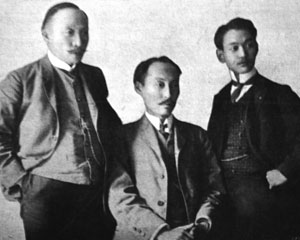
| Life | 1870 ~ 1917 |
| Era | 근현대 |
| Clan | 경주 이씨 |
Life & career
Yi Sang-seol (1870–1917) was a Korean Confucian scholar, official, and independence activist who served as head of the Seonggyungwan academy and a councilor in the Korean Empire government. He fiercely opposed the 1905 Eulsa Treaty that stripped Korea of its diplomatic sovereignty.
In 1907, on Emperor Gojong's secret orders, he traveled with Yi Jun and Yi Wi-jong to the Hague Peace Conference to expose the illegitimacy of the treaty and appeal for international recognition of Korean sovereignty. He was sentenced to death in absentia by a Korean court for this act and was never able to return home.
He founded the Seojeon School in North Gando to promote national education, organized the Seongmyeonghoe in the Russian Maritime Province in 1910 to denounce Japanese aggression, and the following year established the Kwonuphoe, which published a newspaper and expanded Korean schools abroad. In 1914, with Yi Dong-hwi and Yi Dong-nyeong, he helped found the Provisional Government of the Korean Republic — the first Korean government-in-exile after annexation — and was named its president.
He died of illness in Nikolsk-Ussuriysky in March 1917. On his deathbed he urged his comrades to achieve national liberation and asked that his body and belongings be burned and no memorial rites held for him.