안중근 安重根
Independence patriot · Armed resistance (uiyeol) · Order of Merit for National Foundation, Grand Order of the Republic of Korea (Daehanmingukjang, 1962)
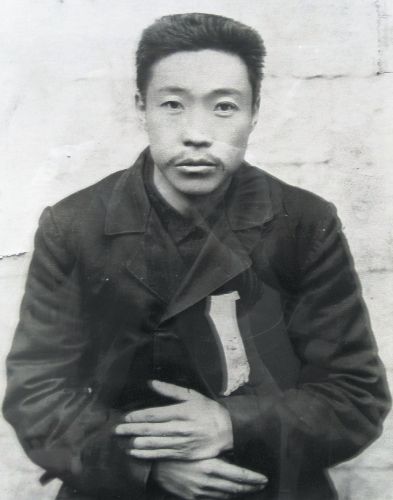
| Life | 1879 ~ 1910 |
| Era | 근현대 |
| Clan | 순흥 안씨 |
Life & career
An Jung-geun (1879-1910) was born in Haeju, Hwanghae Province, and was baptized a Catholic at nineteen, taking the name Thomas. He trained militia fighters and fought Japanese forces near the Tumen River, and as a lieutenant general of the Righteous Army led a raid into Japanese-held territory in North Hamgyong Province in July 1908.
In early 1909 he formed the "Society for the Cutting of Fingers" with eleven fellow patriots, severing part of his left ring finger to seal their pledge for Korean independence. On October 26 of that year he shot and killed Ito Hirobumi, the chief architect of Japan's annexation of Korea, at Harbin Station, and was arrested at the scene. Imprisoned at Lushun Prison, he was sentenced to death on February 14, 1910, and executed on the morning of March 26 at age thirty.
While imprisoned he wrote "A Treatise on Peace in the East," arguing for coexistence among Korea, China, and Japan, though the work was left unfinished at his execution.
Grave
His remains are believed to have been buried in a prisoners' cemetery near Lushun Prison, but Japanese authorities never disclosed the exact location, and they have not been recovered to this day.
Descendants
With his wife Kim A-ryeo, he had a daughter, An Hyeon-saeng, and two sons, An Bun-do (also known as An Mun-saeng) and An Jun-saeng; the younger son An Jun-saeng died of tuberculosis in 1951.