최익현 崔益鉉
Late-Joseon "defend orthodoxy, reject heterodoxy" Confucian scholar and righteous-army commander
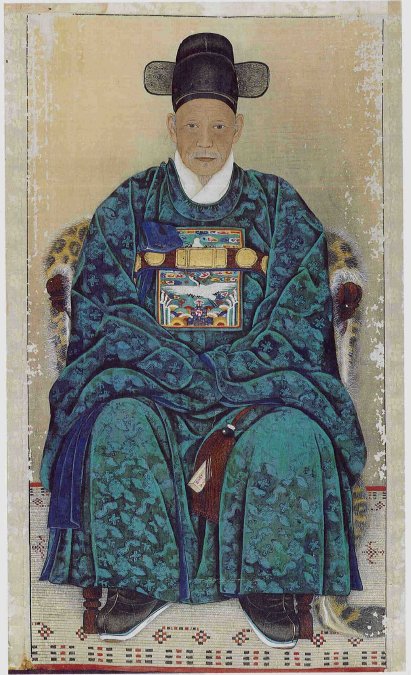
| Life | 1834 ~ 1907 |
| Era | 근현대 |
| Clan | 경주 최씨 |
Life & career
Choe Ik-hyeon (崔益鉉) had the courtesy name Chan-gyeom (贊謙) and the pen name Myeonam (勉菴), and was from Pocheon, Gyeonggi Province. A disciple of Yi Hang-ro, he was a Confucian scholar who represented the "defend orthodoxy, reject heterodoxy" (衛正斥邪) ideology. He served as magistrate of Sinchang and as third minister of taxation (hojo champan).
He is famous for the 1876 incident in which, opposing the conclusion of the Ganghwa Treaty, he prostrated himself before Gwanghwamun bearing an axe and submitted the "Byeongja memorial rejecting peace" (丙子斥和疏). He was also exiled several times for memorials criticizing the Daewongun's misrule.
When the Eulsa Treaty was forced through in 1905, he raised a righteous army in Taein, North Jeolla Province, in 1906, but was captured by government troops and deported to Tsushima Island, Japan. There he died as a martyr after a hunger strike. His works include the Myeonam jip (勉菴集), and a portrait of him painted by Chae Yong-sin survives. His posthumous title was Munheon (文憲).
Grave
Gwaneum-ri, Gwangsi-myeon, Yesan County, South Chungcheong Province
Descendants
He had sons including his eldest son Choe Yeong-jo, and his descendants continued within the Gyeongju Choe clan.