김정희 金正喜
Late Joseon calligrapher-painter and epigrapher who perfected the Chusache style
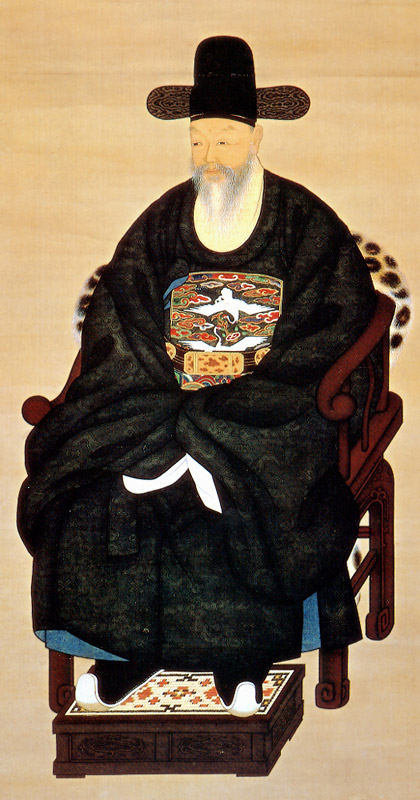
| Life | 1786 ~ 1856 |
| Era | 조선 |
| Clan | 경주 김씨 |
Life & career
Kim Jeong-hui (金正喜, 1786-1856) was a civil official, calligrapher-painter, and epigrapher of the late Joseon period, using the courtesy name Wonchun (元春) and the art names Chusa (秋史) and Wandang (阮堂), among others. His clan lineage was Gyeongju, and he was the son of Kim No-gyeong, who served as Deputy Minister of War.
He passed the higher civil service examination during King Sunjo's reign and served as Daesaseong of the National Academy and Deputy Minister of Personnel, but due to political ups and downs he was exiled to Jeju and Bukcheong. From the mature brushwork of his exile years, he perfected the original calligraphic style known as Chusache, and his representative work Sehando (Winter Landscape) survives.
Adopting Qing evidential scholarship, he pioneered Korean epigraphy and authenticated the Silla King Jinheung Monument on Mount Bukhan. His writings include the literary collection Wandang Jip and the epigraphic work Yedang Geumseok Gwa-allok.
Grave
Yonggung-ri, Sinam-myeon, Yesan-gun, Chungcheongnam-do (Chungcheongnam-do Cultural Heritage Material No. 188)