임경업 林慶業
Joseon general of the Byeongja War era known for his pro-Ming stance; courtesy name Yeongbaek, pen name Gosong, posthumous name Chungmin
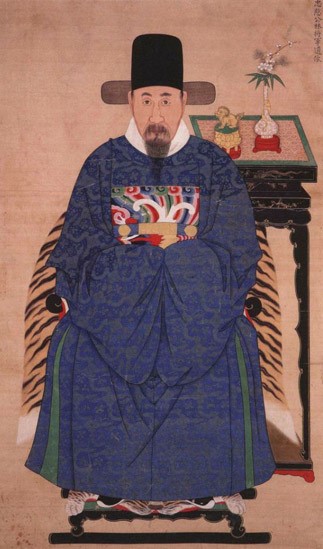
| Life | 1594 ~ 1646 |
| Era | 조선 중기 |
| Clan | 평택 임씨 |
Life & career
Im Gyeong-eop (1594-1646) was a mid-Joseon general of the Pyeongtaek Im clan, with courtesy name Yeongbaek, pen name Gosong and posthumous name Chungmin. He is said to have been born in Dalcheon-chon, Chungju, although some records say Gaecheon in Pyeongan Province. His father was Im Hwang and his mother came from the Papyeong Yun clan. He belonged to the Jeongaengnyeong line and is usually described as a seventh-generation descendant of Im Jeong, though generation counts differ by source.
Fond of war games as a boy, he passed the licentiate examination in 1612 and the military examination in 1618 together with his younger brother Im Sa-eop. In the 1624 rebellion of Yi Gwal he joined the government forces and distinguished himself at the Battle of Anhyeon, being named a first-class original merit subject. He later repaired Geomsan and Yonggol fortresses, and in 1633 rebuilt Baengma Fortress and Uiju as Defense Commissioner of Cheongbuk and Magistrate of Yeongbyeon.
During the Manchu invasion of 1636 he tried to block the Qing advance from Baengma Fortress, but the army bypassed it and marched on Seoul. Later, forced to take part in Qing campaigns against Ming forces, he was suspected of secretly contacting the Ming, fled to the Ming in 1643, was captured by the Qing and taken to Shenyang. Returned to Joseon in 1646, he died during interrogation.
Northern Defense and Baengma Fortress
In the 1630s Im Gyeong-eop repaired fortresses and town walls across Pyeongan Province. In 1633 he rebuilt Baengma Fortress and Uiju and is recorded as having put down the rebel Kong Youde, for which the Ming court granted him office. In 1634 he was dismissed on a false charge of releasing prisoners and was reinstated in 1636 when cleared.
Exile and Return
When Qing forced Joseon to attack the Ming at Gado in 1637, he is said to have warned the Ming and so reduced the damage. After this came to light he escaped custody at Geumgyo station in Hwanghae, crossed to the Ming in 1643 and was given a deputy commander's post, but the Ming collapsed and he was taken prisoner. Sent back in 1646, he died under interrogation, and six years later Kim Ja-jeom was executed for treason.
Restoration, Commemoration and Folklore
He was posthumously restored in 1697, and in 1791 King Jeongjo composed the text for the stele called Eoje Dalcheon Chungnyeolsa-bi. His wife, of the Wansan Yi clan, is said to have killed herself under Qing interrogation, and a memorial stele for her stands in the shrine grounds. Popular belief honored him as a guardian general, the novel Im Gyeong-eop jeon was widely read, and stories such as the Yeonpyeong croaker-fishing tale survive. Such folklore should be read apart from the historical record.
Grave
His tomb is known to be in Chungju, and he was enshrined at Chungnyeolsa in Chungju and Chungminsa in Seoncheon. Local scholars founded Chungnyeolsa in 1726, it received a royal plaque the next year, and it was developed as a sacred site in 1978.