서정주 徐廷柱
Poet, pen name Midang, author of Hwasajip and Jilmaje Sinhwa
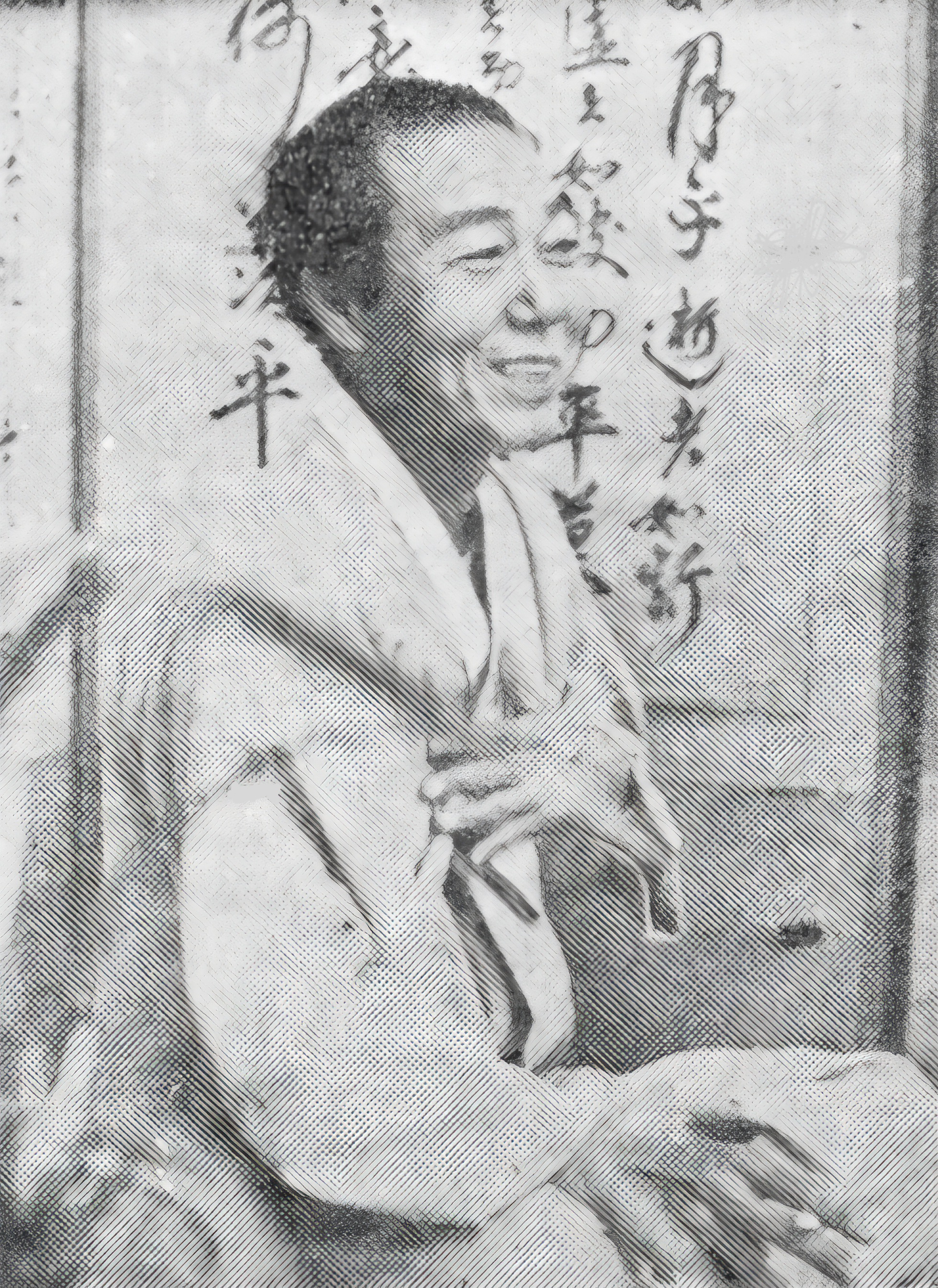
| Life | 1915 ~ 2000 |
| Era | 일제강점기·현대 |
| Clan | 달성 서씨 |
Life & career
Seo Jeong-ju (徐廷柱, 18 May 1915 - 24 December 2000) was a poet and educator of the Dalseong Seo clan, with pen names Midang and Gungbal. He was born in Seonun-ri, Buan-myeon, Gochang County, North Jeolla, and grew up in Buan. At fourteen he went to Seoul and attended Jungang Elementary School, and in 1933 studied under the monk Bak Han-yeong at Daewonam of Gaeunsa. He left Jungang Buddhist College in 1936, and the same year his poem 'Byeok' (Wall) won the Dong-A Ilbo's spring literary contest, launching his career; he co-founded the coterie journal Siin Burak with Kim Gwang-gyun, Kim Dong-ri and Oh Jang-hwan.
His collections include Hwasajip (1941), Gwichokdo (1946), Siseon (1955), Sillacho (1960), Dongcheon (1968), Jilmaje Sinhwa (1975) and Neulgeun Tteoldoli-ui Si (1993). Rooted in folk and Buddhist themes and a poetic language that uses the southwestern dialect, he is counted among the leading modern Korean poets, and the line about the wind in his poem 'Self-Portrait' is widely quoted. 'Pureureun Nal' appeared in Dongcheon and was set to music by the singer Song Chang-sik. After Liberation he formed the Association of Joseon Youth Writers, took part in founding the Korean Writers' Association, and taught for many years at Sorabeol Arts College and Dongguk University.
However, in the late colonial period he took the Japanese name Tatsushiro Shizuo (達城靜雄) and published writing and poems praising the war and urging Koreans to enlist, and was included in the 2002 list of pro-Japanese writers, the list of 708 collaborators and the Dictionary of Pro-Japanese Collaborators. He was also criticized for a poem honoring President Chun Doo-hwan in the early 1980s. Wikipedia notes that, apart from his literary achievement, his historical assessment is controversial because of these actions. The Midang Poetry Museum stands in his hometown of Gochang and his Seoul house in Gwanak-gu has been restored. He died in 2000, the year his wife Bang Ok-suk also died. This entry gives public records, focusing on facts.
Debut and Poetic World
He debuted in 1936 with 'Byeok' in the Dong-A Ilbo contest and published his first collection Hwasajip in 1941. His poetry is characterized by folk and Buddhist themes and a language that uses the Jeolla dialect.
After Liberation
He took part in founding the Association of Joseon Youth Writers and the Korean Writers' Association and taught at Sorabeol Arts College and Dongguk University. The Midang Poetry Museum is in Gochang.
Collaboration and Controversy
Name-changing and pro-Japanese works in the late colonial period led to his listing in the Dictionary of Pro-Japanese Collaborators, and he was criticized for a poem honoring Chun Doo-hwan in the early 1980s. Wikipedia sums up that his historical assessment is controversial regardless of his literary achievement.
Grave
The location of his tomb could not be confirmed here.