이승훈 李昇薰
Educator who founded Osan School and one of the 33 national representatives of the March 1st Movement; pen name Namgang; recognized independence activist
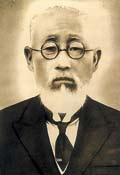
| Life | 1864 ~ 1930 |
| Era | 대한제국·일제강점기 |
| Clan | 여주 이씨 |
Life & career
Yi Seung-hun (1864-1930) was an independence activist and educator of the Yeoju Yi clan, pen name Namgang, born Yi In-hwan. Born to a poor family in Jeongju, North Pyongan, he lost his parents young and at sixteen worked in a brassware shop. Through peddling and running a brassware workshop he built a fortune and became one of the country's leading businessmen, but went bankrupt in 1904 when the Russo-Japanese War ruined his trading company plan. He is a different person from the earlier Catholic Yi Seung-hun (1756, Pyeongchang Yi).
Moved by a speech by An Chang-ho in Pyongyang after the 1905 treaty, he turned in his forties to education and social movements, founding Gangmyeong Uisuk and Osan School. He brought in Jo Man-sik as a teacher, and Osan is said to have produced figures such as Ryu Yeong-mo and Ham Seok-heon. He joined the New People's Association, became Presbyterian in 1910 and an elder in 1916, and was arrested in the 1911 "105-person incident" and sentenced to six years.
In the 1919 March First Movement he joined the 33 national representatives as the Christian delegate and received a three-year sentence; Osan School suffered heavily but was rebuilt in July. Released on parole in 1922, he took part with Yi Sang-jae and others in the movement for a people's university and the Joseon Education Association, and continued as principal and chairman of Osan. At his death in 1930 he left a will donating his body for teaching at Keijo Imperial University, which Japanese authorities blocked.
Education for National Salvation
Osan School ranks with An Chang-ho's Daeseong School as one of the two pillars of nationalist education in the northwest. After the March First Movement its teachers were arrested and the school and church burned, but it was rebuilt in July 1919 through the efforts of Jo Man-sik and others. After parole he continued local work such as communal farming at Yongdong, and with Yi Sang-jae, Yun Chi-ho and Kim Seong-su campaigned for a people's university, which Japanese suppression defeated.
Honors
He is a recipient of the Order of Merit for National Foundation (Republic of Korea Medal) and was named "Cultural Figure of the Month" in December 1999 and "Independence Activist of the Month" in March 2001.