해평 윤씨 family tree
Build your family tree online해평 윤씨(海平 尹氏) — Said to be a family that takes Yun Gun-jeong of Goryeo as its founder and produced figures in the Joseon period and modern times.
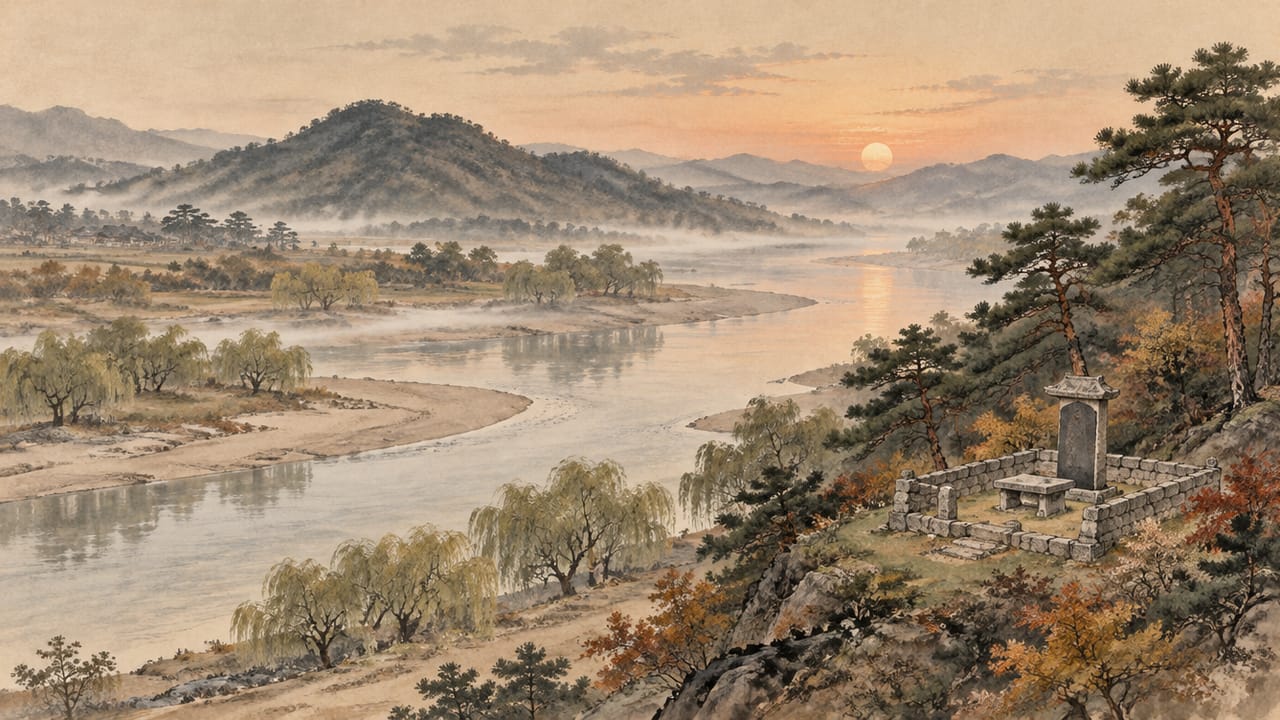
About the 해평 윤씨 clan
Said to be a family that takes Yun Gun-jeong of Goryeo as its founder and produced figures in the Joseon period and modern times. In the 2015 Census the 해평 윤씨 clan numbered about 32,091 people, one of Korea's major surnames and clans. Even among people surnamed 윤, a different clan seat (bon-gwan, 해평) means a different lineage. New to these terms? See the bon-gwan, pa & hangnyeol guide.
Roots and History of the Haepyeong Yun Clan
Founder and Origin of the Clan Seat
The Haepyeong Yun clan (海平 尹氏) traces its founder to Yun Gun-jeong (尹君正), a Goryeo official under Kings Gojong and Wonjong. He helped suppress a rebellion at Wonju in 1257 (44th year of Gojong), served as Right and then Left Executive under Wonjong, and in 1273 rose to Geumja Gwangnok Daebu, Acting Minister of Works and Left Executive of the Secretariat.
The clan seat, Haepyeong, is today's Haepyeong-myeon in Gumi, North Gyeongsang Province. Yun Gun-jeong's grandson Yun Seok (尹碩) went to the Yuan court as an envoy under King Chungsuk and helped halt a plan to set up a Yuan provincial administration (haengseong) in Goryeo; for this he was named a merit subject, rose to state councillor and was enfeoffed as Prince Haepyeong (海平府院君). His descendants then took Haepyeong as their clan seat and retroactively honored Yun Gun-jeong as founder. Despite the similar name, the clan is a separate lineage unrelated to the Papyeong Yun clan.
The Clan Through the Ages
The clan divides in the fourth generation between Yun Seok's two sons. Descendants of the elder, Yun Ji-hyeon, form the Munyeong-gong branch, which split into four sub-branches by the eighth generation; descendants of the younger, Yun Ji-pyo, form the Chunggan-gong branch, which split into sixteen sub-branches by the thirteenth generation.
According to local-history sources, the clan produced six state councillors and three Daejehak (chief scholars) during Joseon. Only Chief State Councillor Yun Eun-bo under King Jungjong and Chief State Councillor Yun Seung-hun under King Seonjo belonged to the Munyeong-gong branch; all the others came from the Chunggan-gong branch. Above all, the Oeum-gong line descended from Yun Du-su (pen name Oeum), Chief State Councillor under King Seonjo, and the Woljeong-gong branch descended from his younger brother Yun Geun-su (pen name Woljeong), a Daejehak, flourished so greatly that they now account for most of the clan.
All five of Yun Du-su's sons, Yun Bang, Yun Heun, Yun Hwi, Yun Hwon and Yun O, passed the state examinations, and the eldest, Yun Bang, became Chief State Councillor under King Injo, earning the family fame for a father and son who both served as Chief State Councillor. Their descendants formed the Chicheon-gong (Yun Bang), Doje-gong (Yun Heun), Jangju-gong (Yun Hwi) and Baeksa-gong (Yun Hwon) branches, among others. Late Joseon produced Minister of Personnel Yun Geup, famous for his "Yun Sangseo" calligraphic style, Right State Councillor Yun Si-dong under King Jeongjo, and Daejehak Yun Sun-ji and Yun Sun, while Yun Yong-seon served as state councillor at the end of the dynasty. In the Chicheon-gong line, high office ran through many generations: Yun Sin-ji's son Yun Ji became Vice Minister of Personnel, Yun Ji's fifth-generation descendant Yun Myeong-ryeol and his son Yun Chi-hui became Vice Minister and Minister of Personnel respectively, and Yun Chi-hui's son was state councillor Yun Yong-seon.
The clan frequently married into the royal family: Yun Sin-ji, son-in-law of King Seonjo, and Yun Ui-seon, son-in-law of King Sunjo, came from it, and Empress Sunjeonghyo, second empress of Emperor Sunjong of the Korean Empire, was a descendant of Yun Bang. In modern times the clan produced Yun Chi-ho, an eighth-generation descendant of Yun Heun, and Yun Bo-seon, the fourth President of South Korea and a 22nd-generation member of the Doje-gong branch. The 2015 census counted 32,091 members.
Notable Figures
- Yun Gun-jeong (尹君正) — Founder of the clan, who rose to Acting Minister of Works and Left Executive under Kings Gojong and Wonjong.
- Yun Seok (尹碩) — Diplomat under King Chungsuk who blocked the plan for a Yuan provincial office, became a merit subject and Prince Haepyeong, giving the clan its seat.
- Yun Ji-pyo (尹之彪, 1310-1382) — Prince Haepyeong and founder of the Chunggan-gong branch; Yi Saek wrote his epitaph.
- Yun Eun-bo (尹殷輔, 1468-1544) — Munyeong-gong figure who held key posts under Seongjong, Yeonsangun and Jungjong and became Chief State Councillor under Jungjong.
- Yun Du-su (尹斗壽, 1533-1601) — Pen name Oeum. Escorted King Seonjo during the Imjin War, urged the retreat to Uiju, and became Chief State Councillor. View profile
- Yun Geun-su (尹根壽, 1537-1616) — Pen name Woljeong. Younger brother of Yun Du-su who served as Daejehak, handled diplomacy with Ming during the Imjin War and was renowned for his prose and calligraphy.
- Yun Seung-hun (尹承勳, 1549-1611) — Munyeong-gong figure who helped restore order after the Imjin War and became Chief State Councillor under King Seonjo.
- Yun Bang (尹昉, 1563-1640) — Eldest son of Yun Du-su who retired in protest at the deposition of Queen Dowager Inmok and became Chief State Councillor after the Injo Restoration.
- Yun Sin-ji (尹新之, 1582-1657) — Royal son-in-law married to King Seonjo's daughter Princess Jeonghye, skilled in poetry, calligraphy and painting.
- Yun Sun (尹淳, 1680-1741) — Minister of Personnel and Daejehak, remembered as a leading calligrapher of late Joseon.
- Yun Geup (尹汲, 1697-1770) — Minister of Personnel whose distinctive hand became known as the "Yun Sangseo" style.
- Yun Chi-ho (尹致昊, 1865-1945) — Eighth-generation descendant of Yun Heun and enlightenment intellectual who led the Independence Club, but who collaborated with Japan in the late colonial period.
- Empress Sunjeonghyo (純貞孝皇后, 1894-1966) — Second empress of Emperor Sunjong and a descendant of Chief State Councillor Yun Bang.
- Yun Bo-seon (尹潽善, 1897-1990) — Mayor of Seoul and National Assembly member who became the fourth President of South Korea. View profile
Clan Villages and Heritage Sites
Yun Gun-jeong's tomb has been lost, so an altar was set up in Somae-ri, Sari-myeon, Goesan, North Chungcheong, in 1971, moved in 1998 to Geumsan-ri, Haepyeong-myeon, Gumi, the ancestral seat, and given a new altar stele in 2003. The tomb of Munyeong-gong Yun Ji-hyeon is likewise lost, and an altar was built for him at Somae-ri in 1925.
Representative clan villages include Somae-ri in Sari-myeon, Goesan, and Monam-ri in Sinni-myeon, Chungju (North Chungcheong); Cheongyang and Sinhang-ri in Dunpo-myeon, Asan (South Chungcheong); and Icheon-ri in Oeseo-myeon, Sangju (North Gyeongsang), with another formerly in Geumcheon, Hwanghae Province. President Yun Bo-seon's birthplace in Dunpo-myeon, Asan, and the Yun Bo-seon House in Anguk-dong, Jongno-gu, Seoul, where he lived, are preserved as national heritage.
Branch divisions and lineages can differ between family organizations and genealogies, so please check against your own family's jokbo.
Main branches (派)
Munyeong-gong-pa, Chunggan-gong-pa, Woljeong-gong-pa, Doje-gong-pa, Chicheon-gong-pa, Jangju-gong-pa, Baeksa-gong-pa
Munyeong-gong-pa (文英公派)
The Munyeong-gong branch descends from Yun Ji-hyeon (尹之賢), eldest son of Yun Seok (尹碩), Prince Haepyeong. He held senior rank and served as jeongdang munhak and grand academician of the Jinhyeon-gwan, with the posthumous name Munyeong (文英).
It parted from the Chunggan-gong branch in the fourth generation from the founder Yun Gun-jeong, and in the eighth generation divided into four sub-branches: the Hanseong-yun-gong, Cheongju-gong, Jangnyeong-gong and Namwon-gong lines.
Chunggan-gong-pa (忠簡公派)
The Chunggan-gong branch descends from Yun Ji-pyo (尹之彪, 1310-1382), second son of Yun Seok. A merit subject, he rose to munha pyeongni, was enfeoffed as Prince Haepyeong, and received the posthumous name Chunggan (忠簡); Yi Saek (Mogeun) wrote his epitaph.
In the 13th generation the line divided into 16 sub-branches. Yun Du-su (尹斗壽), pen name Oeum (梧陰), chief state councillor under King Seonjo, and his younger brother Yun Geun-su came from this line.
Woljeong-gong-pa (月汀公派)
The Woljeong-gong branch is a sub-branch of the Chunggan-gong line descended from Yun Geun-su (尹根壽), pen name Woljeong (月汀), younger brother of Yun Du-su.
It is one of the 16 sub-branches into which the Chunggan-gong line divided in the 13th generation, and stands in an uncle-nephew relationship to the Chicheon-gong, Doje-gong, Jangju-gong, Baeksa-gong and Bangeo-gong branches founded by Yun Du-su's sons.
Doje-gong-pa (都制公派)
The Doje-gong branch is a sub-branch of the Chunggan-gong line descended from Yun Heun (尹昕), a son of Yun Du-su.
Yun Po-sun (尹潽善, 1897-1990), the fourth President of the Republic of Korea, was a 22nd-generation descendant in this branch; he served as a National Assembly member and mayor of Seoul before taking office as president in 1960.
Chicheon-gong-pa (稚川公派)
The Chicheon-gong branch, a sub-branch of the Chunggan-gong line, descends from Chicheon-gong Yun Bang (尹昉, 1563-1640), eldest son of Yun Du-su. After retiring in protest at the deposition of Queen Dowager Inmok, he returned after the Injo Restoration and rose through Minister of Rites, Right and Left State Councillor to Chief State Councillor, so that he and his father were remembered as a father-and-son pair of Chief State Councillors.
His sons included Yun I-ji, Director of the Office of Royal Kin, and Yun Sin-ji, a royal son-in-law of King Seonjo. Later descendants include Minister of Personnel Yun Chi-hui, late-Joseon state councillor Yun Yong-seon and Yun Ui-seon, son-in-law of King Sunjo, and Empress Sunjeonghyo, second empress of Emperor Sunjong, was also a descendant of Yun Bang.
Jangju-gong-pa (長洲公派)
The Jangju-gong branch, a sub-branch of the Chunggan-gong line, descends from Jangju-gong Yun Hwi (尹暉), third son of Yun Du-su. During the Manchu invasion of 1636 he escorted King Injo and went back and forth to the enemy camp to negotiate peace, later rising through Minister of Punishments to Right Associate State Councillor.
His grandson Yun Gye and great-grandson Yun Se-gi both served as Minister of War, and the branch also produced the calligrapher and Minister of Personnel Yun Geup, Right State Councillor Yun Si-dong under King Jeongjo, and the minister brothers Yun Chi-yong and Yun Chi-jeong.
Baeksa-gong-pa (白沙公派)
The Baeksa-gong branch, a sub-branch of the Chunggan-gong line, descends from Baeksa-gong Yun Hwon (尹暄), fourth son of Yun Du-su, who served as Minister of War.
His son Yun Sun-ji became Minister of Rites and Daejehak, his great-grandson Yun Yu served as Minister of Personnel, and Yun Sun of the same line rose through Minister of Personnel to Daejehak, also leaving his name as a calligrapher of late Joseon.
Branch divisions vary by lineage and jokbo; confirm your own branch in your family's records.
Notable figures
윤군정(founder·Goryeo Left Executive), 윤석(Prince Haepyeong·origin of the clan seat), 윤지표(founder of the Chunggan-gong branch), 윤은보(Chief State Councillor under King Jungjong), 윤두수(Joseon civil official·Chief State Councillor), 윤근수(Daejehak·pen name Woljeong), 윤승훈(Chief State Councillor under King Seonjo), 윤방(Chief State Councillor under King Injo), 윤신지(royal son-in-law of King Seonjo·painter-calligrapher), 윤순(Daejehak·calligrapher), 윤급(Minister of Personnel·Yun Sangseo style), 윤치호(enlightenment intellectual), 순정효황후(second empress of Emperor Sunjong), 윤보선(4th President of South Korea)
Tap a name for the full profile (life, career, grave, descendants).
How to build your 해평 윤씨 tree
- Start with yourself — sign in to get your own tree. Enter your name, birth year and clan seat (해평).
- Add older generations — add parents and grandparents. For accuracy see tracing ancestors with jejeok records (usually to about 5 generations).
- Link siblings & children — sort by generational name (hangnyeol) to see each generation at a glance.
- Export & share — save the finished tree as a PDF and invite family to manage it together.
Related reading
해평 윤씨 clan association
The 해평 윤씨 clan association can be found in the Korean E-Jokbo Library clan-association directory.
✍ Request additions / corrections to the 해평 윤씨 family tree infoStart your family tree free →