강세황 姜世晃
Late Joseon civil official, calligrapher-painter, and art critic; art name Pyoam (豹菴)
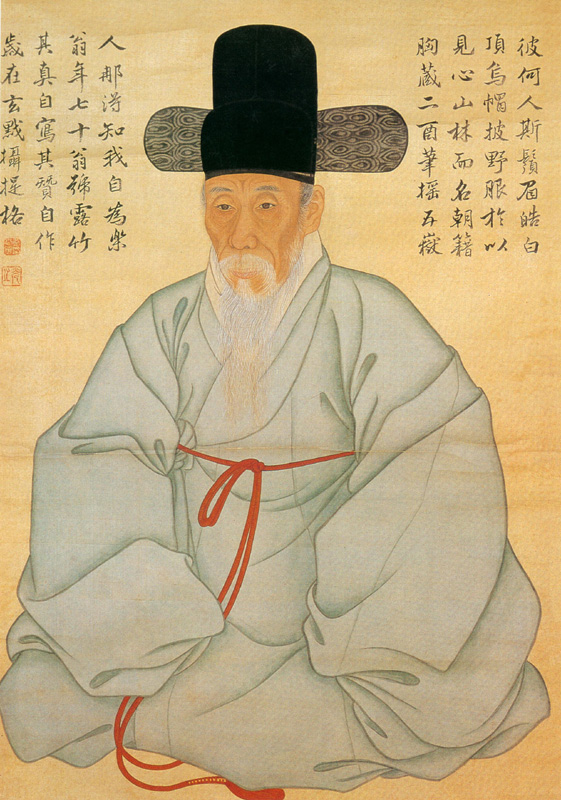
| Life | 1713 ~ 1791 |
| Era | 조선 |
| Clan | 진주 강씨 |
Life & career
Born in Seoul to the Jinju Kang clan, Gang Se-hwang entered officialdom late in life through the eumseo hereditary appointment system in 1773, then topped a special examination in 1776 before rising to Minister of Rites and Mayor of Hanseong. As an envoy to Qing China he became so celebrated for his calligraphy and painting that collectors in Beijing sought out his work.
Acclaimed as a master of the “three perfections” of poetry, calligraphy, and painting, he mentored artists such as Kim Hong-do and Sin Wi, shaping eighteenth-century Joseon painting profoundly. He experimented with true-view landscape, genre painting, and Western pictorial techniques, and his critical writings on art earned him the title “chief of the garden of arts.” He was married twice, to women of the Jinju Yu and Naju Ra clans.
His self-portrait (Korean Treasure No. 590) and the painting Yeongtongdonggu-do are among his best-known works, alongside his collected writings, Pyoamyugo. He is buried in Jincheon, North Chungcheong Province, a site designated Chungcheongbuk-do Cultural Material No. 83.
Grave
Jincheon-gun, Chungcheongbuk-do
Descendants
His grandson was the poet Kang Jin (姜溍, 1807-1858).