진주 강씨 family tree
Build your family tree online진주 강씨(晉州 姜氏) — The representative ancestral seat of the Kang surname, said to take as its founder the celebrated Goguryeo general Kang I-sik.
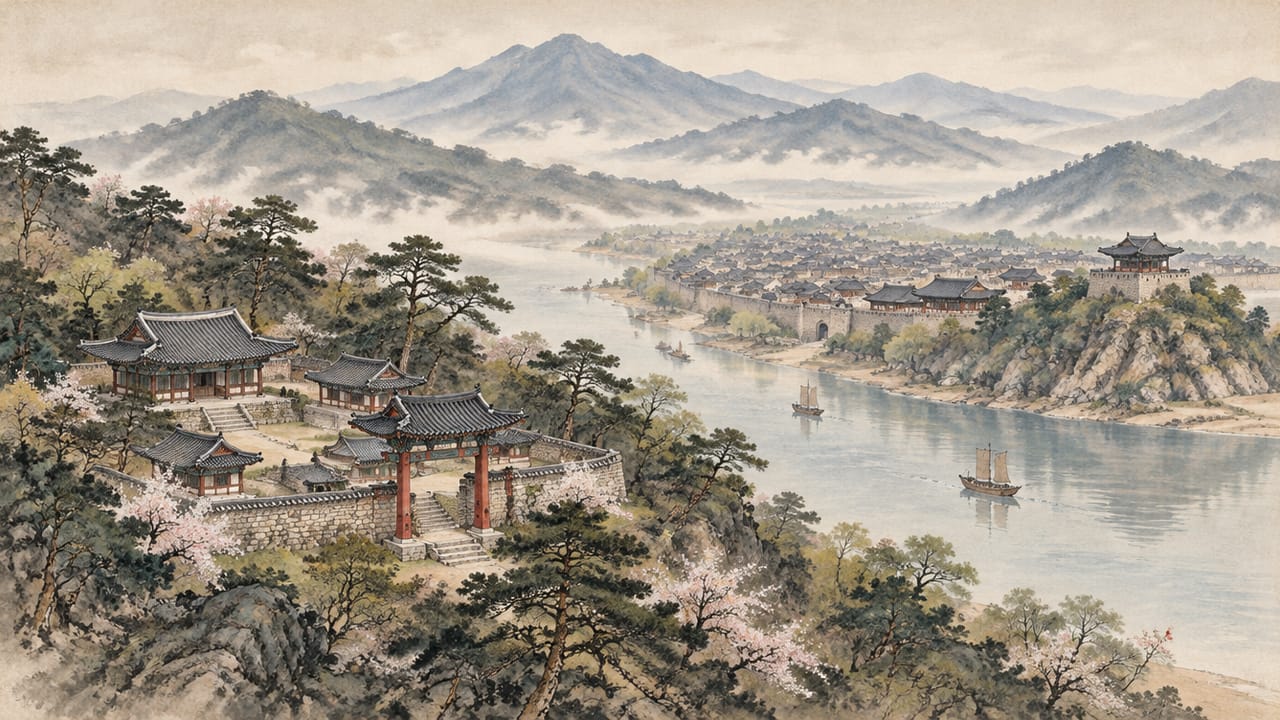
About the 진주 강씨 clan
The representative ancestral seat of the Kang surname, said to take as its founder the celebrated Goguryeo general Kang I-sik. In the 2015 Census the 진주 강씨 clan numbered about 968,109 people, one of Korea's major surnames and clans. Even among people surnamed 강, a different clan seat (bon-gwan, 진주) means a different lineage. New to these terms? See the bon-gwan, pa & hangnyeol guide.
Roots and History of the Jinju Kang Clan
Founder and Origin of the Clan Seat
The Jinju Kang clan (晉州 姜氏) honors Kang I-sik (姜以式), said to have been a field marshal under King Yeongyang of Goguryeo, as its founder, and is also called the Jinyang Kang clan after Jinju's old name. In the 2015 census, "Jinju Kang" (968,109) and "Jinyang Kang" (193,217) together numbered about 1.16 million people, the overwhelming majority of all Kangs (姜). The clan seat is today's Jinju in South Gyeongsang Province.
The adoption of Jinju as the clan seat is usually traced to Kang Jin (姜縉) being enfeoffed as Marquis of Jinyang, but other accounts say Kang U-deok (姜友德), an eighth-generation descendant of Kang I-sik, moved to Jinju after Goguryeo fell, or that the family made Jinju its home after Kang Hoe-baek (姜淮伯) was exiled there in late Goryeo. Other Kang clan seats such as Geumcheon, Andong, Baecheon and Haemi are generally regarded as offshoots of the Jinju Kang clan.
The Clan Through the Ages
The clan already produced generals and scholars in Goryeo. Kang Min-cheom, who repelled the Khitans under King Hyeonjong, heads the Eunyeol-gong branch; Kang Gung-jin, father of Kang Gam-chan of the Battle of Gwiju, heads the Inheon-gong branch; and Kang Gye-yong (姜啓庸), a National Academy professor who went to Japan as a secretary of an embassy under King Wonjong, founded the Baksa-gong branch, while his younger brothers founded the Sogam-gong and Sijung-gong branches.
The Baksa-gong branch, by far the largest, is also called the Eosa-gong branch because Kang Gye-yong's grandson Kang Sa-cheom served as a censor, and it divides at the fourth generation into the Daejanggun-gong (Kang Chang-bu) and Jinwon Buwongun-gong (Kang Chang-gwi) lines. From the Jinwon Buwongun line came the late-Goryeo brothers Kang Hoe-baek and Kang Hoe-jung, founders of the Tongjeong-gong and Tonggye-gong branches. In Joseon, the Tongjeong-gong branch produced Kang Seok-deok, father of King Sejong's consort Yeongbin Kang; his sons, the brothers Kang Hui-an and Kang Hui-maeng; Chief State Councillor Kang Maeng-gyeong under King Sejo; and Right State Councillor Kang Gu-son under Yeonsangun. The Tonggye-gong branch produced Right State Councillor Kang Sa-sang under King Seonjo, his sons Kang Sin and Kang In, Kang Hong-rip, who led Joseon troops sent to aid Ming under Gwanghaegun, and Kang Hong-jung, who developed artillery techniques under King Injo. Kang In's descendants produced a run of minister-level officials such as Kang Jun-heum, Kang Si-yeong and Kang Mun-hyeong under King Gojong.
The Eunyeol-gong branch produced the painter-critic Kang Se-hwang, and among his descendants were makers of an armillary clock and portable sundials (angbu ilgu). The Inheon-gong branch produced Right State Councillor Kang Seok-gi under King Injo and his daughter, Crown Princess Minhoe, wife of Crown Prince Sohyeon; the family suffered greatly when she was forced to take poison. In modern times many independence activists came from the clan, including Kang U-gyu, who threw a bomb at the Japanese Governor-General.
Notable Figures
- Kang Min-cheom (姜民瞻, 963-1021) — Goryeo general who routed the Khitans as Kang Gam-chan's deputy under King Hyeonjong; progenitor of the Eunyeol-gong branch. View profile
- Kang Gam-chan (姜邯贊, 948-1031) — Goryeo general who led the victory at Gwiju; the Inheon-gong branch takes its name from his posthumous title. View profile
- Kang Gye-yong (姜啓庸) — National Academy professor under King Wonjong who traveled to Japan as an embassy secretary; progenitor of the Baksa-gong branch.
- Kang Hoe-baek (姜淮伯, 1357-1402) — Inspector-General in late Goryeo and Northeastern Commissioner after the founding of Joseon; founder of the Tongjeong-gong branch.
- Kang Seok-deok (姜碩德, 1395-1459) — Son of Kang Hoe-baek, Magistrate of Gaeseong and father of King Sejong's consort Yeongbin Kang.
- Kang Maeng-gyeong (姜孟卿, 1410-1461) — Chief State Councillor under King Sejo and elder cousin of Kang Hui-an.
- Kang Hui-an and Kang Hui-maeng (姜希顔·姜希孟) — The elder brother, called a master of poetry, calligraphy and painting, and the younger, a prose writer who became Second State Councillor. View profile
- Kang Gu-son (姜龜孫, 1450-1505) — Son of Kang Hui-maeng and Right State Councillor under Yeonsangun.
- Kang Sa-sang (姜士尙, 1519-1581) — Right State Councillor under King Seonjo and leading figure of the Tonggye-gong branch.
- Kang Hong-rip (姜弘立, 1560-1627) — Led Joseon troops sent to aid Ming under Gwanghaegun, surrendered to the Later Jin, and returned with the Later Jin army during the 1627 invasion.
- Kang Hang (姜沆, 1567-1618) — Scholar taken captive to Japan in 1597 who returned and wrote Ganyangnok; founder of the Sueun-gong branch.
- Kang Seok-gi (姜碩期, 1580-1643) — Right State Councillor under King Injo, whose daughter became Crown Princess Minhoe.
- Kang Se-hwang (姜世晃, 1713-1791) — Pen name Pyoam. Painter and critic who established the Southern School literati style in Korea and taught Kim Hong-do. View profile
- Kang U-gyu (姜宇奎, 1855-1920) — Independence activist who threw a bomb at the new Japanese Governor-General at Seoul Station in 1919. View profile
Clan Villages and Heritage Sites
Bongsansa Shrine (鳳山祠) in Sangbong-dong, Jinju, enshrines the portrait and spirit tablet of founder Kang I-sik, with rites held every year on the 10th day of the third lunar month. Eunryeolsa in Okbong-dong, Jinju, marks the traditional birthplace of Kang Min-cheom with a memorial stele and shrine, and his tomb, stele and memorial hall lie in Ichi-ri, Daesul-myeon, Yesan, South Chungcheong. Nakseongdae in Gwanak-gu, Seoul, is Kang Gam-chan's birthplace, where legend says a star fell at his birth, together with Anguksa Shrine.
In the Hajung-dong area of Siheung, Gyeonggi, are tombs of Tongjeong-gong forebears including Kang Hui-maeng, the memorial hall Yeonseongjae and Kang Hui-maeng's stele; nearby Gwangokji pond is said to be where he planted lotus seeds brought from Ming China. On Jeju Island, descendants of Kang Yun-hui (exiled in 1418 for opposing the deposition of Grand Prince Yangnyeong), Kang In-deok (arrived 1436) and Kang Cheol (who fled the 1504 purge's aftermath in 1506) each formed large local lines. Clan villages also existed in Jinju and Namhae, Andong and Yeongju, Icheon, Sunchang and Namwon, and in the north in Hwanghae, Jeongju (North Pyongan) and Bukcheong (South Hamgyong).
Baksa-gong Branch Generation Names (Hangnyeol)
The table below follows the Baksa-gong branch generation characters published in the online genealogy run by the Gongmok-gong (恭穆公) sub-lineage association of the Jinju Kang clan, counting Kang Gye-yong as the first generation. The Jinwon Buwongun-gong (Kang Chang-gwi) and Daejanggun-gong (Kang Chang-bu) lines use different characters for the same generation, and for generations 24-27 some characters of the Jinwon Buwongun-gong line are used mainly by the Tongjeong-gong branch and others by the Tonggye-gong branch. ○ marks the other syllable of the given name.
| Generation | Jinwon Buwongun-gong (Chang-gwi) line | Daejanggun-gong (Chang-bu) line |
|---|---|---|
| 23 | 永(영)○ · 漢(한)○ · 源(원)○ | 燦(찬)○ · 炳(병)○ |
| 24 | ○秀(수) · ○元(원) · ○馨(형) | ○基(기) · ○奎(규) |
| 25 | 大(대)○ · 熙(희)○ · 昌(창)○ | 鎭(진)○ · 鐘(종)○ |
| 26 | ○遠(원) · ○中(중) · ○信(신) · ○基(기) | ○源(원) · ○漢(한) |
| 27 | 聲(성)○ · 鎬(호)○ · 錫(석)○ | 東(동)○ · 相(상)○ |
| 28 | ○求(구) · ○澤(택) · ○淳(순) | ○煥(환) · ○然(연) |
| 29 | 模(모)○ · 秉(병)○ · 來(래)○ | 圭(규)○ · 載(재)○ |
| 30 | ○默(묵) · ○顯(현) · ○焌(준) | ○鎬(호) · ○鉉(현) |
| 31 | 培(배)○ · 敎(교)○ · 應(응)○ | 洪(홍)○ · 泰(태)○ |
| 32 | ○鍊(련) · ○鐘(종) · ○鐸(탁) | ○植(식) · ○柱(주) |
| 33 | 雨(우)○ · 湜(식)○ · 浚(준)○ | 炫(현)○ |
| 34 | ○榮(영) · ○樺(화) · ○穆(목) | ○均(균) · ○墉(용) |
| 35 | 熏(훈)○ · 炯(형)○ · 煇(휘)○ | 銖(수)○ · 鉦(정)○ |
| 36 | ○垠(은) · ○喆(철) · ○奎(규) | ○洛(락) · ○汶(문) |
| 37 | 鉀(갑)○ · 鈺(옥)○ · 鎭(진)○ | 根(근)○ · 杬(원)○ |
| 38 | ○澈(철) · ○沅(원) · ○濟(제) | ○炅(경) · ○焃(혁) |
Generation names can vary by sub-branch and local family association, so please confirm with your own clan association or jokbo.
Branch divisions and lineages can differ between family organizations and genealogies, so please check against your own family's jokbo.
Main branches (派)
Baksa-gong-pa, Sogam-gong-pa, Sijung-gong-pa, Eunyeol-gong-pa, Inheon-gong-pa, Tongjeong-gong-pa, Tonggye-gong-pa
Baksa-gong-pa (博士公派)
The Baksa-gong branch is the senior branch of the Jinju Kang clan, tracing to Kang Gye-yong (姜啓庸), a national academy scholar (gukja baksa) who travelled to Japan as an envoy's secretary under King Wonjong of Goryeo. Because his grandson Kang Sa-cheom (姜師瞻) served as a censor (eosa), it is also called the Eosa-gong branch.
Its Tongjeong-gong sub-branch, from Kang Hoe-baek (姜淮伯), who was inspector-general in late Goryeo and became a regional commissioner of the Northeast under Joseon, produced the brothers Kang Hui-an and Kang Hui-maeng, chief state councillor Kang Maeng-gyeong and right state councillor Kang Gu-son. The Tonggye-gong sub-branch of Kang Hoe-jung (姜淮仲) produced right state councillor Kang Sa-sang and Kang Hong-rip. Kang Hang (姜沆, pen name Sueun), taken prisoner to Japan during the second Japanese invasion, was a fifth-generation descendant of Kang Hui-maeng in this line.
Sogam-gong-pa (少監公派)
The Sogam-gong branch descends from Kang Wi-yong (姜渭庸), who served as a deputy director (sado sogam) in Goryeo. He is traditionally said to have been a younger brother of Kang Gye-yong, the founder of the Baksa-gong branch.
The branch later divided into sub-branches, such as the Daesang-gong branch of Kang Tae (姜泰)'s descendants and the Taesa-gong branch of Kang Geon (姜健)'s descendants.
Sijung-gong-pa (侍中公派)
The Sijung-gong branch takes Kang Won-yong (姜遠庸) as its central ancestor and Kang Won-ro (姜元老), titled Great General of Gwanseo, as its branch founder, so it is also called the Gwanseo-gong or Gwanseo Daejanggun branch.
Members include Kang Yun-bo, a friend of Jeong Mong-ju who withdrew from office after the founding of Joseon, and Kang Haeng, who helped put down the Yi Si-ae rebellion under King Sejo.
Eunyeol-gong-pa (殷烈公派)
The Eunyeol-gong branch takes as its central ancestor Kang Min-cheom (姜民瞻, posthumous title Eunyeol), who served as Kang Gam-chan's deputy commander and helped defeat the Khitan army under King Hyeonjong of Goryeo.
The late-Joseon literati painter and critic Kang Se-hwang (姜世晃, pen name Pyoam) is said to descend from this branch, and members involved in making sundials (angbu ilgu) and armillary clocks are also attributed to it.
Inheon-gong-pa (仁憲公派)
The Inheon-gong branch descends from Kang Gung-jin (姜弓珍), named a Samhan Byeoksang merit subject at the founding of Goryeo. His son was Kang Gam-chan (姜邯贊), who led the victory at Gwiju, and the branch is named after Kang Gam-chan's posthumous title, Inheon.
After Kang Gam-chan's birthplace, this line is also called the Geumcheon (衿川) Kang. Right state councillor Kang Seok-gi (姜碩期), whose daughter became Crown Princess Minhoe, and independence activist Kang U-gyu (姜宇奎) are named as members.
Tongjeong-gong-pa (通亭公派)
The Tongjeong-gong branch split from the Jinwon Buwongun line of the Baksa-gong branch and descends from Kang Hoe-baek (姜淮伯, 1357-1402, pen name Tongjeong), Inspector-General in late Goryeo and Northeastern Commissioner after the founding of Joseon.
His son Kang Seok-deok was the father of King Sejong's consort Yeongbin Kang, and the branch produced the brothers Kang Hui-an and Kang Hui-maeng, Chief State Councillor Kang Maeng-gyeong under King Sejo and Right State Councillor Kang Gu-son under Yeonsangun. Tombs of forebears including Kang Hui-maeng and the memorial hall Yeonseongjae are in Siheung, Gyeonggi.
Tonggye-gong-pa (通溪公派)
The Tonggye-gong branch is a line of the Baksa-gong branch descending from Kang Hoe-jung (姜淮仲, pen name Tonggye), younger brother of Kang Hoe-baek.
Its figures include Right State Councillor Kang Sa-sang under King Seonjo; his sons Kang Sin, a Pyeongnan merit subject who held several ministerial posts, and Kang In, a Hoseong merit subject; Kang Hong-rip, who led troops sent to aid Ming under Gwanghaegun; and Kang Hong-jung, who developed artillery techniques under King Injo. Kang In's descendants produced several ministers under King Gojong.
Branch divisions vary by lineage and jokbo; confirm your own branch in your family's records.
Notable figures
강이식(traditional founder·Goguryeo general), 강민첨(Goryeo general·Eunyeol-gong), 강감찬(general of the Battle of Gwiju·Inheon-gong), 강계용(progenitor of the Baksa-gong branch), 강회백(founder of Tongjeong-gong branch·late-Goryeo Inspector-General), 강맹경(Chief State Councillor under King Sejo), 강희안·강희맹(Joseon civil-official brothers), 강구손(Right State Councillor under Yeonsangun), 강사상(Right State Councillor under King Seonjo), 강홍립(commander of the 1619 expedition to aid Ming), 강항(Joseon scholar·Sueun), 강석기(Right State Councillor under King Injo), 강세황(Joseon literati painter), 강우규(independence activist)
Tap a name for the full profile (life, career, grave, descendants).
진주 강씨 — Independence patriots
진주 강씨 figures recognized as independence patriots (National Independence Hall / Gonghun public data). Tap a name for the citation.
▼ Show more (23 more)▲ Collapse
진주 강씨 — Pro-Japanese collaborators
진주 강씨 figures listed by the Presidential Committee or the Dictionary of Pro-Japanese Collaborators (Minjok Munje Institute).
Founder Kang I-sik and Settlement in Jinju
The Jinju Kang clan takes as its founder General Kang I-sik (姜以式), said to have served as Commander-in-Chief of the Army (兵馬都元帥) during the reign of King Yeongyang of Goguryeo. However, Kang I-sik does not appear in official histories such as the Samguk Sagi and is recorded only in Sin Chae-ho's Joseon Sanggosa and in the Jinju Kang genealogy, so his historical existence is disputed. His portrait and spirit tablet are enshrined at Bongsansa Shrine (鳳山祠) in Sangbong-dong, Jinju.
The Kang clan's settlement in Jinju is said to date from Kang Jin (姜縉), who placed first in the state examination after the fall of Goguryeo, served as Taejungdaebu Pannaeuiryeong (太中大夫判內議令), and was enfeoffed as Marquis of Jinyang (晉陽侯). From this time the ancestral seat became Jinju (晉州).
Back to Jiang Ziya and the Yan Emperor Shennong — Genealogical Tradition
The Jinju Kang genealogy traces its roots to Jiang Ziya (姜太公), a founding minister of China's Zhou dynasty, and further back to the Yan Emperor Shennong (炎帝神農氏), one of the Three Sovereigns. According to tradition, Shennong grew up by the Jiang River (姜水) and took the surname Kang (姜) from that place name; this Kang surname later branched into many lines, and the Korean Jinju Kang clan is said to be rooted in the Yin (殷) dynasty line. To this day the Jinju Kang clan takes part, together with descendants of Jiang Ziya, in the so-called 'Qi Culture Festival' in Linzi District, Zibo, Shandong Province, China, an event also joined by the Go (高), No (盧), Yeo (呂), Jeong (丁), and Gu (丘) surnames said to have branched from the Kang.
The above is clan and genealogical tradition, difficult to cross-verify against documentary historical sources.
Major Branches
The Jinju Kang clan divides broadly into several branches.
- Eunyeolgong-pa (殷烈公派) — founded by Kang Min-cheom (姜民瞻), the celebrated Goryeo general who repelled the Khitan invasions.
- Baksagong-pa (博士公派) — founded by Kang Gye-yong (姜啓庸). The main branch of the Jinju Kang clan, accounting for about 80% of the whole.
- Inheongong-pa (仁憲公派) — together with the line that produced Kang Min-cheom, it forms a major branch of the Jinju Kang clan.
- Sueungong-pa (睡隱公派) — founded by Kang Hang (姜沆), the scholar who was held captive in Japan during the Jeongyu War (second Japanese invasion) and left behind the Ganyangnok (看羊錄).
- Sogamgong-pa (少監公派) — founded by Kang Wi-yong (姜渭庸), younger brother of Kang Gye-yong; his descendants are distributed mainly in the north.
- Sijunggong-pa (侍中公派) — founded by Kang Won-yong (姜遠庸).
Branch divisions and lineages vary by clan and genealogy, so confirm your own family's branch in the genealogy you hold.
Related Videos
How to build your 진주 강씨 tree
- Start with yourself — sign in to get your own tree. Enter your name, birth year and clan seat (진주).
- Add older generations — add parents and grandparents. For accuracy see tracing ancestors with jejeok records (usually to about 5 generations).
- Link siblings & children — sort by generational name (hangnyeol) to see each generation at a glance.
- Export & share — save the finished tree as a PDF and invite family to manage it together.
Related reading
진주 강씨 clan association
The 진주 강씨 clan association can be found in the Korean E-Jokbo Library clan-association directory.
✍ Request additions / corrections to the 진주 강씨 family tree infoStart your family tree free →