홍범도 洪範圖
Patriot of Independence · Manchuria Theater · Grand Order of the Republic of Korea (Daehanmin-guk-jang) (1962)
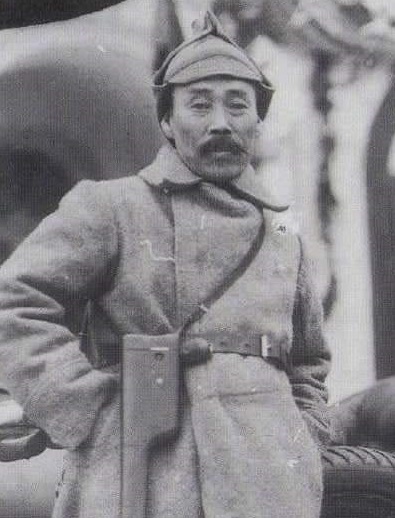
| Life | 1868 ~ 1943 |
| Era | 근현대 |
| Clan | 남양 홍씨 |
Life & career
Hong Beom-do (洪範圖, 1868–1943) was a leading righteous-army commander and independence-army general who led the victories at Bongo-dong (Fengwudong) and took part in the Battle of Cheongsan-ri. He belonged to the Danghong line of the Namyang Hong. Born in 1868 to a poor farming family in Pyongyang, he lost his mother soon after birth and his father at nine. He worked as a farmhand, enlisted as a bugler in the Pyongyang garrison, then worked in a paper mill and served as a novice monk at Singyesa temple in the Diamond Mountains before living as a hunter, where he honed his marksmanship and knowledge of mountain terrain.
In 1907, when Japan moved to confiscate hunters' firearms, he and Cha Do-seon rallied the mountain hunters of Hamgyong and rose in arms. They ambushed Japanese forces at Huchiryeong pass near Bukcheong and waged elusive guerrilla warfare around Gapsan, Samsu, Hyesan and Pungsan, earning him the nickname "Flying General Hong." His wife, captured by the Japanese, refused to help them win him over and died in prison, and his elder son Hong Yang-sun was killed in battle in 1908.
After Korea lost its sovereignty in 1910 he continued the armed struggle from the Russian Maritime Province and Manchuria. In 1919 he became commander of the Korean Independence Army and led raids into Korea; in June 1920 he routed Japanese forces at Bongo-dong, and that October he fought in the Cheongsan-ri campaign alongside Kim Jwa-jin's Northern Military Administration Office army. He later served as vice-president of the Korean Independence Corps.
After the Free City Incident he settled in the Maritime Province and farmed; in 1937 Stalin's forced deportation sent him to Kyzylorda in Kazakhstan, where he worked on a collective farm and, in his last years, as caretaker of the Korean Theater until his death in 1943. He was posthumously awarded the Order of Merit for National Foundation in 1962, and in August 2021 his remains were repatriated and interred at Daejeon National Cemetery.
Source: public records including the Ministry of Patriots and Veterans Affairs archive and Wikipedia.
Descendants
With his wife, Lady Yi of Danyang, he had two sons, Hong Yang-sun and Hong Yong-hwan. His elder son Hong Yang-sun fought alongside him in the righteous army and was killed in action at the Battle of Jeongpyeong-baegi in 1908; his wife was captured by Japanese forces and died in prison.