남양 홍씨 family tree
Build your family tree online남양 홍씨(南陽 洪氏) — The Danghong line, which takes the Goryeo founding merit subject Hong Eun-yeol as its 1st-generation ancestor; said to be the representative line of the Hong surname.
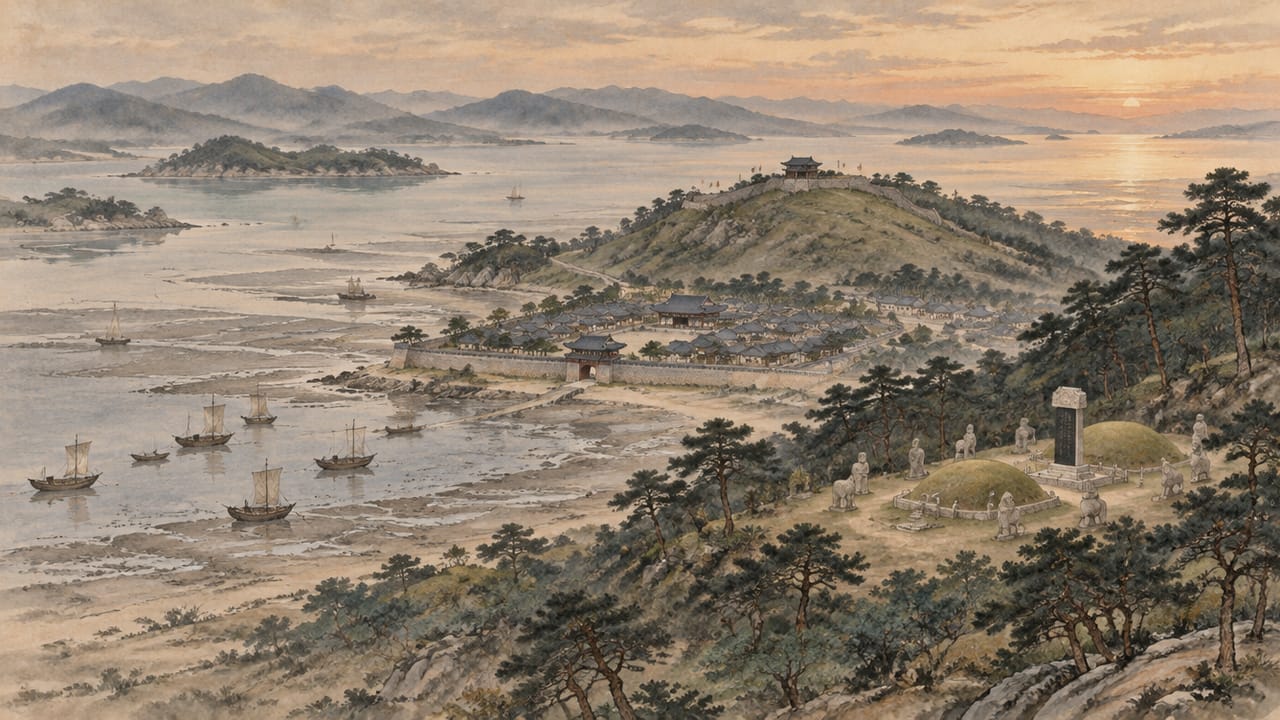
About the 남양 홍씨 clan
The Danghong line, which takes the Goryeo founding merit subject Hong Eun-yeol as its 1st-generation ancestor; said to be the representative line of the Hong surname. In the 2015 Census the 남양 홍씨 clan numbered about 379,708 people, one of Korea's major surnames and clans. Even among people surnamed 홍, a different clan seat (bon-gwan, 남양) means a different lineage. New to these terms? See the bon-gwan, pa & hangnyeol guide.
Roots and History of the Namyang Hong Clan
Founder and origin of the clan seat
The Namyang Hong clan (南陽 洪氏) takes the area of present-day Namyang-eup, Hwaseong, Gyeonggi Province, as its ancestral seat. Two separate lineages share this seat: the Danghong line (唐洪系), whose founder is the Goryeo founding merit subject Hong Eun-yeol (洪殷悅), and the Tohong line (土洪系), whose founder is Hong Seon-haeng (洪先幸). The great majority of today's Namyang Hong belong to the Danghong line.
Danghong genealogies trace the line to Hong Cheon-ha (洪天河), said to be one of the "Eight Scholars" of Tang China. According to tradition, he came to Goguryeo under King Yeongnyu to teach Confucian learning, fled to Silla during Yeon Gaesomun's coup, and was enfeoffed as Earl of Dangseong (唐城伯). Because the lineage after him cannot be verified, the clan counts Hong Eun-yeol as its first generation. Hong Eun-yeol helped King Taejo found Goryeo and held the rank of Samjung Daegwang Taesa. His name does not appear in the official histories, and some suggest he was the same person as the founding merit subject Hong Yu (洪儒).
Namyang began as Dangseong county of Goguryeo and became Dangeun county under Silla and Dangseong county under Goryeo. It was raised to Ikju-mok in 1290, became Namyang-bu in 1310, and became Namyang Dohobu in 1413. It was later merged into Suwon county in 1914 and Hwaseong county in 1949, and is now Namyang-eup in Hwaseong City. The Geography of the Annals of King Sejong lists Hong first among the native surnames of Namyang Dohobu.
The course of the clan
Early branches of the Danghong line are the Jaesin-gong-pa of third-generation Hong Ran, the Yesa-gong-pa of fourth-generation Hong Bok and the Jungnangjang-pa of sixth-generation Hong Hu. The descendants of seventh-generation Hong Ji-yu later split into 13 branches in the 13th generation, for 16 branches in all. Among the 13, the branches that began with the grandsons of Namyang Buwongun Hong Gyu flourished greatly: the Namyang-gun-pa of Hong Ju, the Munjeong-gong-pa of Hong Eon-bak and the Panjungchu-gong-pa of Hong Eon-su. The Iksan-gun-pa of Hong Un-su is also large. The Namyang-gun-pa and Munjeong-gong-pa are said to make up about 70 percent of the Danghong line, and the Iksan-gun-pa about 15 percent.
In late Goryeo, Hong Gyu acted on the king's secret order in 1270 to eliminate the strongman Im Yu-mu, helping return power to the throne. His daughter became Queen Gongwon (Queen Dowager Myeongdeok), consort of King Chungsuk and mother of Kings Chunghye and Gongmin. Hong Eon-bak, her nephew, became chancellor under King Gongmin. With these ties the Namyang Hong became one of the most powerful families of late Goryeo.
In Joseon the Danghong line produced 293 civil-examination graduates, 8 state councillors, 2 chief scholars, 3 officials honored for integrity, 1 queen and 4 royal sons-in-law. Hong Il-dong, great-grandson of Hong Ju, compiled the first Namyang Hong Clan Genealogy in 1454; the original is lost and only its preface survives in later genealogies. Other high ministers included Left State Councillor Hong Eung under Seongjong and Chief State Councillors Hong Seo-bong under Injo and Hong Myeong-ha under Hyeonjong. Queen Hyojeong, second queen of King Heonjong, also came from the Danghong line. In the separate Tohong line, Hong Eon-pil and his son Hong Seom each in turn became Chief State Councillor, and in late Joseon the Tohong Silhak scholar Damheon Hong Dae-yong argued for the earth's rotation in works such as Uisan Mundap. At the opening of the ports, Hong Yeong-sik founded the Postal Administration and joined the Gapsin Coup. Under Japanese rule, Hong Beom-do, commander at the Battle of Fengwudong, led armed resistance.
Notable figures
- Hong Eun-yeol (洪殷悅) — First-generation ancestor of the Danghong line. A founding merit subject who helped King Taejo of Goryeo, he held the rank of Samjung Daegwang Taesa.
- Hong Gwan (洪灌, ?-1126) — An early-Goryeo civil official and calligrapher who wrote the name boards of the Bomungak and Cheongyeongak halls. During Yi Ja-gyeom's rebellion he entered the palace to guard the king and died there. His posthumous title was Chungpyeong.
- Hong Gyu (洪奎, ?-1316) — He led the removal of Im Yu-mu in 1270 and was enfeoffed as Namyang Buwongun. His daughter became King Chungsuk's queen.
- Queen Gongwon (恭元王后, ?-1380) — Daughter of Hong Gyu and consort of King Chungsuk. She was the mother of Kings Chunghye and Gongmin and is also called Queen Dowager Myeongdeok.
- Hong Eon-bak (洪彦博, 1309-1363) — Chancellor under King Gongmin and founder of the Munjeong-gong-pa. He was killed in the Heungwangsa revolt.
- Hong Il-dong (洪逸童) — He passed the civil examination under King Sejong, served as vice-minister of taxation, and compiled the first Namyang Hong Clan Genealogy.
- Hong Eon-pil (洪彦弼, 1476-1549) — He served as Right and Left State Councillor before becoming Chief State Councillor. His posthumous title was Munhui, and he was famous for the strict discipline of his household.
- Hong Seom (洪暹, 1504-1585) — Son of Hong Eon-pil. He became Chief State Councillor, received the posthumous title Gyeongheon, and was enshrined at Angoksa in Namyang.
- Hong Myeong-ha (洪命夏) — From the Namyang-gun-pa, he served as Chief State Councillor under King Hyeonjong.
- Hong Dae-yong (洪大容, 1731-1783) — Pen name Damheon. A Northern Learning Silhak scholar and scientific thinker, he wrote Damheonseo and Uisan Mundap.
- Queen Hyojeong (孝定王后) — Daughter of Ikpung Buwongun Hong Jae-ryong and second queen of King Heonjong. She became queen dowager and later grand queen dowager under Kings Cheoljong and Gojong.
- Hong Yeong-sik (洪英植, 1855-1884) — Son of Chief State Councillor Hong Sun-mok. As director of the Postal Administration in 1884 he launched Korea's modern postal service. He took part in the Gapsin Coup and was killed.
- Hong Beom-do (洪範圖, 1868-1943) — Independence army commander who led the Korean Independence Army to victory at the Battle of Fengwudong in 1920.
Clan villages and heritage sites
- Namyang Hong clan burial ground, Hongbeop-ri, Hwaseong — The burial ground holding the tomb and spirit-path stele of Chief State Councillor Hong Eon-pil. It is a designated Gyeonggi Provincial Monument and lies in Hwaseong, near the clan seat of Namyang.
- Angoksa Shrine (安谷祠) — A shrine in Namyang where Chief State Councillor Hong Seom was enshrined.
- Yangcheonseowon Academy — A Namyang Hong clan academy in Gunwi-eup, Gunwi County, North Gyeongsang. It was founded in 1786 to honor Hong Eon-bak and Seodam Hong Wi, and Hong Gwan was added in 1798. It was torn down in 1868 and rebuilt in 1988.
- Gwangjeseowon Academy — In Myeongseok-myeon, Jinju, South Gyeongsang. It was founded in the late 19th century to honor Hong Ui and Hong Gwan, Goryeo figures of the Namyang Hong clan.
- Gyeongneung (景陵) — A royal tomb in the Donggureung cluster in Guri, where Queen Hyojeong is buried with King Heonjong and Queen Hyohyeon.
Branch lines and genealogies may differ by family and by jokbo, so please check your own family's jokbo.
Main branches (派)
Namyang-gun-pa, Munjeong-gong-pa, Panjungchu-gong-pa, Iksan-gun-pa, Yesa-gong-pa, Jungnangjang-pa, Jaesin-gong-pa, Munhui-gong-pa (Tohong line), Jeonghyo-gong-pa (Tohong line), Chamui-gong-pa (Tohong line), Daehogun-gong-pa (Tohong line)
Namyang-gun-pa (南陽君派)
The Namyang-gun branch descends from Hong Ju (洪澍), eldest son of Hong Yung and grandson of Hong Gyu, Prince Namyang. Hong Ju, the 13th generation of the Danghong line, was the elder brother of Hong Eon-bak, founder of the Munjeong-gong branch. It is the largest Danghong branch, and together with the Munjeong-gong branch is said to make up about 70% of the line.
Hong Ju's great-grandson Hong Il-dong passed the civil examination in 1442, became Vice Minister of Revenue and in 1454 compiled the first Namyang Hong genealogy, of which only the preface survives in later editions.
The descendants of the mid-Joseon official Hong Chun-gyeong (1497–1548) are said to have produced five state councillors and two chief scholars, and his three sons founded the Yuljeong-gong, Yeongi-gong and Jorong-gong sub-branches. His grandson Hong Seo-bong joined the 1623 coup that enthroned King Injo and later became Chief State Councillor, and his great-grandson Hong Myeong-ha was Chief State Councillor under King Hyeonjong. Chief State Councillors Hong Chi-jung under Yeongjo and Hong Sun-mok under Gojong are also counted in this line.
Munjeong-gong-pa (文正公派)
The Munjeong-gong branch descends from Hong Eon-bak (1309–1363), who headed the government as Munha Sijung under King Gongmin; the branch name comes from his posthumous title, Munjeong. He was a grandson of Hong Gyu and second son of Hong Yung, younger brother of Hong Ju (Namyang-gun branch) and elder brother of Hong Eon-su (Panjungchu-gong branch). He was a seventh-generation descendant of the calligrapher Hong Gwan and a nephew of King Gongmin's mother Queen Gongwon.
Hong Eon-bak co-supervised the 1353 civil examination with Yi Je-hyeon, passing Yi Saek among others, attended the king during the Red Turban invasion, and was killed standing his ground in the Heungwangsa revolt of 1363. With the Namyang-gun branch it is counted as the most flourishing Danghong branch, the two together said to make up about 70% of the line.
His sons held high office: Hong Sa-bo as head of the Office of Ceremonial Affairs, Hong Sa-beom in the Royal Secretariat, Hong Sa-u as military commissioner and Hong Sa-won as a director of a government bureau. Yangcheon Seowon in Gunwi, North Gyeongsang, was founded in 1786 to honor Hong Eon-bak; it was torn down in 1868 and rebuilt in 1988.
Panjungchu-gong-pa (判中樞公派)
The Panjungchu-gong branch descends from Hong Eon-su (洪彦修), a son of Hong Yung and grandson of Hong Gyu, Prince Namyang. He was the younger brother of Hong Ju (Namyang-gun branch) and Hong Eon-bak (Munjeong-gong branch). His mother was a daughter of the Royal Secretariat official Na Yu, and he is said to have held the post of Geomgyo Chamchan Munhabusa.
Hong Eon-su and his brothers grew up when the Namyang Hong were at the height of their power in late Goryeo: their grandfather Hong Gyu had ended military rule by eliminating Im Yu-mu in 1270, and their aunt Queen Gongwon had married King Chungsuk and borne Kings Chunghye and Gongmin. His brother Hong Eon-bak became chancellor under Gongmin.
The branch is one of the thirteen formed when the descendants of 7th-generation Hong Ji-yu divided in the 13th generation, and with the Namyang-gun and Munjeong-gong branches it makes up the line of Hong Gyu's descendants. It is counted among the more populous branches. Lineages and figures vary by branch genealogy, so please check your own family's jokbo.
Iksan-gun-pa (益山君派)
The Iksan-gun branch of the Danghong line descends from Hong Un-su (洪云遂) and was formed when the descendants of 7th-generation Hong Ji-yu divided into thirteen branches in the 13th generation. Accounting for about 15% of the Danghong line, it is said to be the third largest branch after the Namyang-gun and Munjeong-gong branches.
The branch produced a noted minister in early Joseon. Hong Eung (1428–1492), 17th generation of the branch, placed first in the 1451 special civil examination, served in senior posts of the Royal Secretariat and the ministries, and became Right State Councillor in 1479 and Left State Councillor in 1485, enfeoffed as Ikseong Buwongun. His posthumous title was Chungjeong and he was enshrined in King Seongjong's royal shrine. His sister was King Munjong's consort Sukbin Hong, and his son Hong Sang married Princess Myeongsuk, eldest daughter of King Deokjong.
His younger brother Hong Heung served as governor of Gangwon and Vice Minister of Revenue under Yeonsangun. The Hyuhyudang Bujomyo shrine honoring Hong Eung is a designated cultural heritage material of North Gyeongsang Province. The obituary in the Annals of King Seongjong credited Hong Eung with "the bearing of a great minister."
Yesa-gong-pa (禮史公派)
The Yesa-gong branch descends from Hong Bok (洪復), 4th generation and great-grandson of the first ancestor Hong Eun-yeol. In the Danghong line the Jaesin-gong branch (3rd generation Hong Ran), the Yesa-gong branch (4th generation Hong Bok) and the Jungnangjang branch (6th generation Hong Hu) split off early, and the descendants of 7th-generation Hong Ji-yu later divided into thirteen branches in the 13th generation, for sixteen in all. The Yesa-gong branch is thus one of the earliest.
According to writings by descendants of the branch, Hong Han-seung and Hong Chung served as Vice Commissioners of the Privy Council and Hong Se as a chancellor in late Goryeo, Hong Yu-do held Privy Council posts at the end of Goryeo, and Hong Myeong, a former Goryeo minister, was appointed mayor of Hanseong by the new Joseon court. These accounts rest on branch genealogies and family records and should be checked against the official histories.
Because the branch separated so early, much of its lineage has been handed down separately from the other branches. For details, please consult the Yesa-gong branch genealogy.
Jungnangjang-pa (中郞將派)
The Jungnangjang branch, also called the Jungnang-gong branch, descends from Hong Hu (洪厚), sixth-generation descendant of Hong Eun-yeol. Its name, Jungnangjang, is a Goryeo military rank of the senior fifth grade in the capital armies.
In the Danghong line, the Jaesin-gong branch of 3rd-generation Hong Ran and the Yesa-gong branch of 4th-generation Hong Bok split off first, followed by the Jungnangjang branch of 6th-generation Hong Hu. The descendants of 7th-generation Hong Ji-yu later divided in the 13th generation into thirteen branches, including the Namyang-gun, Munjeong-gong, Panjungchu-gong and Iksan-gun branches, giving sixteen branches in all. The Jungnangjang branch is therefore one of the three early branches that became independent before the thirteen.
It is counted among the larger Danghong branches. Its members share the common generation names of the Danghong line, which, counting Hong Eun-yeol as the 1st generation, fixes characters such as Gye (啓) for the 27th, Yeong (泳) for the 28th, Byeong (秉) for the 29th, Seop (燮) for the 30th, Jae (在) for the 31st, Jong (鍾) for the 32nd and Sun (淳) for the 33rd generation. Early Goryeo generations may differ between records, so please check your own family's jokbo.
Jaesin-gong-pa (宰臣公派)
The Jaesin-gong branch descends from Hong Ran (洪蘭), 3rd generation and grandson of Hong Eun-yeol, and was the earliest branch to split from the Danghong line. Its name, jaesin, means a minister of chancellor rank.
In Goryeo the jaesin of the Secretariat-Chancellery and the chusin of the Privy Council were together called jaechu; jaesin referred to the chancellor-level officials who deliberated on state affairs.
After the Jaesin-gong branch came the Yesa-gong branch of 4th-generation Hong Bok and the Jungnangjang branch of 6th-generation Hong Hu, and the descendants of 7th-generation Hong Ji-yu later divided into thirteen branches in the 13th generation, for sixteen in all. Arising in the generation of the first ancestor's grandsons, it is the oldest Danghong branch.
According to the Segye Ilbo series "Kim Seong-hoe's Search for Roots," the Bugye Hong clan traces itself to Hong Nan (洪蘭), grandson of Hong Eun-yeol, and is said to have recently merged its genealogy with the Namyang Hong (Danghong line), an example of an early offshoot that continued under another clan seat and later rejoined. Please check your own family's jokbo for details.
Munhui-gong-pa (Tohong line) (文僖公派)
The Munhui-gong branch belongs to the Tohong line of the Namyang Hong, a lineage separate from the Danghong line. It descends from 12th-generation Hong Eon-pil (1476–1549), Chief State Councillor under Kings Jungjong and Myeongjong, and takes its name from his posthumous title, Munhui. The Tohong line honors Hong Seon-haeng, a native gentry official of Dangseong under King Gojong of Goryeo, as its founder, and from the sons of 9th-generation Hong Ik-saeng it divided in the 10th to 12th generations into five branches: Munhui-gong, Jeonghyo-gong, Chamui-gong, Jubu-gong and Daehogun-gong.
Hong Eon-pil served repeatedly as Inspector-General and became Chief State Councillor in 1544; his son Hong Seom was Chief State Councillor three times under King Seonjo and was honored for integrity. Hong Eon-pil's wife is noted as a rare woman whose father Song Jil, husband and son all became Chief State Councillor. Hong Seom's daughter married Prince Hawon, son of Grand Prince Deokheung.
In Hongbeop-ri, Seosin-myeon, Hwaseong, the tombs and spirit-path steles of Hong Eon-pil, his father Hong Hyeong and other Tohong ancestors form a burial ground designated a Gyeonggi Provincial Monument. Angoksa in Namyang was the shrine where Hong Seom was enshrined.
Jeonghyo-gong-pa (Tohong line) (貞孝公派)
The Jeonghyo-gong branch of the Tohong line descends from Hong Eon-gwang (洪彦光), younger brother of Hong Eon-pil. The two brothers were sons of 11th-generation Hong Hyeong; the elder founded the Munhui-gong branch and the younger the Jeonghyo-gong branch.
Hong Eon-gwang's son Hong Dam rose to Minister of Personnel and Right Councillor under King Seonjo, was honored for integrity and received a commemorative gate for filial piety. Hong Dam's grandson Hong Hui, married to the elder sister of King Injo's mother, was posthumously enfeoffed as Ikpyeong Buwongun, and Hong Hui's son Hong Jin-do rose to the senior rank of Panjungchubusa. A later descendant, Hong Eok, is said to have headed all six ministries under King Jeongjo.
The Silhak scholar Hong Dae-yong, Hong Eok's nephew, came from this branch. He accompanied his uncle to Beijing in 1765, befriended Qing scholars and encountered Western astronomy, and in Uisan Mundap argued for the earth's rotation and an infinite universe. The Hong Dae-yong Science Museum now stands in his birthplace, Sushin-myeon in Cheonan.
Chamui-gong-pa (Tohong line) (參議公派)
The Chamui-gong branch of the Tohong line descends from 11th-generation Hong Han (洪瀚), son of 10th-generation Hong Gwi-hae and brother of Hong Hyeong, father of Hong Eon-pil. He served as a senior official of the Ministry of Personnel (chamui), from which the branch takes its name, and is said to have suffered in the 1498 literati purge. His tomb lies in the Tohong burial ground at Hongbeop-ri, Hwaseong.
His great-grandson Hong Ga-sin served as magistrate of Suwon and governor of Gaeseong, was named a merit subject for suppressing Yi Mong-hak's rebellion in 1596, and became Minister of Justice under Gwanghaegun. Hong Ga-sin's grandsons Hong U-jeong, Hong U-ryang and Hong U-won were also distinguished: Hong U-jeong withdrew from the world after the Qing invasion of 1636, Hong U-ryang was honored for integrity, and Hong U-won was a Southerner leader who served as Minister of Works and of Personnel under King Sukjong. Hong U-won is also known for speaking out against the injustice done to Crown Princess Minhoe.
In modern times, Hong Sa-ik, a lieutenant general of the Japanese army, was a descendant of Hong U-won in this line.
Daehogun-gong-pa (Tohong line) (大護軍公派)
The Daehogun-gong branch of the Tohong line descends from 10th-generation Hong Gwi-yeon (洪貴演), son of 9th-generation Hong Ik-saeng and brother of Hong Gwi-hae (ancestor of the Munhui-gong, Jeonghyo-gong and Chamui-gong branches) and Hong Gwi-ho (founder of the Jubu-gong branch). Its name, daehogun, is an early Joseon military rank of the junior third grade.
Hong Gwi-yeon's son Hong Suk served under King Jungjong as Inspector-General and as minister of Justice, Rites and Military Affairs before becoming Left Senior Councillor.
Hong Suk's great-great-grandson Hong Ik-han (1586–1637) was one of the "Three Scholars" who opposed peace with the Qing to the end during the 1636 invasion. After the surrender he was taken to Shenyang, refused to yield and was executed; he was later honored posthumously with a ministerial title and a commemorative gate, and is enshrined at shrines including Heonjeolsa in Gwangju, Chungnyeolsa on Ganghwa and Puisa in Pyeongtaek. He is also honored at Changnyeol, Dodong and Jangam seowon.
Branch divisions vary by lineage and jokbo; confirm your own branch in your family's records.
Notable figures
홍은열(founder of the Danghong line of the Namyang Hong clan), 홍관(Goryeo official and calligrapher), 홍규(Namyang Buwongun; removed the strongman Im Yu-mu), 공원왕후(consort of King Chungsuk and mother of King Gongmin), 홍언박(chancellor under King Gongmin; founder of the Munjeong-gong-pa), 홍일동(compiler of the first Namyang Hong genealogy), 홍응(Left State Councillor under King Seongjong; Iksan-gun-pa), 홍언필(Joseon Chief State Councillor; founder of the Tohong Munhui-gong-pa), 홍섬(Joseon Chief State Councillor; son of Hong Eon-pil), 홍명하(Chief State Councillor under King Hyeonjong), 홍대용(Silhak scholar; author of Uisan Mundap), 효정왕후(second queen of King Heonjong), 홍영식(director of the Postal Administration; Gapsin Coup), 홍범도(commander at the Battle of Fengwudong)
Tap a name for the full profile (life, career, grave, descendants).
남양 홍씨 — Independence patriots
남양 홍씨 figures recognized as independence patriots (National Independence Hall / Gonghun public data). Tap a name for the citation.
남양 홍씨 — Pro-Japanese collaborators
남양 홍씨 figures listed by the Presidential Committee or the Dictionary of Pro-Japanese Collaborators (Minjok Munje Institute).
The Namyang Hong Clan — The Danghong and Tohong Lines
The Namyang Hong clan (南陽 洪氏), with its ancestral seat in Namyang, Hwaseong, Gyeonggi Province, divides into the Danghong line (唐洪系), said to have come from Tang China, and the Tohong line (土洪系), said to be originally native. The great majority of today's Namyang Hong clan is the Danghong line, which takes the Goryeo founding merit subject Hong Eun-yeol (洪殷悅) as its mid-founder.
A Distinguished House of Joseon
The Namyang Hong clan is a distinguished house that produced many civil officials during the Joseon period, producing several Daejehak and State Councillors. Scholars such as the Silhak thinker Damheon Hong Dae-yong also came from this house.
Related Videos
How to build your 남양 홍씨 tree
- Start with yourself — sign in to get your own tree. Enter your name, birth year and clan seat (남양).
- Add older generations — add parents and grandparents. For accuracy see tracing ancestors with jejeok records (usually to about 5 generations).
- Link siblings & children — sort by generational name (hangnyeol) to see each generation at a glance.
- Export & share — save the finished tree as a PDF and invite family to manage it together.
Related reading
남양 홍씨 clan association
The 남양 홍씨 clan association can be found in the Korean E-Jokbo Library clan-association directory.
✍ Request additions / corrections to the 남양 홍씨 family tree infoStart your family tree free →