신안 주씨 family tree
Build your family tree online신안 주씨(新安 朱氏) — The Sinan Ju clan (新安 朱氏) honors the Southern Song Neo-Confucian scholar Zhu Xi (朱熹) as its distant progenitor and his great-grandson Ju Jam (朱潛), who crossed the sea to Goryeo, as its founder in Korea. Long known as the Neungseong Ju clan, it restored Sinan as its ancestral seat in 1902. Its population in 2015 was 148,207.
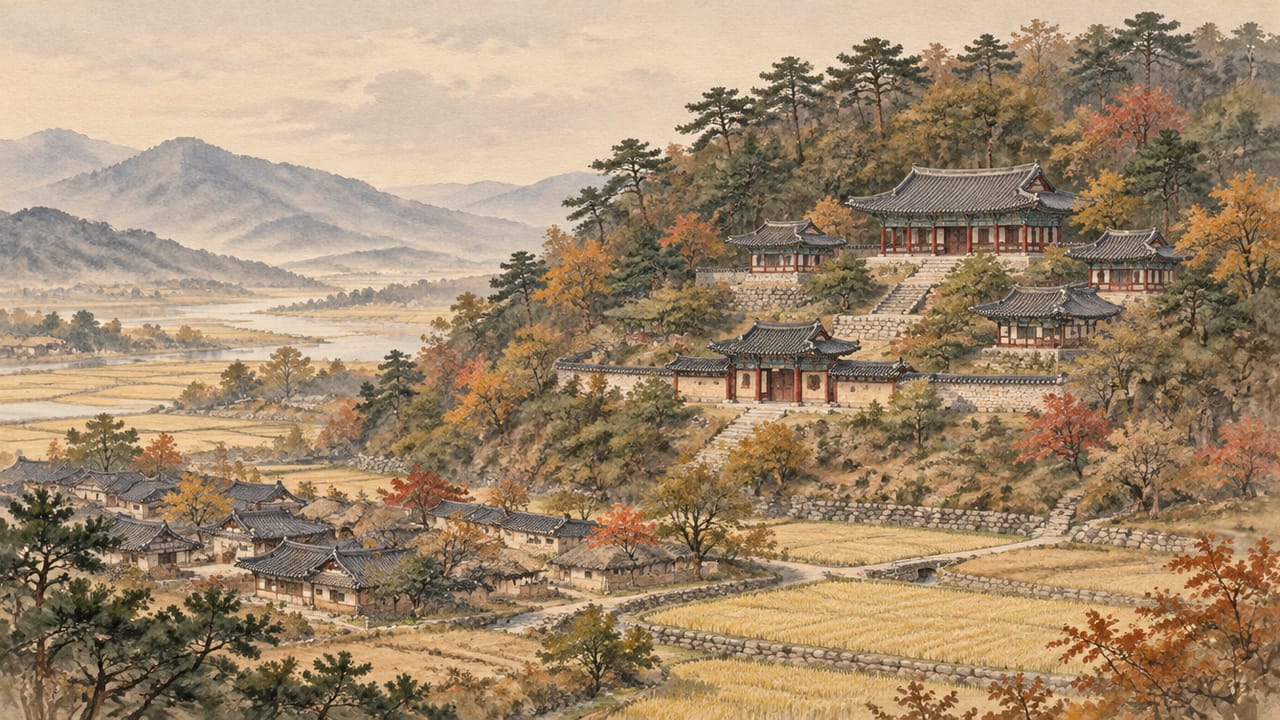
About the 신안 주씨 clan
The Sinan Ju clan (新安 朱氏) honors the Southern Song Neo-Confucian scholar Zhu Xi (朱熹) as its distant progenitor and his great-grandson Ju Jam (朱潛), who crossed the sea to Goryeo, as its founder in Korea. Long known as the Neungseong Ju clan, it restored Sinan as its ancestral seat in 1902. Its population in 2015 was 148,207. In the 2015 Census the 신안 주씨 clan numbered about 148,207 people, one of Korea's major surnames and clans. Even among people surnamed 주, a different clan seat (bon-gwan, 신안) means a different lineage. New to these terms? See the bon-gwan, pa & hangnyeol guide.
Roots and History of the Sinan Ju Clan
The Sinan Ju clan (新安 朱氏) numbered 148,207 people in the 2015 census. Nearly all Koreans who write the surname Ju with the character 朱 ("red") today use Sinan as their ancestral seat. The clan honors Zhu Xi (朱熹), the Southern Song scholar who synthesized Neo-Confucianism, as its distant progenitor. It regards his great-grandson Ju Jam (朱潛), who came to Goryeo, as its founder in Korea. Ju clans that write the surname with 周, such as the Sangju Ju clan, are a separate lineage (Sangju Ju clan).
Sources differ on whom to call the founder. Some name Zhu Xi (Wikipedia and the local culture encyclopedias of Seongju, Buyeo and Yeosu), while others name Ju Jam (sources from Changwon, Gimhae and Jindo). Wikipedia lists Zhu Xi as founder and Ju Jam as the restorer of the line.
The Founder and the Origin of the Seat
Sinan is not a place in Korea. It was the old Xin'an Commandery in Huizhou, Anhui Province, China, around present-day Huangshan. The commandery was first established under the Sui dynasty and later renamed Huizhou. Zhu Xi's family home of Wuyuan lay within Huizhou, so Ju families claiming descent from him took this place as their ancestral seat. Some sources (the Shinailbo and the Yeosu local culture encyclopedia) place Sinan in Henan Province instead.
The Annals of King Gojong record a 1902 petition by Ju Seok-myeon. According to the petition, Zhu Xi's eighth-generation ancestor Zhu Gui (朱瓌) moved from Huangdun in Shezhou to Wuyuan in Huizhou during the Tianyou era of the Tang dynasty. Because the family's forebears were people of Xin'an in Wu Commandery, they took Xin'an as their seat. The same petition identifies Ju Jam as the third son of Zhu Ju (朱鉅) and a grandson of Zhu Ye (朱埜), Zhu Xi's second son.
According to clan tradition, Ju Jam served in Song as a Hanlin academician and an academician of the Imperial Library. Fleeing the Mongol invasions, he crossed the sea to Naju (Geumseong). He brought his son Ju Yeo-gyeong (朱餘慶) and seven scholar-disciples: Seop Gong-je, Jo Chang, Jin Jo-sun, Ju Se-hyeon, Yu Eung-gyu, Du Haeng-su and Do Seong-ha. He then lived in hiding at Neungseong (today's Neungju) in Hwasun, and is said to have changed his name to Ju Jeok-deok (朱積德) to evade Yuan searches.
Much of the account of this flight rests on genealogical tradition, and the details vary. The Gojong petition dates it to the imsin year, the first year of King Gangjong of Goryeo (1212). The Siheung and Gimhae local culture encyclopedias and the Namdo Ilbo give 1224 (11th year of King Gojong of Goryeo). The Shinailbo places his place of refuge at Yongdam in Jinan, while the Namdo Ilbo places it at Sinan village in Jucheon-myeon, Jinan.
From Neungseong Ju to Sinan Ju
The family first called itself the Neungseong Ju clan, after its place of settlement. By the late Joseon period it had divided into many lines. The Siheung encyclopedia and the Shinailbo count 45 branches, while Wikipedia and the Yeosu encyclopedia count 87 ancestral seats. After Ju Seok-myeon's 1902 petition, King Gojong replied that the seat should "be restored to Sinan." The clan agreed and adopted Sinan. The Annals date the petition to October 8 by the solar calendar; the September 7 date found elsewhere appears to follow the lunar calendar.
Branches
According to the Namdo Ilbo, the clan split into the Neungseong, Ungcheon and Jeonju branches in the generation of the three sons of Ju Yeol (朱悅). The Neungseong branch descends from Ju In-jang (朱印長, 1243–1315) and settled in Neungju, Hwasun. The Ungcheon branch (Ungcheon, Jinhae, Changwon) and the Jeonju branch (Jeonju) are linked to Ju In-won (朱印遠) and Ju In-hwan (朱印還), but which of them founded which branch could not be confirmed. Wikipedia also states that Ju Hyeon-jin (朱玄進) was enfeoffed at Aphae and founded the Aphae Ju line. Its relationship to the Sinan Ju lineage could not be confirmed.
Regional Settlements
- Jindo: Ju Su (朱壽) settled in 1573, at Gubunsil in Imhoe-myeon and Deokbyeong in Gunnae-myeon.
- Yeosu: Ju Beop-myeong (朱法鳴) settled in Hwachi village, Samil-dong, during the Imjin War.
- Siheung: Ju Jae-hyeop settled in Jungnim village, Gwarim-dong.
- Seongju: Ju Gwang-seong (朱光成) settled in Jisu-ri and Mawol-ri, Yongam-myeon.
- Other settlements include Naesam-ri in Juchon-myeon, Gimhae; Hongsan and Imcheon in Buyeo; and Geumjin-ri in Seopo-myeon, Sacheon. About 1,300 people in some 500 households reportedly live in Uljin.
Historic Sites
- Juja Shrine (Neungju, Hwasun): Hwasun County Local Cultural Heritage No. 53. Its Dongwonsa shrine stands on the site of Hoedeoksa, which once enshrined Ju Jam, Ju Yeo-gyeong, Ju Yeol, Ju In-jang, Ju In-won and Ju In-hwan.
- Gwihujae (Dong-myeon, Hwasun): Hwasun County Local Cultural Heritage No. 59. It enshrines Ju Yeo-gyeong.
- Jucheon Seowon (Jinan): North Jeolla Cultural Heritage Material No. 142. It enshrines Ju Jam.
- Other sites are the Jayang Seodang and portrait hall (Junggeo-ri, Yongam-myeon, Seongju), Hwasansa (built 1918) and Semyeongdang (Hwachi village, Yeosu), and Dotongsa (Uljin).
- Wikipedia categories also list a three-generation charity stele of the Sinan Ju clan and the tomb of General Ju Ui-su, but their contents were not confirmed. Designations by the Korea Heritage Service were not confirmed either.
Clan Association
The Sinan Ju Clan Association is said to have operated in Neungju as the Neungseong Ju Clan Association since before the 1800s. It manages ritual land, shrine halls and ancestral graves, and holds seasonal rites for Lords Cheonggye, Yeoyang, Munjeol and Jeongsuk. On November 20, 1969, it took its present name. Its head in 1997 was Ju Seung-gak, and the association then claimed that Nongae was not a courtesan but a secondary wife of General Choe Gyeong-hoe; no evidence for her ancestral seat could be confirmed. No official website could be confirmed.
Generation Names
A generation-name chart posted on a clan online community gives the following order: 31st generation 寧·炯, 32nd 中·奎, 33rd 宰·鍾, 34th 暾·河, 35th 尤·東. However, the historian Ju Gyeong-cheol is described as 32nd generation with the character 哲, and the lawmaker Ju Gi-yong as 30th generation of the Ungcheon branch with 基. Neither fits the chart. Since branches may use different systems, readers should check with their own branch.
Main branches (派)
Neungseong branch, Ungcheon branch, Jeonju branch
Neungseong branch (綾城派)
The Neungseong branch counts Ju In-jang (朱印長, 1243–1315), a son of Ju Yeol (Lord Munjeol), as its first generation. Ju In-jang served as Minister of Rites and received the posthumous title Jeongsuk.
The branch settled in Neungju (old Neungseong), Hwasun, where the founder Ju Jam is said to have lived in hiding. Neungju is home to the Juja Shrine, Hwasun County Local Cultural Heritage No. 53. Its Dongwonsa shrine stands on the site of Hoedeoksa, which once enshrined Ju In-jang among others.
Ju Yeop (1596–1638), a volunteer fighter during the 1636 Qing invasion, belonged to the 13th generation of this branch. The independence activist Ju Seok-hwan (1893–1955) is also described as a descendant. The seasonal rite for Lord Jeongsuk held by the clan association honors Ju In-jang.
Ungcheon branch (熊川派)
The Ungcheon branch is one of the three branches that split off in the generation of Ju Yeol's sons. It settled around Ungcheon in what is now Jinhae-gu, Changwon.
Wikipedia states that Ju In-jang, Ju In-won (朱印遠), Ju In-hwan (朱印還) and others went their separate ways to Neungseong, Ungju and Jeonju. Which of Ju In-won and Ju In-hwan founded the Ungcheon branch could not be confirmed.
Namuwiki lists Ju Gi-yong (1897–1966), a member of the Constituent National Assembly, as 30th generation of the Ungcheon branch with the generation character 基. The pastor and independence activist Ju Gi-cheol was also from Ungcheon, Jinhae.
Jeonju branch (全州派)
The Jeonju branch is said to have split off alongside the Neungseong and Ungcheon branches in the generation of Ju Yeol's sons. It settled in Jeonju.
Its founder appears to be either Ju In-won (朱印遠) or Ju In-hwan (朱印還). Which of the two founded it could not be confirmed in this research.
Ju In-won and Ju In-hwan were enshrined together with Ju Jam, Ju Yeo-gyeong, Ju Yeol and Ju In-jang at Hoedeoksa, the former site of the Dongwonsa shrine within the Juja Shrine in Neungju, Hwasun.
Branch divisions vary by lineage and jokbo; confirm your own branch in your family's records.
Notable figures
주잠(founder of the clan in Korea), 주열(Jido Cheomuibusa, Lord of Neungseong), 주몽룡(magistrate of Geumsan during the Imjin War), 주석면(petitioned for restoring the Sinan seat in 1902), 주기철(pastor and independence activist), 주여경(said to have served as Left Chancellor), 주인장(first-generation head of the Neungseong branch), 주요섭(novelist), 주기용(member of the Constituent National Assembly), 주경철(historian of Western history)
Tap a name for the full profile (life, career, grave, descendants).
신안 주씨 — Independence patriots
신안 주씨 figures recognized as independence patriots (National Independence Hall / Gonghun public data). Tap a name for the citation.
Goryeo-Era Founder and Early Ancestors
- Ju Jam (朱潛, 1194–1260): Founder of the clan in Korea. He is said to have been a Hanlin academician in Song who came to Goryeo to escape the Mongol invasions.
- Ju Yeo-gyeong (朱餘慶): Son of Ju Jam. He is said to have passed a special examination and served as Left Chancellor, and he is enshrined at Gwihujae in Hwasun.
- Ju Yeol (朱悅, ?–1287): Posthumous title Munjeol. He served as Jido Cheomuibusa and was enfeoffed as Lord of Neungseong.
- Ju In-jang (朱印長, 1243–1315): Posthumous title Jeongsuk. He served as Minister of Rites and is the first-generation head of the Neungseong branch.
Joseon and the Korean Empire
- Ju Mong-ryong (朱夢龍): Pen name Yongam, posthumous title Muyeol. He was magistrate of Geumsan during the Imjin War.
- Ju Yeop (1596–1638): 13th generation of the Neungseong branch and a disciple of An Bang-jun. He fought as a volunteer during the Qing invasion of 1636. His name in Chinese characters was not confirmed.
- Ju Seok-myeon (朱錫冕): In 1902 he petitioned for the restoration of Sinan as the ancestral seat.
Modern Era
- Ju Gi-cheol (朱基徹, 1897–1944): Pastor and independence activist from Ungcheon, Jinhae.
- Ju Seok-hwan (1893–1955): Independence activist and recipient of the Order of Merit for National Foundation (Independence Medal). He is described as a descendant of the Neungseong branch.
- Ju Gi-yong (1897–1966): Member of the Constituent National Assembly.
- Ju Yo-seop (朱耀燮, 1902–1972): Novelist.
- Ju Gyeong-cheol (朱京哲, 1960–): Historian of Western history.
Related Videos
How to build your 신안 주씨 tree
- Start with yourself — sign in to get your own tree. Enter your name, birth year and clan seat (신안).
- Add older generations — add parents and grandparents. For accuracy see tracing ancestors with jejeok records (usually to about 5 generations).
- Link siblings & children — sort by generational name (hangnyeol) to see each generation at a glance.
- Export & share — save the finished tree as a PDF and invite family to manage it together.
Related reading
신안 주씨 clan association
The 신안 주씨 clan association can be found in the Korean E-Jokbo Library clan-association directory.
✍ Request additions / corrections to the 신안 주씨 family tree infoStart your family tree free →