제주 고씨 family tree
Build your family tree online제주 고씨(濟州 高氏) — Said to be the representative ancestral seat of the Ko surname, taking as its founder Go Eul-la of the Tamna foundation myth.
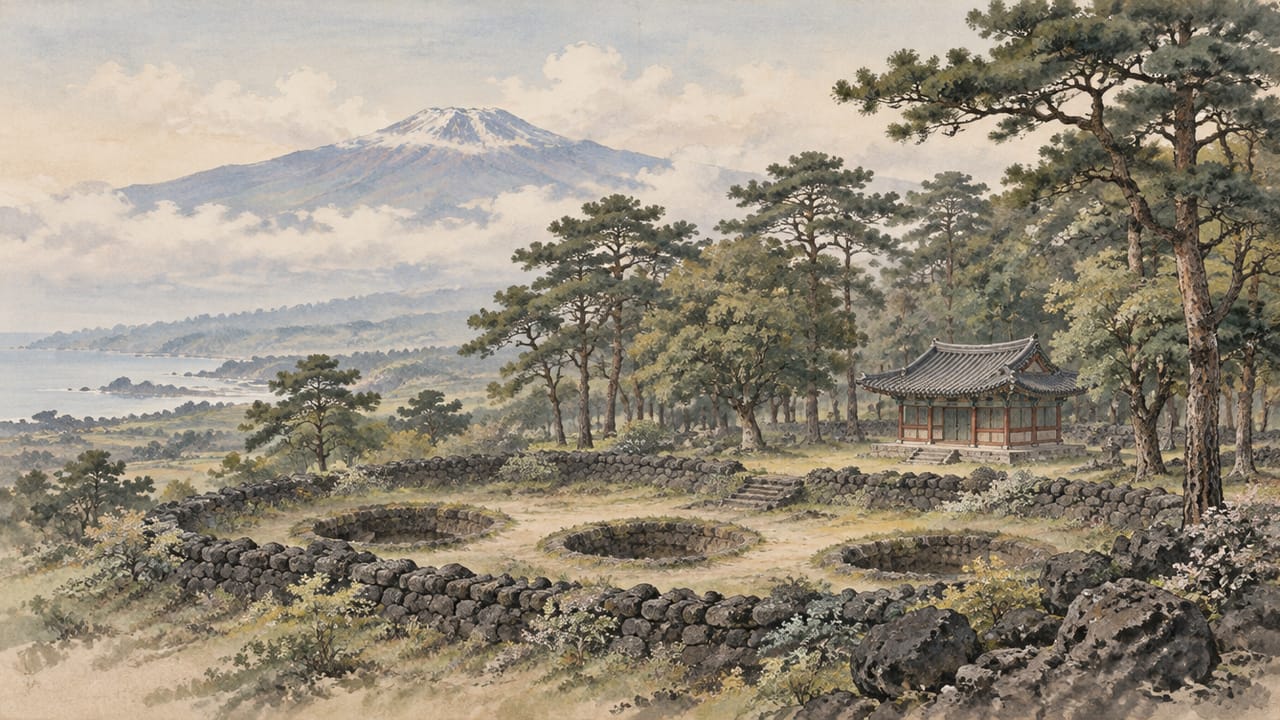
About the 제주 고씨 clan
Said to be the representative ancestral seat of the Ko surname, taking as its founder Go Eul-la of the Tamna foundation myth. In the 2015 Census the 제주 고씨 clan numbered about 310,542 people, one of Korea's major surnames and clans. Even among people surnamed 고, a different clan seat (bon-gwan, 제주) means a different lineage. New to these terms? See the bon-gwan, pa & hangnyeol guide.
Roots and History of the Jeju Ko Clan
With about 310,000 members in the 2015 census, the Jeju Ko (濟州 高氏) account for most people surnamed Ko (Go) in Korea. They honor Go Eul-la (高乙那), one of the three divine founders of Tamna, as their founder, and their family is said to have held the hereditary title of seongju (星主, "star lord") of Tamna through Goryeo into early Joseon.
Founder and Origin of the Ancestral Seat
According to an old record quoted in the Goryeosa, in the distant past three divine men emerged from the Moheung Cave on the northern slope of Hallasan: Yang Eul-la, Go Eul-la and Bu Eul-la. They married three princesses who arrived from the land of Byeongnang, began farming and herding, and founded Tamna. The three holes are today's Samseonghyeol in Jeju City, and Go Eul-la has long been revered as the founder of the Jeju Ko.
Three brothers of the 15th generation, Go Hu, Go Cheong and Go Gye, are said to have crossed the sea to Tamjin (today's Gangjin) to pay court. There the eldest received the title seongju, the second wangja ("prince") and the youngest donae, and because they had landed at Tamjin the island came to be called Tamna. Records differ as to whether the court they visited was Silla or Goryeo.
The clan's mid-founder, Go Mal-lo (高末老), is said to have come to the court of King Taejo of Goryeo in 938 and received the titles of seongju and wangja along with recognition of Tamna's self-rule. His descendants governed Tamna under the title seongju into early Joseon. The ancestral seat, Jeju, is this land of Tamna, which became Tamna County under Goryeo and Jeju Province (moksa district) under King Taejong of Joseon.
The Clan Through History
Under King Munjong of Goryeo, Go Yu (高維) became the first of the Tamna Go to hold central office, serving as Right Remonstrant, Deputy Commander of the Northeastern Circuit and Vice Director of the Royal Library, and in 1071 he supervised the state examination; the family tradition counts him as a son of Go Mal-lo. Go Yu's son Go Jo-gi served Kings Yejong, Injong and Uijong and reached the rank of Jungseo-sirang-pyeongjangsa, and is counted as the first man from Jeju to join the ranks of chief ministers. From mid-Goryeo many descendants went up to the capital to serve, establishing a base around Gaeseong and Jangdan in Gyeonggi.
On the island the line of seongju continued. The late-Goryeo seongju Go In-dan (高仁旦) helped bring Tamna fully back under Goryeo in 1294. Go Bong-rye (高鳳禮), son of the late-Goryeo seongju Go Sin-geol (高臣傑), asked in 1402 that the titles seongju and wangja be changed to Left and Right Dojigwan, bringing Tamna's own titles within the Joseon system. Go Sin-geol's grandson Go Deuk-jong (高得宗) rose to Mayor of Hanseong and founded the Yeonggok-gong branch.
Besides these three, the clan's branches include the Munchung-gong branch of the Goryeo scholar Go Gyeong, the Hwajeon-gun branch of Go In-bi, and the Jangheung-baek, Munjeong-gong, Sangdang-gun and Yanggyeong-gong branches. Old records also mention more than ten offshoot seats (bun-gwan) such as Jangheung, Gaeseong, Yeonan, Sangdang and Andong; the righteous-army leader Go Gyeong-myeong and his sons, who died in the Imjin War, belonged to the Jangheung Ko.
Under Joseon the clan produced far more military than civil examination graduates, with one count giving some 220 military graduates. In modern times the Jeju Ko include Go Hui-dong, Korea's first Western-style painter; Goh Kun, who served as Prime Minister and Mayor of Seoul; and the poet Ko Un.
Notable Figures
- Go Eul-la (高乙那) — One of the three divine men of the Tamna founding myth, revered as founder of the Jeju Ko.
- Go Mal-lo (高末老) — Mid-founder, said to have come to the court of King Taejo of Goryeo and received the titles of seongju and wangja.
- Go Jo-gi (高兆基, ?–1157) — Son of Go Yu; served Kings Yejong, Injong and Uijong and became Jungseo-sirang-pyeongjangsa in 1149. He left the Chinese poem "Night Rain at a Mountain Villa".
- Go In-dan (高仁旦) — Late-Goryeo seongju of Tamna who received a red belt and ivory tablet from King Chungnyeol in 1294 and served as deputy in the Yuan-era Tamna Command.
- Go Yeo (高呂, ?–1402) — Named a third-rank Founding Merit Subject in 1392 for helping enthrone Yi Seong-gye; said to be the founder of the Goseong-gun branch.
- Go Bong-rye (高鳳禮, ?–1411) — Son of the seongju Go Sin-geol, credited with pacifying Jeju; in 1402 he asked that the titles seongju and wangja be changed to Left and Right Dojigwan.
- Go Deuk-jong (高得宗, 1388–1452) — Pen name Yeonggok. He went to Japan as envoy in 1439, served as Second Minister of the Privy Council and Mayor of Hanseong, and wrote the record of the rebuilding of the Jeju government office, Honghwagak-gi.
- Go Eon-baek (高彦伯, ?–1608) — A military officer who fought the Japanese as magistrate of Yeongwon in the Imjin War.
- Go Hui-dong (高羲東, 1886–1965) — Pen name Chungok. He studied Western painting at the Tokyo School of Fine Arts and on returning in 1915 became Korea's first Western-style painter.
- Go Hwang-gyeong (高凰京, 1909–2000) — Sociologist who founded Seoul Women's University; her colonial-era activity has placed her on collaboration lists and is discussed.
- Go Hyeong-gon (高亨坤, 1906–2004) — First-generation scholar of Western philosophy and assemblyman, father of Goh Kun.
- Goh Kun (高建, 1938–) — Administrator who served as Prime Minister and Mayor of Seoul.
- Ko Un (高銀, 1933–) — Poet, author of Maninbo (Ten Thousand Lives) and other works.
- Go Du-sim (高斗心, b. 1951) — Jeju-born actress known for Farmland Diary.
- Go Yu (高維) — Said to be the first man from Tamna to enter central office, placing first in the 1045 Namseong-si.
- Go Tae-pil (高台弼) — Eldest son of Go Deuk-jong; his descendants mostly lived on Jeju.
Clan Villages and Heritage Sites
Samseonghyeol in Ido 1-dong, Jeju City, a designated Historic Site, is the birthplace of the three clans Go, Yang and Bu. The Samseongjeon shrine, built in 1698, holds the tablets of the three founders, and spring and autumn rites are held there every 10 April and 10 October, with the three clans taking turns as officiants. On 10 December the Geonsi rite commemorating the founding of Tamna is held as a festival of all Jeju people. Honinji pond at Onpyeong-ri, Seongsan-eup, Seogwipo, where the three founders are said to have married the princesses of Byeongnang, is a designated Jeju Monument.
The tomb of Go Jo-gi in Ara-dong, Jeju City, is considered the earliest Jeju tomb whose occupant is known and was designated a Jeju Monument in 1977. It is distinguished by stone posts in place of the usual earthen enclosure, and descendants hold a rite there every September.
Beyond Jeju, the clan is spread throughout the country: around Gaeseong and Jangdan in Gyeonggi, in Okgu (now Gunsan) where the Munchung-gong branch settled, in Gurye where the Hwajeon-gun branch moved, and wherever Yeonggok-gong descendants spread. Among the Yeonggok-gong line, descendants of the eldest son Go Tae-pil mostly remained on Jeju.
Branch and lineage details can differ between family associations and genealogies, so please confirm them with your own family's jokbo.
Main branches (派)
Seongju-gong-pa, Jeonseo-gong-pa, Yeonggok-gong-pa, Munchung-gong-pa, Hwajeon-gun-pa, Jangheung-baek-pa, Sangdang-gun-pa, Yanggyeong-gong-pa
Seongju-gong-pa (星主公派)
The Seongju-gong branch descends from Go In-dan (高仁旦). The Go clan of Tamna is said to have ruled Tamna under the hereditary title of seongju (星主, 'star lord') from Goryeo into the early Joseon period.
According to the Gyehae genealogy, the Seongju-gong and Jeonseo-gong branches, descendants of Go In-dan of the 10th generation, lived in large numbers in Cheongju, Seoul and even Japan.
Jeonseo-gong-pa (典書公派)
The Jeonseo-gong branch descends from Go Sin-geol (高臣傑), said to have served as seongju (lord) of Tamna in the late Goryeo period. He was the grandfather of Yeonggok-gong Go Deuk-jong of the early Joseon period.
Like the Seongju-gong branch, it is known to have settled in Cheongju, Seoul and elsewhere.
Yeonggok-gong-pa (靈谷公派)
The Yeonggok-gong branch descends from Go Deuk-jong (高得宗, 1388-1452), grandson of Go Sin-geol and son of General Go Bong-ji (高鳳智). After passing the civil examination in 1414 he went to Japan as envoy in 1439 and served as Second Minister of the Privy Council and Mayor of Hanseong. His pen name was Yeonggok (靈谷), and he excelled in prose and calligraphy.
Descendants of his eldest son Go Tae-pil (高台弼) mostly remained on Jeju, while those of Go Tae-seung, Go Tae-bo and Go Tae-ik spread throughout the country.
Munchung-gong-pa (文忠公派)
The Munchung-gong branch descends from the Goryeo scholar Munchung-gong Go Gyeong (高慶). His great-great-grandfather Go Don-gyeom (高惇謙), a central official in the mid-12th century, was exiled to Okgu County (now Gunsan, North Jeolla) and settled there; he is regarded as the branch's first settler in Okgu.
It is said to have produced nine ministers (sangseo) and twelve Hallim academicians under Goryeo. Its members lived largely in Gaeseong, North Jeolla and Gyeonggi, and some moved to Yeonbaek in Hwanghae Province.
Hwajeon-gun-pa (花田君派)
The Hwajeon-gun branch descends from Go In-bi (高仁庇), Prince Hwajeon (花田君). The line of Go Sung-rye (高崇禮) of the 14th generation moved to Gurye in South Jeolla, and Go Gwang-hu (高廣後), ninth-generation descendant of Go In-bi, is said to have moved from Hoengseong to Yeongwol under King Injo to escape the Yi In-geo rebellion.
Jangheung-baek-pa (長興伯派)
The Jangheung-baek branch is said to descend from Go Jung-yeon (高仲莚). Its descendants settled widely in South Jeolla, including Samgye in Jangseong.
Some records list this line under the separate seat of Jangheung; the Jangheung Ko are known as one of the offshoot seats of the Jeju Ko.
Sangdang-gun-pa (上黨君派)
The Sangdang-gun branch is said to descend from Go Gong-ik (高恭益). Go Cheol of the 12th generation is said to have settled at Bukcheong in Hamgyeong Province, and the branch lived in Hamgyeong and around Cheongju.
Some records describe this line as having taken the separate seat of Sangdang.
Yanggyeong-gong-pa (良敬公派)
The Yanggyeong-gong branch is said to descend from Go Ryeong-sin (高令臣). Its descendants lived largely around Sangju and Mungyeong in North Gyeongsang.
Some records describe this line as having taken the separate seat of Gaeseong.
Branch divisions vary by lineage and jokbo; confirm your own branch in your family's records.
Notable figures
고을나(founder in the Tamna three-clan myth), 고유(first man of Tamna to enter central office), 고조기(Goryeo chief minister), 고인단(late-Goryeo seongju of Tamna), 고여(Joseon founding merit subject), 고봉례(seongju of Tamna and Left Dojigwan), 고득종(envoy to Japan and Mayor of Hanseong), 고태필(eldest son of Go Deuk-jong and Governor of Jeolla), 고언백(Imjin War commander and merit subject), 고희동(Korea's first Western-style painter), 고황경(founder of Seoul Women's University), 고형곤(philosopher and assemblyman), 고건(Mayor of Seoul and Prime Minister), 고은(poet of Maninbo), 고두심(actress of Farmland Diary)
Tap a name for the full profile (life, career, grave, descendants).
제주 고씨 — Pro-Japanese collaborators
제주 고씨 figures listed by the Presidential Committee or the Dictionary of Pro-Japanese Collaborators (Minjok Munje Institute).
How to build your 제주 고씨 tree
- Start with yourself — sign in to get your own tree. Enter your name, birth year and clan seat (제주).
- Add older generations — add parents and grandparents. For accuracy see tracing ancestors with jejeok records (usually to about 5 generations).
- Link siblings & children — sort by generational name (hangnyeol) to see each generation at a glance.
- Export & share — save the finished tree as a PDF and invite family to manage it together.
Related reading
제주 고씨 clan association
The 제주 고씨 clan association can be found in the Korean E-Jokbo Library clan-association directory.
✍ Request additions / corrections to the 제주 고씨 family tree infoStart your family tree free →