광산 김씨 family tree
Build your family tree online광산 김씨(光山 金氏) — A surname said to descend from the Silla prince Kim Heung-gwang and to have settled in Damyang, Jeolla Province.
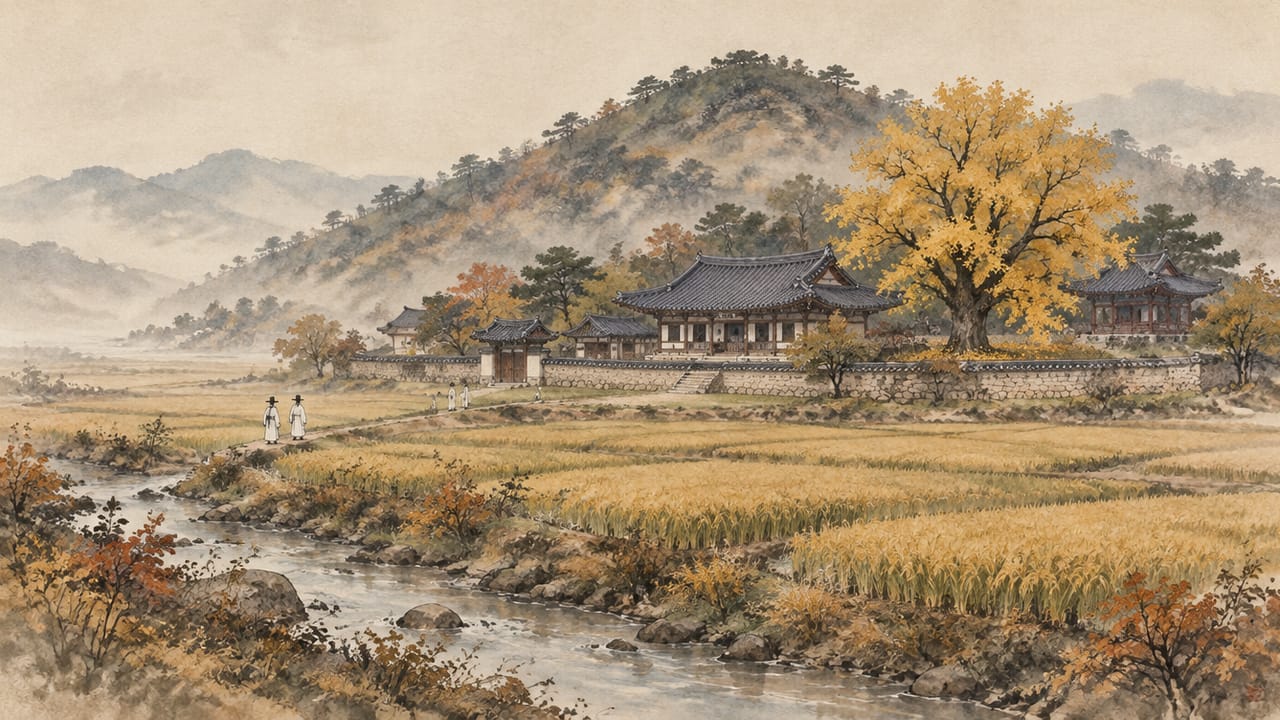
About the 광산 김씨 clan
A surname said to descend from the Silla prince Kim Heung-gwang and to have settled in Damyang, Jeolla Province. In the 2015 Census the 광산 김씨 clan numbered about 926,316 people, one of Korea's major surnames and clans. Even among people surnamed 김, a different clan seat (bon-gwan, 광산) means a different lineage. New to these terms? See the bon-gwan, pa & hangnyeol guide.
Roots and History of the Gwangsan Kim Clan
Founder and origin of the clan seat
The Gwangsan Kim clan (光山 金氏) takes as its founder Kim Heung-gwang (金興光), said to be a descendant of the Silla royal Kim house. Sources disagree on whose son he was. The clan's Jeongyu Grand Genealogy, the Gyerim Daebo and others name him as the third son of King Sinmu, while the Dongguk Manseongbo and Joseon Ssijok Tongbo make him a son of King Heongang. The oldest surviving clan genealogy, the Jeongmyo Daebo of 1747, simply calls him "a Silla prince" because the evidence was unclear.
According to tradition, Kim Heung-gwang foresaw the turmoil at the end of Silla and left Gyeongju. He lived in seclusion at Seoil-dong in Chuseong county of Mujinju, today the area of Pyeongjang-ri, Daejeon-myeon, Damyang County, South Jeolla Province. His grandson Kim Gil (金吉) helped Wang Geon found Goryeo, became a founding merit subject and rose to Samjung Daegwang. For this service Kim Heung-gwang was posthumously enfeoffed as Gwangsan Buwongun (光山府院君). His descendants then took Gwangsan (today's Gwangju) as their ancestral seat, since it was both his title and his home. During Goryeo the family produced eight Pyeongjangsa, a senior second-rank office. Seoil-dong therefore came to be called Pyeongjang-dong, a name that survives in today's Pyeongjang-ri.
The course of the clan
In late Goryeo the clan split into several branches. The main ones are the Yanggan-gong-pa of Kim Yeon (14th generation), the Munsuk-gong-pa of Kim Ju-jeong (14th), the Nangjang-gong-pa of Kim Gyu (14th), the Munjeong-gong-pa of Kim Tae-hyeon (15th) and the Saon Jikjang-gong-pa of Kim Yeong (16th), today called the Gwangjeol-gong-pa. Descendants of the Yanggan-gong-pa make up about 70 percent of the clan, the largest share.
The line that flourished most in Joseon was the one based in Yeonsan, Chungcheong Province (today Yeonsan-myeon, Nonsan). Its ties to the area began around the time of Kim Yak-chae, who served as governor of Chungcheong. The family settled in Gojeong-ri, Yeonsan, in the time of Lady Heo of the Yangcheon Heo clan and her son Kim Cheol-san. Kim Cheol-san's son Kim Guk-gwang became Left State Councillor under King Seongjong and was enfeoffed as Gwangsan Buwongun, and his younger brother Kim Gyeom-gwang also held high office. Later, Sagye Kim Jang-saeng, son of Kim Gye-hwi, and his son Sindokjae Kim Jip led the ritual-studies scholarship of the Giho school. Yeonsan thus became a center of Joseon ritual studies.
Among Kim Jang-saeng's descendants were the brothers Kim Man-gi, father of King Sukjong's first queen Queen Ingyeong, and Kim Man-jung, author of Guunmong. Kim Man-gi, his son Kim Jin-gyu and grandson Kim Yang-taek held the post of chief scholar (Daejehak) in three successive generations. In Ocheon, Yean (today part of Andong), the line founded by Kim Hyo-ro also became a noted scholarly family. During Joseon the clan produced about 260 civil-examination graduates, 5 state councillors, 7 chief scholars (8 by some counts), 4 officials honored for integrity, and 1 queen.
Clan villages spread from the founder's home in Gwangju and Damyang across South Jeolla, including Naju, Jangseong, Yeonggwang, Hwasun and Boseong, and across North Jeolla. Others are found in South Chungcheong (Nonsan, Buyeo, Seosan, Hongseong), North Chungcheong (Chungju, Jecheon), Andong, and many places in Gyeonggi and Gangwon.
Notable figures
- Kim Heung-gwang (金興光) — Founder of the clan. He is said to have been a Silla prince and was enfeoffed as Gwangsan Buwongun thanks to his grandson Kim Gil's merit.
- Kim Tae-hyeon (金台鉉, 1261-1330) — Late-Goryeo civil official and founder of the Munjeong-gong-pa. He supervised the civil examination under King Chungnyeol and rose to Cheomui Jeongseung. His posthumous title was Munjeong.
- Kim Guk-gwang (金國光, 1415-1480) — Courtesy name Gwangyeong, pen name Seoseok, posthumous title Jeongjeong. As minister of war he helped suppress Yi Si-ae's rebellion in 1467. He became Left State Councillor in 1470 and the next year was made a first-rank merit subject and Gwangsan Buwongun.
- Kim Deok-ryeong (金德齡, 1567-1596) — A righteous-army leader from Gwangju during the Imjin War. In 1596 he was falsely accused of collaborating with Yi Mong-hak's rebellion and died in prison. He was exonerated in 1661.
- Kim Jang-saeng (金長生, 1548-1631) — Pen name Sagye. He systematized Joseon ritual studies as a leading scholar of the Giho school and is enshrined in the national Confucian shrine.
- Kim Jip (金集, 1574-1656) — Pen name Sindokjae. He carried on his father Kim Jang-saeng's ritual studies and is enshrined in both the Confucian shrine and the Royal Ancestral Shrine.
- Kim Man-gi (金萬基, 1633-1687) — Pen names Seoseok and Jeonggwanjae, posthumous title Munchung. When his daughter became King Sukjong's queen he was enfeoffed as Gwangseong Buwongun. He served as chief scholar and commander of the Military Training Command and was named a first-rank merit subject in 1680.
- Kim Man-jung (金萬重, 1637-1692) — Pen name Seopo. He served as chief scholar and wrote the Korean-language novels Guunmong and Sassi Namjeonggi.
- Queen Ingyeong (仁敬王后, 1661-1680) — Daughter of Kim Man-gi and first queen of King Sukjong of Joseon.
- Kim Jin-gyu (金鎭圭, 1658-1716) — Pen name Jukcheon, posthumous title Muncheong. He served as chief scholar, minister of rites and Left Chamchan, and excelled at seal and clerical script and at landscape and figure painting.
- Kim Yang-taek (金陽澤, 1712-1777) — Son of Kim Jin-gyu. He served five times as chief scholar, making three generations of chief scholars with his grandfather and father, and became Chief State Councillor in 1776.
- Kim Pil-sun (金弼淳, 1878-1919) — A physician and independence activist who worked in Manchuria.
- Kim Maria (金瑪利亞, 1892-1944) — A woman independence activist who took part in the February 8 Declaration and the March First Movement. As head of the Korean Patriotic Women's Society she supported the Provisional Government.
- Kim Sou-hwan (金壽煥, 1922-2009) — In 1969 he became the first Korean cardinal of the Catholic Church. As Archbishop of Seoul he spoke out for democracy and human rights.
Clan villages and heritage sites
- Pyeongjang-ri, Damyang — In Daejeon-myeon, Damyang County, this is where founder Kim Heung-gwang lived in seclusion. The name "Pyeongjang-dong," after the eight Pyeongjangsa of Goryeo, comes from here. The founder's altar site and clan buildings stand here.
- Tomb complex of Kim Jang-saeng — A Gwangsan Kim burial ground in Gojeong-ri, Yeonsan-myeon, Nonsan, designated a South Chungcheong Provincial Monument in 1984. It holds the tombs of Lady Heo of Yangcheon (Kim Jang-saeng's seventh-generation grandmother), Kim Cheol-san (the clan's first settler in Yeonsan), Kim Gyeom-gwang, Kim Gye-hwi, Kim Jang-saeng and others. Lady Heo's memorial hall, Yeongmojae, and stone steles also remain.
- Donamseowon Academy, Nonsan (遯巖書院) — Founded in 1634 to honor Kim Jang-saeng's learning and virtue, it received a royal charter under King Hyeonjong. Kim Jip, Song Jun-gil and Song Si-yeol are also enshrined here. It survived the 1871 closure of academies. It is a designated Historic Site and in 2019 was inscribed as part of the UNESCO World Heritage "Seowon, Korean Neo-Confucian Academies." Its lecture hall, Eungdodang, is a Treasure.
- Gwangsan Kim lodge and shrine, Andong — A shrine built in 1536 by Kim Bu-pil to honor his grandfather Kim Hyo-ro, the first settler of the Yean line. It was moved to Ocheon-ri, Waryong-myeon, because of the Andong Dam and is a designated heritage of North Gyeongsang Province.
- Chunghyo-dong, Gwangju — The hometown of righteous-army leader Kim Deok-ryeong, with a memorial stele pavilion honoring the loyalty and filial piety of him and his family.
Branch lines and genealogies may differ by family and by jokbo, so please check your own family's jokbo.
Main branches (派)
Yanggan-gong-pa, Munjeong-gong-pa, Munsuk-gong-pa, Nangjang-gong-pa, Saon Jikjang-gong-pa
Yanggan-gong-pa (良簡公派)
The Yanggan-gong branch descends from Kim Yeon (金璉), a 14th-generation descendant of the founder Kim Heung-gwang. The son of the pyeongjangsa Kim Dae-rin (金大鱗), he began his career as a censor (siosa) under King Gojong of Goryeo, rose to minister of punishments, and under King Chungnyeol served as commander for Gyeongsang Province and as chanseongsa before dying in 1291. His posthumous title was Yanggan (良簡).
It is counted as the largest Gwangsan Kim branch. The ritual scholar Kim Jang-saeng (金長生), a great-great-grandson of the censor-general Kim Geuk-nyu (金克忸), and his son Kim Jip (金集) came from this branch, as did Kim Jang-saeng's great-grandsons Kim Man-gi and Kim Man-jung.
Munjeong-gong-pa (文正公派)
The Munjeong-gong branch descends from Kim Tae-hyeon (金台鉉, 1261-1330) of the 15th generation. The son of the censor Kim Su (金須) and a nephew of Kim Ju-jeong, he took first place in the National Academy examination in 1275 and passed the civil service examination the following year.
Under King Chungnyeol he served as chief examiner while a privy councillor, and later held high posts including chief state councillor (cheomui jeongseung). His posthumous title was Munjeong (文正); he compiled the Dongguk mungam, which has not survived.
Munsuk-gong-pa (文肅公派)
The Munsuk-gong branch descends from Kim Ju-jeong (金周鼎) of the 14th generation. He placed first in the state examination in 1264 and, as a royal secretary, accompanied King Chungnyeol on his journey to the Yuan court.
In 1281 he joined the Goryeo-Mongol expedition against Japan alongside Kim Bang-gyeong, and in 1284 became frontier myriarch (jinbyeon manho), patrolling the southern coast. His posthumous title was Munsuk (文肅). His son Kim Sim (金深) was a late-Goryeo high minister enfeoffed as Prince Hwapyeong.
Nangjang-gong-pa (郎將公派)
The Nangjang-gong branch descends from Kim Gyu (金珪) of the 14th generation. Together with the Munjeong-gong, Munsuk-gong, Yanggan-gong and Saon Jikjang-gong branches, it is counted among the five main branches of the Gwangsan Kim clan.
Saon Jikjang-gong-pa (司醞直長公派)
The Saon Jikjang-gong branch descends from Kim Yeong (金英) of the 16th generation. Its name comes from the office of jikjang in the Royal Wine Office (Saonseo), and it is counted among the five main branches of the Gwangsan Kim clan.
Branch divisions vary by lineage and jokbo; confirm your own branch in your family's records.
Notable figures
김흥광(founder of the Gwangsan Kim clan), 김태현(Goryeo official and founder of the Munjeong-gong-pa), 김국광(Left State Councillor under King Seongjong), 김덕령(righteous-army leader in the Imjin War), 김장생(great master of ritual studies), 김집(ritual-studies scholar; enshrined in the Confucian shrine), 김만기(chief scholar and father of Queen Ingyeong), 김만중(author of Guunmong), 인경왕후(consort of King Sukjong), 김진규(chief scholar and calligrapher-painter), 김양택(Chief State Councillor; third of three generations of chief scholars), 김필순(physician and independence activist), 김마리아(head of the Korean Patriotic Women's Society), 김수환(first Korean cardinal)
Tap a name for the full profile (life, career, grave, descendants).
광산 김씨 — Independence patriots
광산 김씨 figures recognized as independence patriots (National Independence Hall / Gonghun public data). Tap a name for the citation.
The Founder and Ancestral Seat of the Gwangsan Kim Clan
The Gwangsan Kim clan (光山 金氏) has its ancestral home in the area of Gwangju Metropolitan City (former Gwangsan) and Pyeongjang-ri, Daejeon-myeon, Damyang County. Its founder Kim Heung-gwang (金興光) is said to be a descendant of the Silla royal house, though which king's prince he was differs among sources and is not stated with certainty. At the end of Unified Silla he left Gyeongju and lived in seclusion at Seoil-dong in Mujinju; when his grandson Kim Gil became a founding merit subject of Goryeo, Taejo enfeoffed Kim Heung-gwang as Gwangsan Buwongun, so that Gwangsan became the ancestral seat. Because eight Pyeongjangsa arose among his descendants, their home village was called Pyeongjang-dong.
A Distinguished House of Ritual Studies
In Joseon it produced Kim Jang-saeng and his son Kim Jip, father and son among the Eighteen Sages of the East enshrined in the Confucian shrine; Kim Jip was also enshrined in the Royal Ancestral Shrine and was called 'guk-ban.' Kim Jang-saeng's great-grandsons, the brothers Kim Man-gi and Kim Man-jung, were active in the reigns of Hyeonjong and Sukjong, and Kim Man-gi's daughter became Queen Ingyeong, Sukjong's principal consort. A distinguished house that produced 5 State Councillors, 8 Daejehak, and 1 queen, it ranks 3rd among Kim ancestral seats by population, after Gimhae and Gyeongju.
Branches
The Gwangsan Kim clan divides broadly into five branches: Munjeonggong-pa, Munsukgong-pa, Yangan-gong-pa, Nangjanggong-pa, and Gwangjeolgong-pa. Besides these there are numerous middle, minor, and sub-branches, such as the Mungyeonggong-pa whose founder was Kim Jip. (The line formerly called Saonjikjanggong-pa is today called Gwangjeolgong-pa.)
Generational names and counts have at times been adjusted through clan reorganization.
Related Videos
How to build your 광산 김씨 tree
- Start with yourself — sign in to get your own tree. Enter your name, birth year and clan seat (광산).
- Add older generations — add parents and grandparents. For accuracy see tracing ancestors with jejeok records (usually to about 5 generations).
- Link siblings & children — sort by generational name (hangnyeol) to see each generation at a glance.
- Export & share — save the finished tree as a PDF and invite family to manage it together.
Related reading
광산 김씨 clan association
For other branch associations, see the Korean E-Jokbo Library clan-association directory.
✍ Request additions / corrections to the 광산 김씨 family tree infoStart your family tree free →