고종 高宗
26th king of Joseon and first emperor of the Korean Empire (r. 1863-1907), who pursued the Gwangmu Reforms and was forced to abdicate during the loss of sovereignty
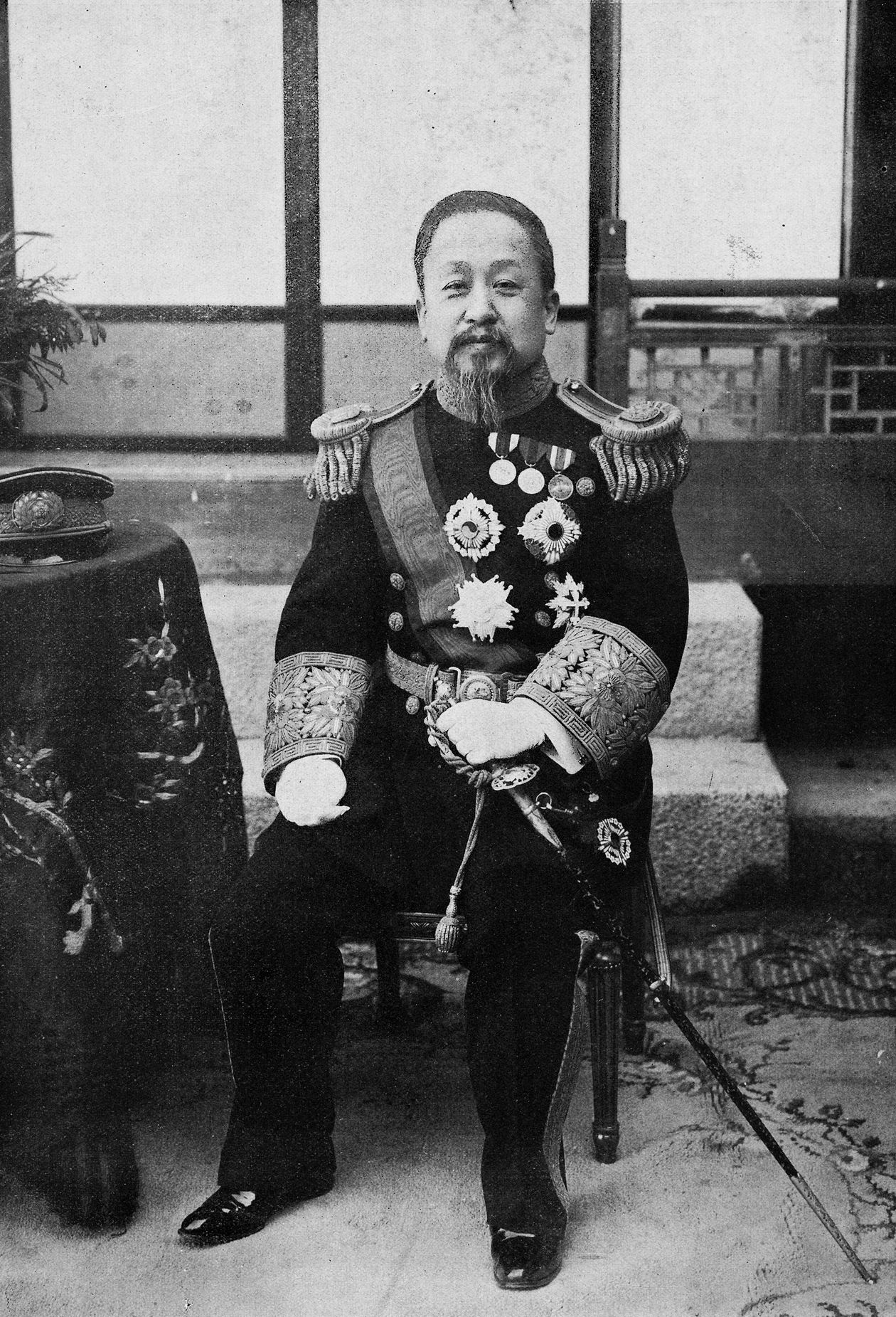
| Life | 1852 ~ 1919 |
| Era | 근대 |
| Clan | 전주 이씨 |
Life & career
Gojong (1852-1919) was the 26th king of Joseon and the first emperor of the Korean Empire. His given name was Hui (㷩), his earlier name Jaehwang, childhood name Myeongbok and pen name Juyeon; he belonged to the Jeonju Yi clan. He was born on 8 September 1852 in Hanseong, second son of Heungseon-gun Yi Ha-eung (later Heungseon Daewongun) and Lady Min of Yeoheung.
When Cheoljong died without an heir in 1863, Queen Dowager Jo (Sinjeong) adopted Heungseon-gun's second son as heir of Ikjong (Crown Prince Hyomyeong), gave him the title Prince Iksung and enthroned him. As he was eleven, Dowager Jo served as regent while his father held real power. He began ruling in person in 1873.
His reign saw the Ganghwa Treaty (1876), the Imo Mutiny (1882), the Gapsin Coup (1884), the Donghak Peasant Movement and Gabo Reforms (1894), the Eulmi Incident (1895) and his flight to the Russian legation (1896). On 12 October 1897 he became emperor at Hwangudan, naming the state the Korean Empire and the reign era Gwangmu. Japan imposed the Eulsa Treaty in 1905, and after the Hague envoy affair of 1907 he handed the throne to his son Sunjong under Japanese pressure. After the loss of sovereignty in 1910 he lived at Deoksugung until he died on 21 January 1919.
Reign and Basic Facts
His given name was Hui (㷩), earlier Jaehwang, childhood name Myeongbok, first courtesy name Myeongbu, pen name Juyeon; he was given the title Prince Iksung at accession. Era names used during his reign were Gaeguk, Geonyang and Gwangmu. His temple name is Gojong and his posthumous title Munheon Mujang Inik Jeonghyo, styled Grand Emperor (Taehwangje); he is also called Emperor Gwangmu after the era name. His tomb is Hongneung in the Hongyureung complex, Namyangju, Gyeonggi Province.
He took the throne on the 13th day of the 12th lunar month of 1863 (21 January 1864) and was king of Joseon until 12 October 1897, then emperor of the Korean Empire until he abdicated on 19 July 1907. Some accounts note he used the title Daegunju from January 1895 to October 1897. His total reign was about 43 years and 6 months. After abdication he was Grand Emperor; after the annexation of 1910 Japan styled him "Yi Taewang of Deoksugung". He died at Hamnyeongjeon in Deoksugung on 21 January 1919 aged 66 by Western count.
Major Events of the Reign
Regency of the Daewongun (1863-1873) Heungseon Daewongun abolished the Border Defence Council and revived the State Council and Samgunbu, introduced the household cloth tax (hoporje) and compiled Daejeon Hoetong and Yukjeon Jorye. Reconstruction of Gyeongbokgung was undertaken, and Korea faced the French campaign of 1866 and the US expedition of 1871, in which Eo Jae-yeon died at Gwangseongbo.
Personal rule and opening (1873-1894) Choe Ik-hyeon's memorial of 1873 led to the Daewongun's withdrawal and the start of Gojong's personal rule. After the Unyo incident of 1875, the Ganghwa Treaty of February 1876 opened the country. In the 1882 Imo Mutiny old-army soldiers brought the Daewongun back until Qing intervention removed him; in December 1884 radical reformers including Bak Yeong-hyo and Kim Ok-gyun staged the failed Gapsin Coup. In 1894 the Donghak Peasant Movement broke out and, with Qing and Japanese troops in the country, Japanese forces occupied Gyeongbokgung on 23 July; the Gabo Reforms led by Gim Hong-jip followed.
Eulmi Incident and the Russian legation (1895-1896) On 8 October 1895 Queen Myeongseong was murdered in the Eulmi Incident, in which Japanese forces were involved; the Eulmi Reforms then changed the era name to Geonyang and ordered topknot cutting, sparking Eulmi righteous armies. On 11 February 1896 Gojong and the crown prince moved to the Russian legation. He returned to Gyeongungung in 1897.
Korean Empire and Gwangmu Reforms (1897-1904) In October 1897 he became emperor at Hwangudan, naming the state Daehan and the era Gwangmu and raising Queen Min to empress and the crown prince to imperial crown prince. Under the "old base, new learning" principle the Gwangmu Reforms set up the Wonsubu to strengthen the military, the Yangji and Jigye offices for land surveys and land certificates, sent representatives to the 1900 Paris Exposition and joined the Universal Postal Union. A Gando inspector was posted and Yi Beom-yun was sent as Gando administrator in 1903; trams and electricity were introduced in Seoul.
Loss of sovereignty and abdication (1904-1907) After the Russo-Japanese War of 1904 Japanese pressure grew and the Eulsa Treaty of 17 November 1905 stripped Korea of diplomatic rights. In April 1907 he sent Yi Jun, Yi Sang-seol, Yi Wi-jong and the American Homer Hulbert to the Hague peace conference to protest it, without success; Japan used this as a pretext to force his abdication and on 19 July he passed the throne to the crown prince (Sunjong). It is recorded that neither giver nor receiver attended the abdication ceremony.
After abdication The Jeongmi Treaty and army disbandment came on 24 July 1907 and annexation on 29 August 1910 ended the empire. His sudden death on 21 January 1919 was officially attributed to cerebral hemorrhage or heart failure, but poisoning rumours persist and it is described as a trigger of the March First Movement.
Assessment Some praise his pursuit of modernization and sovereign diplomacy and his founding of the empire to defend independence; others criticize limits in political ability, drain on the treasury, sale of offices and reliance on foreign powers. Assessments are divided.
Queen and Children
His queen was Min of Yeoheung, Empress Myeongseong (Queen Myeongseong, 1851-1895), whom he married in 1866 and who was murdered in the Eulmi Incident of 1895; she was posthumously made empress when the empire was founded. His consorts included Imperial Noble Consort Sunheon of the Eom clan of Yeongwol (Sunheon, 1854-1911), Gwiin Jang (Gwiin Jang, 1838-1887), and Gwiin Yi of Yeongbodang, Gwiin Jeong of Bohyeondang, Gwiin Yang of Boknyeongdang and Gwiin Yi of Gwanghwadang.
Queen Myeongseong bore four sons and a daughter but only Sunjong (1874-1926) lived to adulthood. Sunheon bore Crown Prince Yi Un (Yeongchinwang, 1897-1970); Gwiin Jang bore Prince Imperial Ui Yi Kang (1877-1955); Gwiin Yi of Yeongbodang bore Prince Wanhwa Yi Seon (1868-1880); and Gwiin Yang of Boknyeongdang bore Princess Deokhye (1912-1989). The throne passed to his legitimate son Sunjong.
Notable Figures of the Reign
- Heungseon Daewongun Yi Ha-eung - Gojong's father and regent in 1863-1873.
- Queen Sinjeong - Queen Dowager who adopted him as heir of Ikjong, enthroned him and acted as regent.
- Queen Myeongseong - his queen, murdered in 1895.
- Choe Ik-hyeon - conservative Confucian and later righteous-army leader whose 1873 memorial ended the Daewongun's rule.
- Yang Heon-su - officer who led the Jeongjoksanseong fight in 1866.
- Sin Heon - officer who represented Joseon at the 1876 Ganghwa Treaty.
- Gim Hong-jip - prime minister who led the Gabo Reforms.
- Bak Yeong-hyo - reformist official behind the 1884 Gapsin Coup.
- Seo Jae-pil - founder of The Independent and the Independence Club.
- Yu Gil-jun - enlightenment thinker who wrote Seoyu Gyeonmun.
- Jeon Bong-jun - leader of the 1894 Donghak Peasant Movement.
- Min Yeong-hwan - minister who killed himself in protest against the Eulsa Treaty.
See the Royal Family Tree
The full royal lineage can be browsed in the Joseon royal family tree and the Jeonju Yi founding-ancestor lineage tree.
Previous: Cheoljong · Next: Sunjong
Related heritage sites
Heritage sites connected to this figure (Korean-language pages).
Related National Treasures
National Treasures and Treasures connected to this figure (Korean-language pages).
Related temples
Buddhist temples connected to this figure (Korean-language pages).
Major events of the reign
Political, diplomatic and social events during the reign. Each links to a page with background, course and related figures.
Grave
Hongneung (洪陵) in the Hongyureung complex, Namyangju, Gyeonggi Province, shared with Empress Myeongseong.
Descendants
His children included Sunjong (by Empress Myeongseong), Yeongchinwang (by Sunheon), Prince Imperial Ui (by Gwiin Jang) and Princess Deokhye (by Gwiin Yang); Sunjong succeeded him.