청주 한씨 family tree
Build your family tree online청주 한씨(淸州 韓氏) — Said to be the representative line of the Han surname, with its ancestral seat in Cheongju.
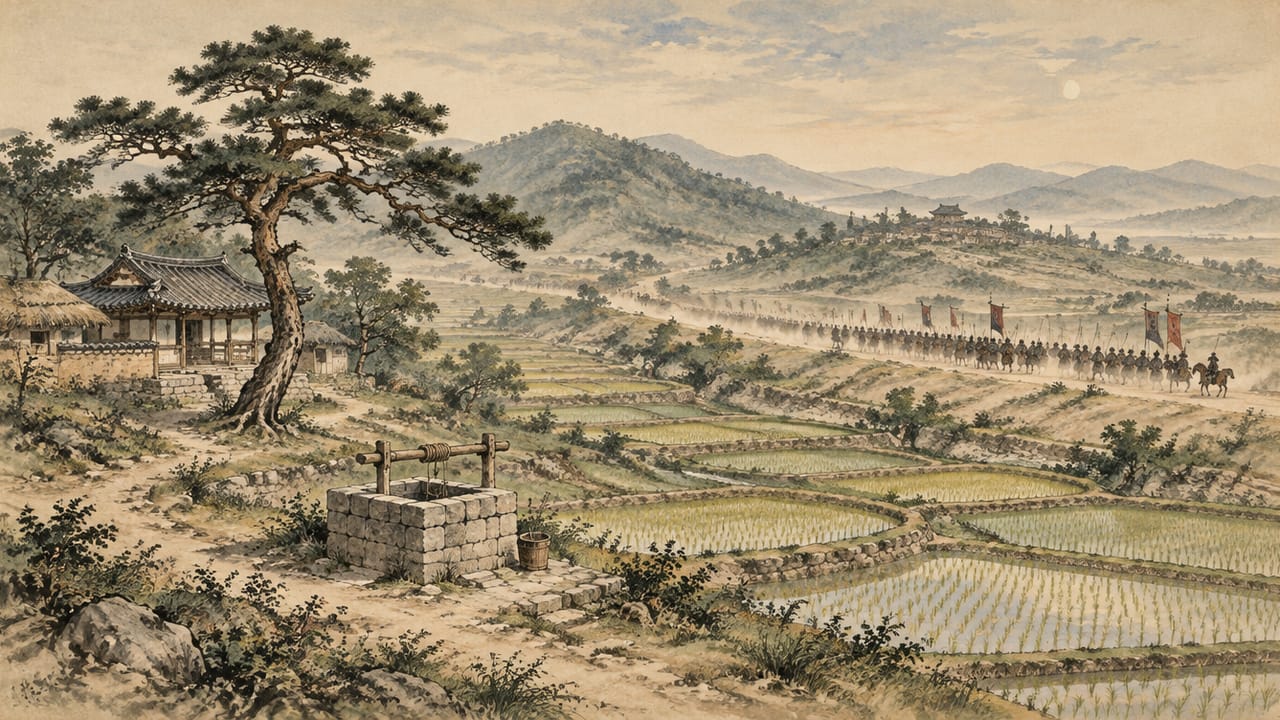
About the 청주 한씨 clan
Said to be the representative line of the Han surname, with its ancestral seat in Cheongju. In the 2015 Census the 청주 한씨 clan numbered about 752,689 people, one of Korea's major surnames and clans. Even among people surnamed 한, a different clan seat (bon-gwan, 청주) means a different lineage. New to these terms? See the bon-gwan, pa & hangnyeol guide.
Roots and history of the Cheongju Han clan
Founder and origin of the clan seat
The Cheongju Han clan honors Han Ran (韓蘭), a founding merit subject of Goryeo, as its founder. The clan genealogy traces a distant ancestry to Uryang (友諒), said to be a son of King Won of Mahan and a descendant of Gija (箕子), but because the generations in between cannot be verified, the documented line begins with Han Ran.
According to clan tradition, Han Ran was born in today's Hwanggan area of Yeongdong, North Chungcheong, and around the age of forty moved to Bangseo-dong in Cheongju, where he built the Munongjeong pavilion and opened up farmland as a local magnate. Around 928, when Wang Geon (King Taejo of Goryeo) passed through Cheongju on his campaign against Later Baekje, Han Ran supplied provisions to the drought-weary army and joined the campaign himself. For this he is said to have been named a Byeoksang founding merit subject and to have risen to samjung daegwang munha taewi (三重大匡門下太尉). His descendants kept Cheongju as their ancestral seat.
Cheongju was Sangdang-hyeon (上黨縣) under Baekje and Seowon-gyeong (西原京) under Unified Silla before receiving the name Cheongju in 940. The Sejong Sillok Jiriji lists the Han first among the native surnames (tosseong) of Cheongju-mok, and Han Myeong-hoe's title, Prince Sangdang, comes from the old name of the region.
The clan through history
In late Goryeo the family rose with figures such as Han Gang (韓康), who retired as chancellor (docheomui jungchan) during the Yuan-dominated period, and Han Su (韓脩), noted for his writing and calligraphy. A daughter of Han Gyeong (韓卿), Prince Ancheon, married Yi Seong-gye and bore the future kings Jeongjong and Taejong; she died before the founding of Joseon and was later honored posthumously as Queen Sinui (神懿王后).
Under Joseon, the founding merit subject Han Sang-gyeong (韓尙敬) became Chief State Councillor, and in the 15th century Han Hwak, Han Myeong-hoe, Han Gye-hui and Han Baek-ryun followed one after another as merit subjects and state councillors, bringing the clan to its height. Six queens came from the clan: Queen Sinui, Queen Sohye (Queen Dowager Insu, consort of Deokjong), Queens Jangsun and Ansun (consorts of Yejong), Queen Gonghye (consort of Seongjong) and Queen Inyeol (consort of Injo). The clan produced 315 successful candidates in the Joseon civil examination.
Most of today's branches split from the merit subjects and councillors of this period. Representative ones are the Yangjeol-gong-pa of Han Hwak, the Chungseong-gong-pa of Han Myeong-hoe, the Iyang-gong-pa of his younger brother Han Myeong-jin, the Munyang-gong, Munjeong-gong and Yangpyeong-gong branches founded by the three sons of Han Hye, and the Yanghye-gong-pa of Han Baek-ryun. Dozens more are recorded, including the Jeongdang-gong, Anyang-gong, Chanseong-gong, Hojo Champan-gong and Mongye-gong branches. The Gwangju, Geumsan, Myeoncheon, Buan, Yangju, Pyeongsan and Hongsan Han are known as seats that split off from the Cheongju Han.
The mid and late Joseon period produced many scholars. Han Baek-gyeom is counted a forerunner of Silhak for his evidential study of ancient geography, Dongguk jiriji; Han Chi-yun compiled Haedong yeoksa (海東繹史), a history of Korea drawn from Korean, Chinese and Japanese sources; and Namdang Han Won-jin led the Horon side of the Horak debate. At the end of the Korean Empire, Prime Minister (chamjeong daesin) Han Gyu-seol opposed the 1905 Eulsa Treaty to the last. Modern figures include Manhae Han Yong-un and the successive prime ministers Han Myeong-suk, Han Deok-su and Han Seung-soo.
Notable figures
- Han Ran (韓蘭) — Founder of the clan, said to have become a founding merit subject by aiding Wang Geon's campaign against Later Baekje.
- Queen Sinui (神懿王后, 1337-1391) — Daughter of Han Gyeong, first wife of King Taejo Yi Seong-gye and mother of Kings Jeongjong and Taejong.
- Han Sang-gyeong (韓尙敬, 1360-1423) — Founding merit subject of Joseon and Chief State Councillor; ancestor of the Munjeong-gong, Munyang-gong and Yangpyeong-gong branches.
- Han Hwak (韓確) — Left State Councillor, active in diplomacy with Ming; his daughter was Queen Sohye, mother of King Seongjong. Founder of the Yangjeol-gong-pa.
- Han Myeong-hoe (韓明澮, 1415-1487) — King Sejo's strategist in the Gyeyu coup and Chief State Councillor; two of his daughters became queens of Yejong and Seongjong.
- Han Chi-hyeong (韓致亨, 1434-1502) — Official who served as Chief State Councillor under Yeonsangun.
- Han Baek-gyeom (韓百謙, 1552-1615) — Scholar and author of Dongguk jiriji; as magistrate of Cheongju he identified the founder's old homestead and set up an altar.
- Han Jun-gyeom (韓浚謙, 1557-1627) — Younger brother of Han Baek-gyeom and father of Queen Inyeol, made Prince Seopyeong; he wrote the text of the founder's altar stele.
- Han Won-jin (韓元震, 1682-1751) — Pen name Namdang; a Neo-Confucian disciple of Kwon Sang-ha who represented the Horon side of the Horak debate.
- Han Chi-yun (韓致奫, 1765-1814) — Silhak scholar who compiled Haedong yeoksa from hundreds of Korean and foreign sources.
- Han Gyu-seol (韓圭卨, 1848-1930) — Prime minister of the Korean Empire who refused to the end to accept the 1905 Eulsa Treaty.
- Han Yong-un (韓龍雲, 1879-1944) — Monk, poet and one of the 33 national representatives of the March First Movement; author of The Silence of Love.
- Han Myeong-suk (韓明淑, 1944-) — Korea's first woman prime minister.
- Han Deok-su (韓悳洙, 1949-) — Former economic official who served as prime minister.
Clan lands and heritage sites
The Cheongju Han live throughout Korea, including their ancestral seat of Cheongju, and the sites linked to the founder are gathered in Sangdang-gu, Cheongju.
- Tomb and spirit-path stele of Han Ran — In Gasan-ri, Namil-myeon, Sangdang-gu, Cheongju, lies the joint tomb of Han Ran and his wife, Lady Song. Damaged in 1659, it was reburied in 1663 and the grounds were restored in 1690; below it stands a stele composed by Chief State Councillor Han Ik-mo and erected in 1768. It was designated a Chungcheongbuk-do monument in 1987.
- Bangjeong (方井), the square well — A square well in Bangseo-dong, Sangdang-gu, said to be the well of Han Ran's village. Legend says a general appeared in Han Ran's dream during a great drought and struck the ground to release water, and that Wang Geon's soldiers drank from it. It was designated a Chungcheongbuk-do monument in 1990, and the village name Bangjeong comes from it.
- Altar stele of the Cheongju Han founder — A stele of 1605 in Yongam-dong, Sangdang-gu. Its text, written by Han Jun-gyeom, records how his elder brother Han Baek-gyeom, as magistrate of Cheongju, used the writings of the Goryeo scholar Han Su and other sources to identify the old Munongjeong and Bangjeong-ri sites, built an altar and bought land to fund the rites. It is a Chungcheongbuk-do tangible heritage.
- Other sites — Apgujeong (狎鷗亭), the riverside pavilion Han Myeong-hoe built on the Han River, gave its name to today's Apgujeong-dong in Seoul. Han Baek-ryun's tomb in Majeon-dong, Incheon, and the Munik-gong tomb grounds in Geomo-dong, Siheung, are described in the Yanghye-gong and Munjeong-gong cards above.
Branch divisions and genealogies vary by lineage and jokbo; confirm your own line in your family's records.
Main branches (派)
Yangjeol-gong-pa, Chungseong-gong-pa, Iyang-gong-pa, Munjeong-gong-pa, Munyang-gong-pa, Yangpyeong-gong-pa, Yanghye-gong-pa
Yangjeol-gong-pa (襄節公派)
The Yangjeol-gong branch descends from Han Hwak (韓確, 1400-1456), a Left State Councillor. A descendant of the Goryeo minister Han Gang and great-grandson of Han Bang-sin, fourth son of Han Ak, he was active in diplomacy thanks to his sisters' places in the Ming imperial harem. For supporting the Gyeyu coup and Sejo's accession he was made a first-rank Jeongnan and Jwaik merit subject and Prince Seowon (Seowon Buwongun); his posthumous title is Yangjeol (襄節).
His daughter was Queen Sohye (Queen Dowager Insu), mother of King Seongjong. The branch divides into many sub-branches, including those of his third son Han Chi-rye (韓致禮), Seongjong's maternal uncle, who served as minister and Left Minister-without-Portfolio (jwachamchan), and the Gongan-gong (Han Chi-in) and Jangdo-gong (Han Chi-ui) lines.
Chungseong-gong-pa (忠成公派)
The Chungseong-gong branch descends from Han Myeong-hoe (韓明澮, 1415-1487), a Chief State Councillor. Grandson of the dynastic-founding merit subject Han Sang-jil and son of Han Gi (韓起), he was Grand Prince Suyang's strategist and led the Gyeyu coup, becoming a Jeongnan merit subject, Prince Sangdang (Sangdang Buwongun), and twice Chief State Councillor. His posthumous title is Chungseong (忠成), and his tablet was enshrined in King Sejo's royal shrine.
Queen Jangsun, first consort of King Yejong, and Queen Gonghye, first consort of King Seongjong, were his daughters. Sub-lines include that of Panyun-gong Han Eok-ho (韓億虎).
Iyang-gong-pa (夷襄公派)
The Iyang-gong branch descends from Han Myeong-jin (韓明溍, 1426-1454), a younger brother of Han Myeong-hoe. Its sub-lines include those of the county magistrate Han Hak-dae (韓學大), the minister Han Yeo-jik (韓汝稷) and the military commander Han Geun (韓根).
The monk, poet and independence activist Manhae Han Yong-un is known as a descendant of Han Myeong-jin.
Munjeong-gong-pa (文靖公派)
The Munjeong-gong branch descends from Han Gye-hui (韓繼禧, 1423-1482), grandson of Chief State Councillor Han Sang-gyeong (韓尙敬) and third son of Han Hye (韓惠). After passing the civil examination in 1447 he tutored the crown prince in the classics under King Sejo, rose through Minister of Personnel to Left Associate State Councillor (jwachanseong), and was made Prince Seopyeong. His posthumous title is Munjeong (文靖).
It has many sub-lines, including the Munik-gong line of Han Jun-gyeom (韓浚謙), father-in-law of King Injo and Prince Seopyeong (Seopyeong Buwongun). The tomb grounds of the Munik-gong line lie in Geomo-dong, Siheung, Gyeonggi Province.
Munyang-gong-pa (文襄公派)
The Munyang-gong branch descends from Han Gye-mi (韓繼美, 1421-1471), great-grandson of Han Sang-gyeong and son of Han Hye, brother of Han Gye-hui and Han Gye-sun, and a second cousin of Han Myeong-hoe.
Entering office through protected appointment, he served as royal secretary and vice-minister of Taxation and of Punishments, then as Minister of Personnel and Right Associate State Councillor (Uchanseong), and was enrolled as an Ikdae and Jwari merit subject. His posthumous title is Munyang (文襄); a sub-line is that of the inspector Han Hyeong (韓瀅).
Yangpyeong-gong-pa (襄平公派)
The Yangpyeong-gong branch descends from Han Gye-sun (韓繼純, 1431-1486), son of Han Hye (grandson of Han Sang-gyeong) and younger brother of Han Gye-mi and Han Gye-hui.
Recommended for a military post through protected appointment under King Sejo, he later also held civil office. In 1468 he became a first-rank Ikdae merit subject and Prince Cheongpyeong, and under Seongjong a third-rank Jwari merit subject. He served as royal secretary, Minister of Works, Minister of Personnel and commander-in-chief (dochonggwan); his posthumous title is Yangpyeong (襄平).
Yanghye-gong-pa (襄惠公派)
The Yanghye-gong branch descends from Right State Councillor Han Baek-ryun (韓伯倫, 1427-1474), son of Han Chang (韓昌). He passed the civil examination in 1444; when his daughter became Queen Ansun, second consort of King Yejong, he was made Prince Cheongcheon as royal father-in-law, and under Seongjong, as Right State Councillor, Prince Cheongcheon (Cheongcheon Buwongun). His posthumous title is Yanghye (襄惠).
Sub-lines include that of Prince Cheongwon, Han Gyeong-seok (韓慶錫). His tomb in Majeon-dong, Seo-gu, Incheon is designated an Incheon Metropolitan City monument.
Branch divisions vary by lineage and jokbo; confirm your own branch in your family's records.
Notable figures
한란(founder of the Cheongju Han clan), 신의왕후(first wife of King Taejo Yi Seong-gye), 한상경(Joseon founding merit subject and Chief State Councillor), 한확(Left State Councillor of Joseon), 한명회(Chief State Councillor of Joseon), 한치형(Chief State Councillor of Joseon), 한백겸(author of Dongguk jiriji), 한준겸(father of Queen Inyeol), 한원진(Namdang; Neo-Confucian scholar), 한치윤(compiler of Haedong yeoksa), 한규설(prime minister who opposed the Eulsa Treaty), 한용운(Manhae; independence activist), 한명숙(Prime Minister), 한덕수(Prime Minister)
Tap a name for the full profile (life, career, grave, descendants).
청주 한씨 — Independence patriots
청주 한씨 figures recognized as independence patriots (National Independence Hall / Gonghun public data). Tap a name for the citation.
The Cheongju Han Clan and the Samhan Gapjok
The Cheongju Han clan (淸州 韓氏) has its ancestral home in Cheongju (former Sangdang), North Chungcheong Province. It takes as its founder Han Ran (韓蘭), a descendant of Uryang (友諒) who is said to have descended from Gija; Han Ran is said to have helped Wang Geon's unification of the Samhan and risen to a founding Byeoksang merit subject. Though there are several documented ancestral seats for the Han surname, the great majority except the Goksan Han clan are branches that diverged from Cheongju, and today they have been unified into the Cheongju Han clan.
A Distinguished House of Many Queens
Producing 6 queens including Queen Sinui of Joseon, 12 State Councillors, 315 civil-examination graduates, and 26 merit subjects, it is called a Samhan Gapjok (三韓甲族), a first-rank house of the Three Han. Representative figures include Left State Councillor Han Hwak, renowned for his diplomacy with Ming (father of Queen Insu); Han Myeong-hoe, a leader of the Gyeyu coup who married two daughters to kings; the modern figure Manhae Han Yong-un; and Han Myeong-suk and Han Deok-su, who served as Prime Ministers.
The descent from Gija and the Samhan Gapjok are best understood as clan tradition.
Related Videos
How to build your 청주 한씨 tree
- Start with yourself — sign in to get your own tree. Enter your name, birth year and clan seat (청주).
- Add older generations — add parents and grandparents. For accuracy see tracing ancestors with jejeok records (usually to about 5 generations).
- Link siblings & children — sort by generational name (hangnyeol) to see each generation at a glance.
- Export & share — save the finished tree as a PDF and invite family to manage it together.
Related reading
청주 한씨 clan association
For other branch associations, see the Korean E-Jokbo Library clan-association directory.
✍ Request additions / corrections to the 청주 한씨 family tree infoStart your family tree free →